Mariama Hamani
Gabon economic diplomacy: concrete outcomes sought after Paris talks
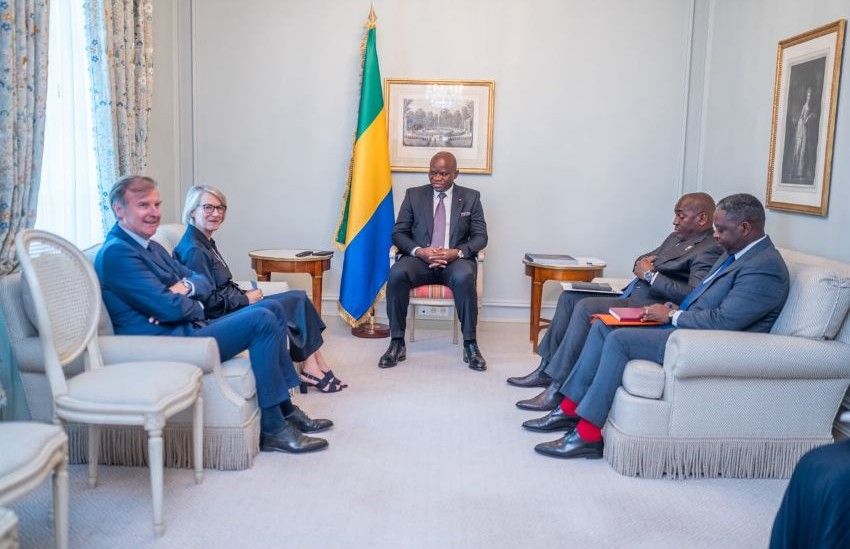
Libreville, August 4, 2026 – Gabon’s state visit to Paris from July 19 to 22 was more than ceremonial diplomacy. Behind the official protocol involving military honors at Les Invalides and meetings at the Élysée Palace lay a strategic economic agenda.
The Gabonese delegation, led by President Brice Clotaire Oligui Nguema, sought tangible economic commitments to address pressing domestic priorities. As the dust settles on the high-profile meetings, one pressing question emerges: what concrete benefits will the Gabonese people see from these discussions?
The delegation numbered over 80 participants, including key private sector representatives. While initial reports focused on the political symbolism of the visit, details now reveal the identities of major French corporate leaders engaged in critical discussions and the specific sectors under negotiation.
Air connectivity and manganese transformation take center stage
The visit began with a meeting between President Oligui Nguema and Anne Rigail, CEO of Air France. The airline partnership represents far more than commercial cooperation—it’s about reshaping Gabon’s air transport landscape. Fly Gabon and Air France have been working toward a codeshare agreement, potentially allowing Fly Gabon to market flights to Paris under its own airline code by year-end. While no final agreement was signed, the timeline underscores the urgency of improving regional connectivity for business travelers, tourists, and investors alike.
The following day at the Élysée Palace, mining took precedence. Discussions with Eramet and its subsidiary Comilog centered on a protocol for locally processing manganese. Christel Bories, Eramet’s president, presented a collaborative roadmap targeting up to 700,000 tons of locally processed manganese by 2031. The agreement also hints at a “Made in Gabon” fund and biochar development—though these remain conceptual at this stage.
Crucially, these are framework agreements, not finalized investments. For Gabonese citizens, the distinction is vital: meaningful transformation requires not just signed documents but executed investments, infrastructure development, and operational decisions.
Booué hydroelectric project: a litmus test for energy ambitions
Energy security emerged as another critical dossier. Gabon, EDF Power Solutions, and Gabon Power Company formalized discussions around the Booué hydroelectric project on the Ogooué River. With a proposed capacity of 400 megawatts, the project addresses a glaring imbalance: while Gabon boasts substantial hydroelectric potential, current production of around 700 megawatts falls short of a demand exceeding 1,000 megawatts.
However, the agreement reached in Paris is just the beginning. Partners have until October 31 to finalize development terms, with monthly meetings pledged to maintain momentum. This deadline now serves as a credibility test for Gabon’s energy transition ambitions.
The visit also included consultations with Omega Consortium, a specialist in water and electricity infrastructure, reflecting Libreville’s broader focus on expanding access to essential services.
While presidential communications touted progress across mining, water, energy, security, and investment sectors, specific financial details and implementation timelines remain undisclosed. This opacity fuels public anticipation—and skepticism.
From promises to progress: what Gabonese citizens demand
The Paris visit secured partnerships, set deadlines, and launched several initiatives. Yet the true measure of success lies beyond diplomatic niceties. Gabonese citizens expect tangible outcomes: gainful employment, reliable electricity, improved water networks, enhanced mobility, and increased local value addition—all culminating in measurable improvements to daily life.
The October 31 deadline for the Booué project, the prospective air agreement by year-end, and the evolution of manganese processing frameworks will be closely monitored. Economic diplomacy must ultimately be judged not by the volume of meetings or documents signed, but by the real-world impact it delivers to the Gabonese people.

 Boureima Amadou