Mariama Hamani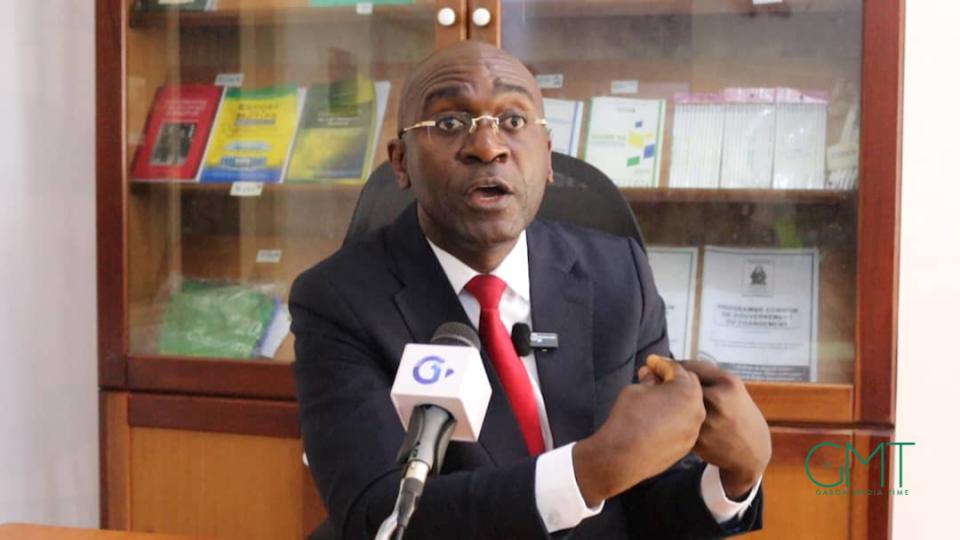
As verbal excesses attributed to certain Gabonese activists abroad surge, civil society leader Geoffroy Foumboula Libeka Makosso has drawn a clear line between free expression and harmful rhetoric. Speaking at a press conference in Libreville, he condemned recent attacks targeting President Brice Clotaire Oligui Nguema, his wife, and mother, while urging authorities to move beyond symbolic outrage and address infractions through the justice system when warranted.
The intensity of public debate need not cross into insult or defamation, Foumboula asserted. Referring to a diaspora activist known by the pseudonym Lanlaire, he argued that political dissent crosses a red line when it shifts from ideological opposition to personal attacks on state leaders and their families.
Freedom of expression has limits
For Foumboula, civic engagement must remain distinct from verbal abuse. Reflecting on his own advocacy journey, he emphasized that constructive criticism—through petitions, public statements, and when necessary, legal action—does not equate to insulting opponents. “Disagreement does not imply humiliation,” he stated.
He underscored that restoring constitutional order requires upholding legal standards. While the transition period may have aimed to reconcile with some exiles, he cautioned against interpreting this openness as permanent immunity from legal consequences.
“Insults, defamation, and public outrage are crimes, not expressions of free speech,” he declared. While criticizing institutions and leaders remains a democratic right, he stressed that those who overstep must face accountability under the law. Foumboula condemned Lanlaire’s remarks targeting President Oligui Nguema, the First Lady, and the president’s mother as crossing that threshold.
Questioning ties between authorities and activists
Foumboula extended his critique beyond the activists themselves, questioning what he described as persistent ties between the government and some diaspora figures known for virulent attacks on authorities.
He cited instances of invitations to Gabon, appearances on state media, and alleged outreach during presidential trips. While some of these claims require verification, their public articulation raises concerns about selective engagement with dissent.
He also referenced an activist’s claim of receiving €150,000 (nearly 100 million FCFA) from a presidential delegation member to publicly attack the head of state. Foumboula presented this as an unverified allegation, not a judicial fact.
Ending unchecked proximity to inflammatory figures
Foumboula called on the presidency and institutions to clarify their stance: “The President and his team must end their excessive closeness to activists whose only contribution is insult and outrage.” He framed this as a matter of national reputation, warning that inaction risks fostering a culture of impunity.
He argued that failing to pursue legal action against such behavior not only protects wrongdoers but may also encourage others to weaponize verbal abuse for visibility or access to power. His critique targets both the speakers and the institutions expected to enforce the law.
Condemning misconduct publicly without following through with legal action, when justified, risks normalizing the very behavior being denounced.
Pursuing justice over normalizing insults
Foumboula urged administrative and judicial authorities to initiate legal proceedings against those who cross legal boundaries. Without such action, he warned, public perception could shift toward believing that certain activists operate under protection.
He also appealed to internet users to curb the spread of abusive content by unsubscribing from offending accounts, avoiding sharing such material, and using platform reporting tools.
Beyond the current controversy, his stance reflects a broader concern: while free speech is vital in any democracy—even when it unsettles those in power—it must not devolve into personal degradation. Criticism fuels democracy; infractions belong in court.


 Boureima Amadou