Mariama Hamani
Mali: former minister Hamma Ag Mahmoud joins imam Dicko’s coalition
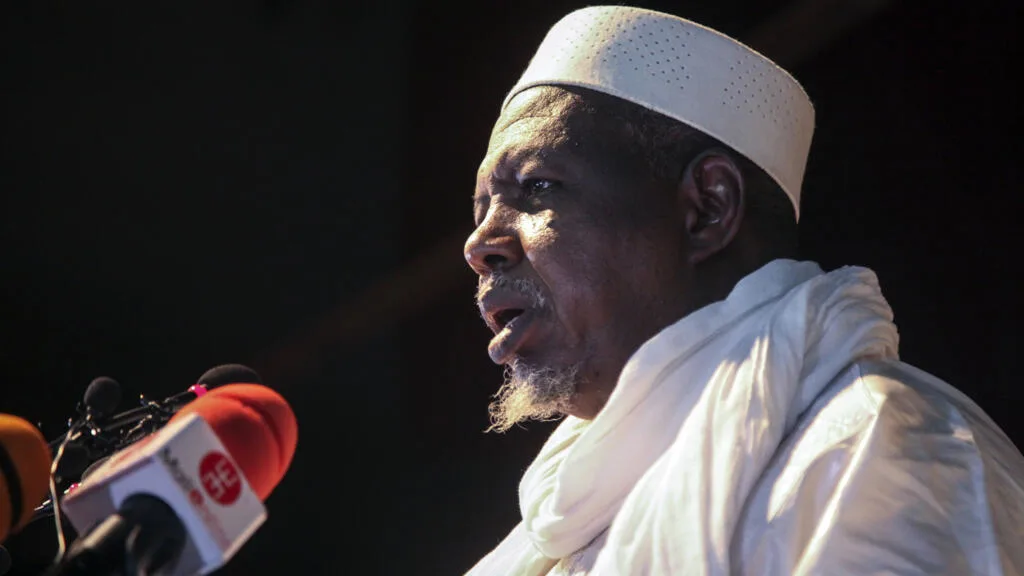
Hamma Ag Mahmoud served as Mali’s Minister of Labour and Civil Service from 1986 to 1988 under the military regime of General Moussa Traoré. He later held positions as a prefect in several Malian regions, including Sikasso, Koulikoro, Ségou, Gao, and Tombouctou. In 2012, he joined the independence movement of the National Movement for the Liberation of Azawad (MNLA), playing a key role in negotiating the 2015 peace agreement with the Malian government.
‘The political class has failed’
Since relocating to Mauritania in 2011, Hamma Ag Mahmoud has now officially announced his alignment with the Coalition of Forces for the Republic (CFR). In an exclusive interview, he expressed grave concerns about Mali’s current state: ‘We are in a period of crisis, with the country facing severe disintegration. Malians must unite behind a shared vision for society where everyone feels represented.’ The CFR, he believes, has taken the initiative, and he urges all Malians to join in order to organize a national conference that corrects past mistakes.
‘The rise of rebellions and jihadist groups in Mali is a direct consequence of the political class’s failure,’ he asserts. ‘Malians deserve a political project that unites them all.’
Despite the CFR’s efforts to engage in dialogue with armed groups, including jihadist factions linked to al-Qaeda, many Malians remain skeptical about the prospect of such talks and fear further fragmentation of the country. Hamma Ag Mahmoud, however, remains optimistic: ‘If we integrate these groups into a shared project, we can put an end to the violence,’ he argues. ‘Restoring good governance in Mali would eliminate the need for jihadists or separatist rebellions.’
Sharia vs. Republic: is compromise possible?
In recent months, the Group for Support of Islam and Muslims (JNIM), an al-Qaeda-affiliated jihadist faction, has sought to reframe its narrative, positioning itself as a political actor in Mali. While it now emphasizes the concept of ‘sovereignty’ and claims to defend local populations, its ultimate goal remains unchanged: the imposition of its interpretation of Sharia law. Can negotiations with such a group ever be feasible within a republican framework?
Hamma Ag Mahmoud is convinced they can: ‘Of course,’ he states. ‘All democratic principles—equality, justice—must be applied by involving every Malian citizen.’

 Boureima Amadou