
 Mariama Hamani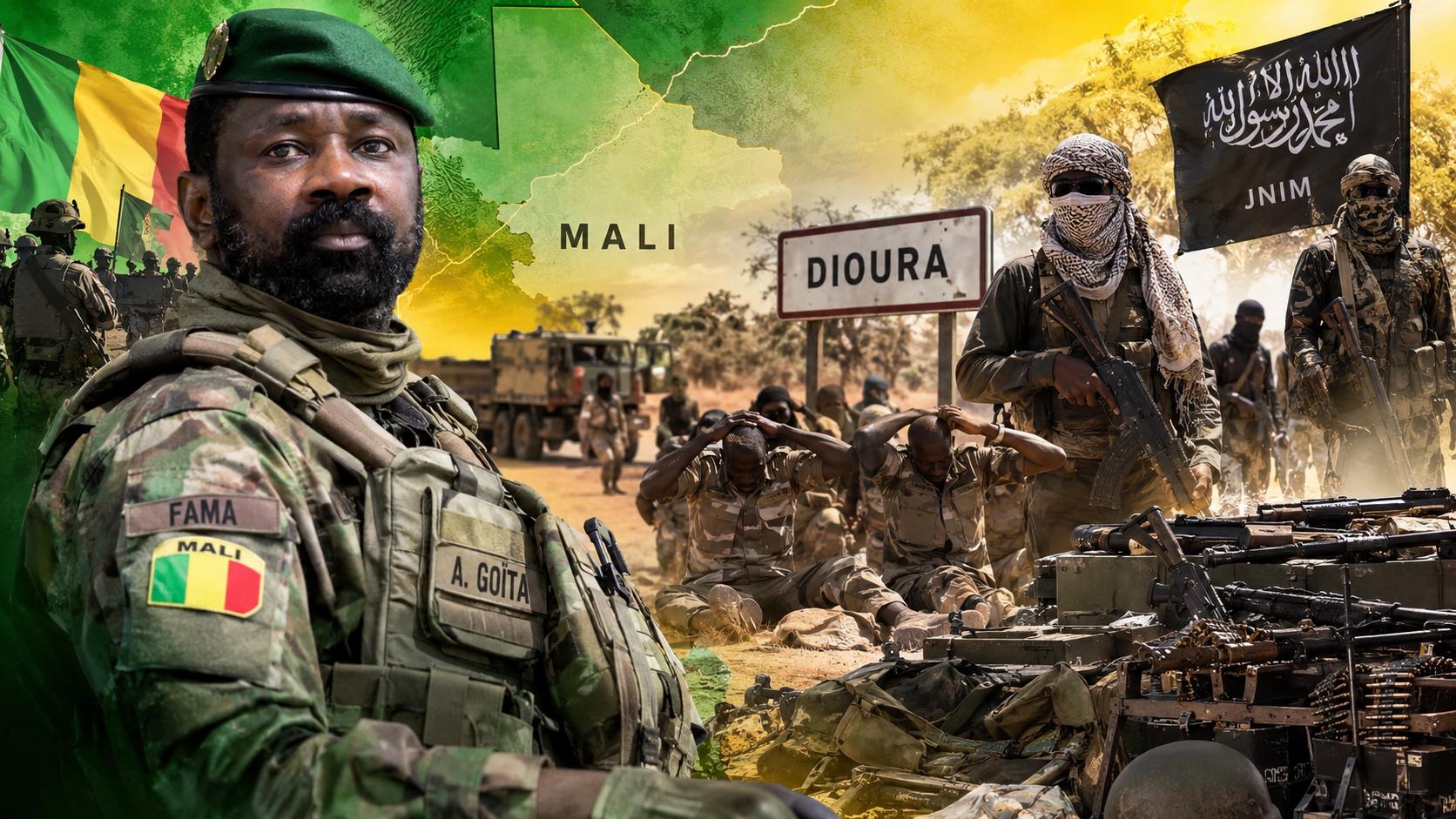
The assault on Dioura began at first light on Thursday 10 September 2026 and ground on for hours. Fighters of the Group for the Support of Islam and Muslims (JNIM), the Al-Qaida-affiliated coalition that operates across the Sahel, descended on the military base in the Tenenkou circle of central Mali, shelled it, pushed through its defences and stripped it of weapons and equipment before pulling back.
What they left behind was a ruined garrison, a trail of bodies and a column of captured soldiers. In the space of a single morning, the outpost that was supposed to anchor state authority in the area vanished from the map of Malian military positions.
The toll emerging from central Mali
Information reaching the region paints a picture far grimmer than anything the authorities have been willing to acknowledge. Local officials, residents and families of the missing converge on the same provisional figures, and the numbers are devastating.
Around 130 soldiers killed
The provisional death toll among Malian troops stands at roughly 130. That would make Dioura the heaviest single loss suffered by the national army since the insurgency spread into the centre of the country, and one of the most lethal engagements of the entire Sahel conflict.
Some 70 men marched away as prisoners
Beyond the dead, the attack delivered a strategic humiliation: approximately 70 soldiers were seized and led away by the insurgents. Footage circulated by the group shortly afterwards shows rows of young recruits, most of them barely out of training, staring into the camera, alongside captured stocks of rifles, ammunition and vehicles. For the families of those men, the wait is unbearable, made worse by the near-total silence from the capital.
Silence from Bamako as the evidence circulates
Communication from the Malian Armed Forces (FAMA) and from the transitional presidency has been minimal, and in places non-existent. The pattern is familiar: when the news is bad, the official channels go quiet, leaving the public to piece together events from fragments of testimony and from the enemy’s own media output.
That vacuum has consequences. Without confirmation, without lists, without a clear account of what happened on the ground, families in the Mopti region are left to guess whether a son, a brother or a neighbour is among the dead or among the captives. Grief is compounded by uncertainty, and trust in the institutions that promised to protect them erodes a little further with every passing day.
Moscow’s promise and the shrinking reach of the state
The Dioura disaster lands squarely on the security doctrine championed by the military government of Colonel Assimi Goïta. Since taking power and turning decisively towards Moscow, the junta has built its legitimacy on two pledges: a rebuilt, better-equipped army, and the imminent defeat of the insurgency with the help of Russian instructors and mercenaries.
Reality has refused to cooperate. The departure of international missions, including MINUSMA and the French-led Barkhane force, has left Malian units to hold vast stretches of territory on their own, frequently under-manned, under-supplied and stranded in isolated forward positions. Dioura is the clearest illustration yet: a static base, dependent on long and vulnerable supply lines, sitting within reach of highly mobile armed groups that now choose the time and place of every confrontation.
The rhetoric of sovereignty and imminent victory has not been matched by control of the ground. Instead, the state’s writ is contracting across the centre and the north, and the soldiers sent to defend it are paying the price.
Communities around Mopti left to fend for themselves
Behind the military ledger lies a civilian catastrophe that rarely makes the headlines. In and around Dioura, shock has hardened into resignation.
“Every time the camp is overrun or the soldiers pull back, we know exactly what comes next: reprisals, fear and complete emptiness,” said a resident of the area, speaking on condition of anonymity. “In Bamako they talk about sovereignty on television. Here we have no protection, no state and no future.”
Markets closed, roads cut, families on the move
Economic life in the zone has seized up almost entirely:
- Weekly markets, the backbone of local trade, have been cancelled.
- Main roads are controlled or obstructed by armed groups.
- Supplies of basic goods, from food to medicine, arrive only sporadically, if at all.
- Villagers frightened of reprisals or of being caught between rival forces are leaving for larger towns, swelling the ranks of the internally displaced.
That displacement unfolds with little attention from the outside world, and with almost no organised humanitarian response in the areas hardest hit.
Where does the transition go from here?
Dioura is more than a battlefield setback; it is a warning. A government that has invested heavily in the narrative of national redemption while losing ground on the battlefield is running out of room to manoeuvre. Depleted units, sinking morale and the gradual loss of territorial control in the centre and the north raise a question that cannot be deferred indefinitely: how much longer can the language of reclaimed sovereignty conceal the collapse of national security?
Without a serious rethink of its alliances, its military tactics and its relationship with the communities it claims to protect, Mali risks sinking deeper into a cycle in which civilians and ordinary soldiers alike continue to pay for decisions made far from the front line.


 Boureima Amadou





