
 Boureima Amadou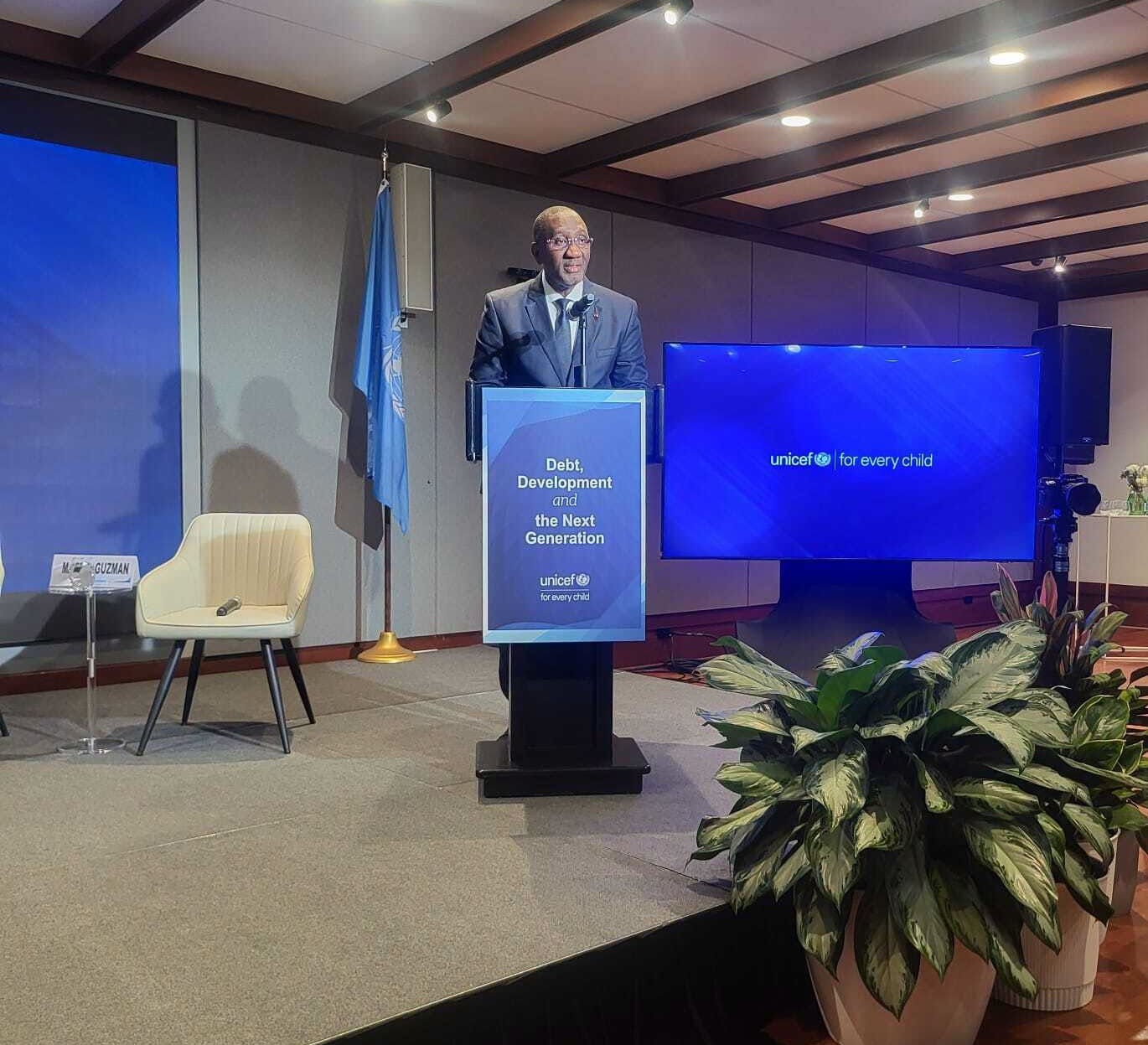
When Finance Minister Souleymane Diarrassouba took Côte d’Ivoire’s case to two high-level UNICEF gatherings in New York on 21 and 22 September 2026, the stakes were not abstract. Every borrowing decision made in Abidjan ripples through classrooms, health centres and family budgets across the country. One session examined how artificial intelligence can be financed in education; the other tackled the mounting pressure of debt on future generations. Côte d’Ivoire used both platforms to explain how it intends to keep human capital investment alive while managing its obligations.
Why the debt conversation matters for ordinary Ivorians
UNICEF estimates that close to 400 million children worldwide live in countries where debt is growing faster than spending on health, education and nutrition. That figure frames the lived reality for millions of families: when debt service eats into national budgets, the first casualties are often school infrastructure, teacher training and access to basic care.
Diarrassouba made Côte d’Ivoire’s position plain: the effect of debt on people depends on where the money is directed, how the loan is structured and what it costs. In other words, a debt can either build a clinic or drain the funds meant to staff it — the difference lies in the choices made at the negotiating table.
A debt swap that redirected hundreds of millions toward development
In 2024, with support from the World Bank Group, Côte d’Ivoire executed a debt-for-development swap. Nearly 400 million euros of commercial debt was refinanced, and the operation is expected to free up roughly 330 million euros in budget resources over five years. A significant share of that money is channelled into education through national budget mechanisms — meaning schools, not creditors, are the ultimate beneficiaries.
That transaction stands as a concrete example of what the minister calls a debt with a human face. As he put it, such a debt is not erased — it is restructured so that its allocation, terms and cost serve health, education and child protection.
Linking loan conditions to learning outcomes: a new frontier
On 21 September, during the Learn AI Global Compact session — held under the theme of responsible artificial intelligence for every learner — Côte d’Ivoire shared its pioneering experience with sustainability-linked financing. In 2025, the country adopted a dedicated framework and secured a 433.3 million euro loan whose financial terms adjust based on results in renewable energy and forest restoration. The operation carries a joint guarantee from the International Bank for Reconstruction and Development and the Multilateral Investment Guarantee Agency, making it the first sovereign sustainability-linked loan in West Africa.
In New York, officials explored whether the same model could be extended to human capital through a sustainability-linked bond, with loan conditions tied to nationally measured learning outcomes. Such a mechanism would require reliable, verifiable learning indicators and careful management of financial risks. The loan’s duration would need to match the timeline of the investments it finances. Child data protection and the accountability of states and teachers in pedagogical choices were also among the principles Côte d’Ivoire emphasised.
What the 2026-2030 national plan changes on the ground
The National Development Plan 2026-2030 places greater emphasis on digital tools and artificial intelligence, particularly in education and training. It also sets targets for maternal and child health, universal health coverage, social protection and improvement of the human capital index — all areas where debt policy directly shapes outcomes for citizens.
Côte d’Ivoire said it is ready to continue working with UNICEF and Learn AI Global Compact partners on verifiable learning indicators and an appropriate guarantee mechanism. The country is simultaneously pursuing debt management based on risk control, fiscal sustainability and securing better financing terms.
The bottom line for businesses and households
For Ivorian businesses, the government’s approach signals predictability: debt is being managed to avoid sudden budget shocks that could stall public contracts or delay payments. For households, the payoff is measured in functioning schools, accessible health services and a social safety net that does not collapse under interest payments. Through its two interventions in New York, Côte d’Ivoire laid out the choices guiding its development financing policy: preserve debt sustainability, steer resources toward national priorities, and explore new instruments when they can advance the goals of the 2026-2030 plan. Education, health, social protection and the broader development of human capital remain at the centre of those priorities — and, ultimately, at the centre of what debt policy means for everyday life.








