Mariama Hamani
Key facts
- Provisional toll: 24 fatalities and 36 injured among 69 passengers and crew
- Location: Touba-Biankouma route, near Bafingdala village, Bafing region (northwest)
- Time: Monday, July 13, 2026, around 11:30 AM
- Investigation: Accident Investigation and Analysis Bureau (BEA) deployed by the Ministry of Transport
A catastrophic collision occurred Monday morning on the Touba-Biankouma route in northwestern Côte d’Ivoire. A coach operated by Diarra Transport, running a regular service between Odienné and Yamoussoukro, veered off the road and plunged into the Bafing River near Bafingdala village.
The Ministry of Transport and Maritime Affairs confirmed the grim toll in an official statement: 24 lives lost and 36 others injured. All 69 occupants of the vehicle were accounted for—either among the deceased, the injured, or the unharmed.
Swift emergency response and medical care
Rescue teams arrived promptly after the disaster struck around 11:30 AM. The injured were rushed to healthcare facilities in Touba and Biankouma, while search efforts continued in the Bafing River to locate any missing persons.
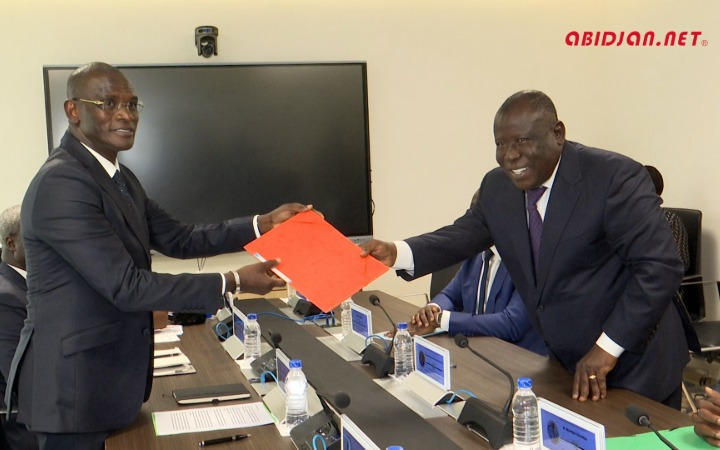
Minister of Transport Amadou Koné immediately dispatched regional transport directors from Tonkpi and Bafing to the disaster site. The severity of the incident mobilized local authorities and emergency services across the region.
Administrative and technical probe under way
Minister Amadou Koné announced the launch of an urgent administrative and technical investigation to determine the causes of the crash. The Accident Investigation and Analysis Bureau (BEA) has been tasked with reconstructing the sequence of events that led to the vehicle leaving the roadway.
The inquiry will examine the bus’s mechanical condition, traffic conditions at the time, and any human factors involved. Diarra Transport, a well-known operator of intercity routes, had not issued an official statement at the time of reporting.
Rainy season heightens road risks
The tragedy unfolded during the peak of the rainy season, when Ivorian roads become especially hazardous. The Ministry of Transport had already urged drivers to exercise extreme caution.
The crash site lies along a stretch of the route that winds through the mountainous northwest, where the Bafing River swells significantly during this time of year. Local roads are often narrow, winding, and lack adequate safety barriers where they run close to waterways.
Ongoing challenge of road safety
This incident highlights the persistent road safety challenges facing Côte d’Ivoire. Deadly intercity bus crashes continue to make headlines, raising concerns over long-distance travel safety.
Routes linking northern and central regions—such as the Odienné to Yamoussoukro run—stretch hundreds of kilometers over unevenly maintained roads. Factors such as driver fatigue, vehicle conditions, and the sheer distance contribute to elevated risks, according to authorities.
In response to repeated tragedies, the government has tightened technical inspections and operational rules for transport companies. Ongoing initiatives also target driver training and stricter enforcement of rest periods.
Nationwide reaction and mobilization
The disaster sparked widespread grief across Côte d’Ivoire and neighboring West African countries. Local media widely broadcast updates as the initial death toll of 14 rose throughout Monday afternoon.
Religious leaders and civil society organizations extended condolences to the victims’ families. Health centers in Touba and Biankouma received reinforcements in staffing and supplies to care for the injured.
The incident also drew attention from the large Ivorian diaspora in France, many of whom regularly use intercity routes during visits to the country.
Next steps in the investigation
The BEA will establish the precise circumstances surrounding the vehicle’s departure from the road. Investigators will assess mechanical integrity, weather conditions at the time of the crash, and potential human errors.
Findings are expected within weeks and will help determine accountability and necessary corrective actions. The Ministry of Transport has already reiterated its call for heightened vigilance among transport companies during the rainy season.
Families of the victims await formal identification of their loved ones and arrangements for funerals. The government has not yet announced any support measures for the affected families.


 Boureima Amadou