Mariama Hamani
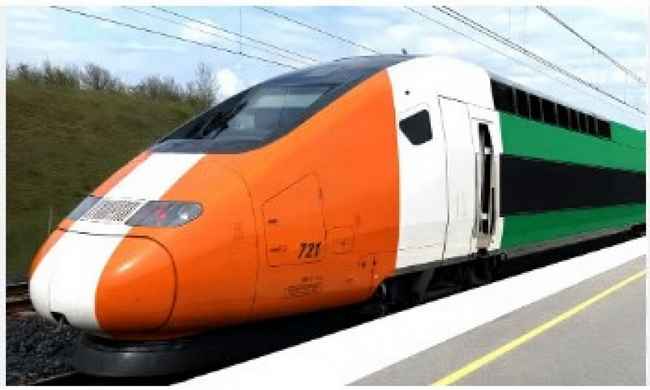
Following Morocco’s launch in late 2018, Côte d’Ivoire could become the second African nation to operate a high-speed train. The West African government aims to build a 640-kilometre line between Abidjan, the economic hub, and Yamoussoukro, the political capital founded by former President Félix Houphouët-Boigny in his birthplace. This journey, currently taking nearly three hours by road, would be slashed to just 45 minutes. The TGV would then extend northward, serving Bouaké, the country’s second-largest city, as well as Korhogo and Ferkessédougou.
Feasibility and financing studies are ongoing. The project is also intended to make Yamoussoukro more attractive and ease congestion in Abidjan, where housing costs remain steep. Locally, the high-speed rail is viewed as a positive development should Côte d’Ivoire decide to bid for the 2038 FIFA World Cup, though its chances are slim since Morocco is already the African host for 2030.
Boosting economic development through transport
Côte d’Ivoire’s government, led by Prime Minister Robert Beugré Mambé, has integrated this high-speed rail into the 2026-2030 National Development Programme. It is part of a broader €175 billion economic growth strategy heavily reliant on transport infrastructure. Other initiatives include a new Abidjan metro expected by 2029, additional roads, over 1,000 kilometres of highways, and two new airports in San Pedro (southwest) and Bondoukou (northeast). President Alassane Ouattara, in power since 2011, views these projects—and potentially the TGV—as emblems of the nation’s economic and social modernisation.

 Boureima Amadou