Mariama Hamani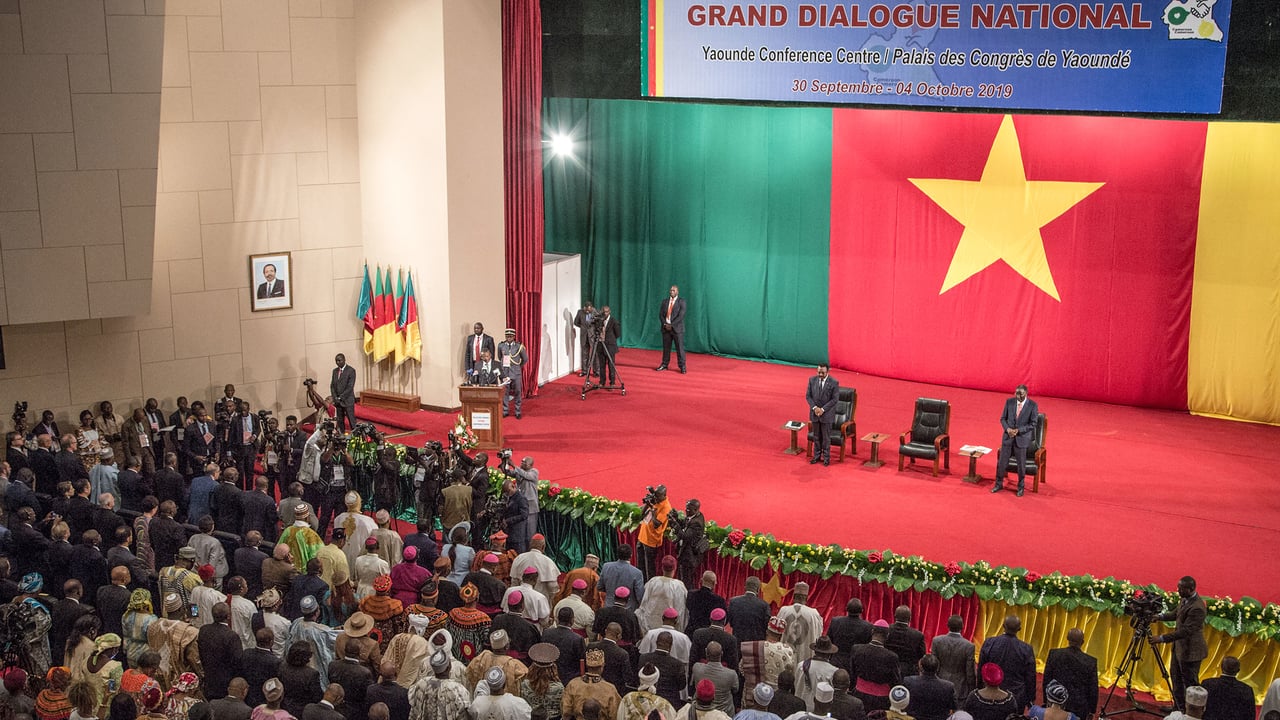

The question of whether Cameroon can revert to a federal structure has resurfaced as political and social pressures mount. Decades after adopting a unitary system, the debate now centers on whether decentralization could quell long-standing grievances, particularly in the Anglophone regions.
Historically, Cameroon operated as a federation from 1961 until 1972, when a constitutional reform abolished the federal arrangement in favor of a centralized government. The shift was intended to unify the country under a single administrative framework, but critics argue it sidelined regional voices, especially in the Northwest and Southwest regions where English-speaking communities feel marginalized.
Historical context: from federation to unitary state
The 1961 union between French-speaking Cameroon and British-speaking Southern Cameroons created a bilingual federation. However, President Ahmadou Ahidjo, who led the country from independence until 1982, pushed for a constitutional amendment in 1972 that dismantled the federal structure. His successor, Paul Biya, has maintained this centralized system despite periodic calls for greater autonomy.
The 1972 reform replaced the federal system with a United Republic of Cameroon, later renamed the Republic of Cameroon in 1984. Proponents of federalism argue that this centralization exacerbated regional disparities, fueling tensions that culminated in the ongoing separatist conflict in the Anglophone regions, which began in 2016.
Current debates and separatist crisis
In 2019, a national dialogue was convened in an attempt to address the crisis, with Prime Minister Joseph Dion Ngute overseeing the proceedings. The dialogue aimed to explore solutions, including potential federal reforms, but its impact was limited by the absence of key rebel leaders. The crisis has since intensified, with armed groups demanding independence for the Ambazonia region.
Advocates for federalism insist that devolving power to the regions could restore stability by addressing historical injustices and accommodating linguistic and cultural differences. Opponents, however, warn that such a move could weaken national cohesion and trigger further fragmentation.
Arguments for federalism
- Regional autonomy: A federal system would grant the Northwest and Southwest regions greater control over their resources, governance, and education systems, aligning with their Anglophone identity.
- Conflict resolution: Federalism could provide a framework to de-escalate the separatist conflict by addressing the root causes of marginalization.
- Historical justice: Restoring federalism would honor the original 1961 agreement that united the two Cameroons under a shared but decentralized governance model.
Challenges to federalism
- Political resistance: The central government has historically resisted decentralization, fearing it could undermine national unity and lead to demands for further autonomy by other regions.
- Security risks: Implementing federalism in the current climate of armed conflict could embolden separatist factions and complicate peace efforts.
- Implementation hurdles: Transitioning to a federal system would require constitutional amendments, legal reforms, and extensive negotiations with stakeholders across the country.
Public opinion and political landscape
The debate over federalism has divided public opinion. While some citizens in the Anglophone regions and civil society groups advocate for a return to federalism, others, particularly in the Francophone-dominated regions, view it as a threat to national integrity. Political parties remain divided, with some endorsing decentralization as a necessary reform and others rejecting it outright.
President Biya, who has ruled Cameroon since 1982, has not indicated a willingness to revisit the federal question. His administration has instead emphasized national unity and security, deploying military forces to combat separatist groups while pursuing limited decentralization measures.
Future prospects: can Cameroon restore federalism?
The feasibility of restoring a federal system in Cameroon hinges on several factors. First, the government would need to engage in genuine dialogue with all stakeholders, including separatist leaders, civil society, and regional representatives. Second, a constitutional framework would have to be established to define the powers and responsibilities of the federal and regional governments. Finally, security conditions would need to improve to create an environment conducive to reform.
While the road to federalism is fraught with challenges, the growing discontent in the Anglophone regions suggests that the status quo may no longer be sustainable. Whether Cameroon can navigate these complexities to restore a federal system remains an open question—one that will shape the country’s future trajectory.

 Boureima Amadou