Mariama Hamani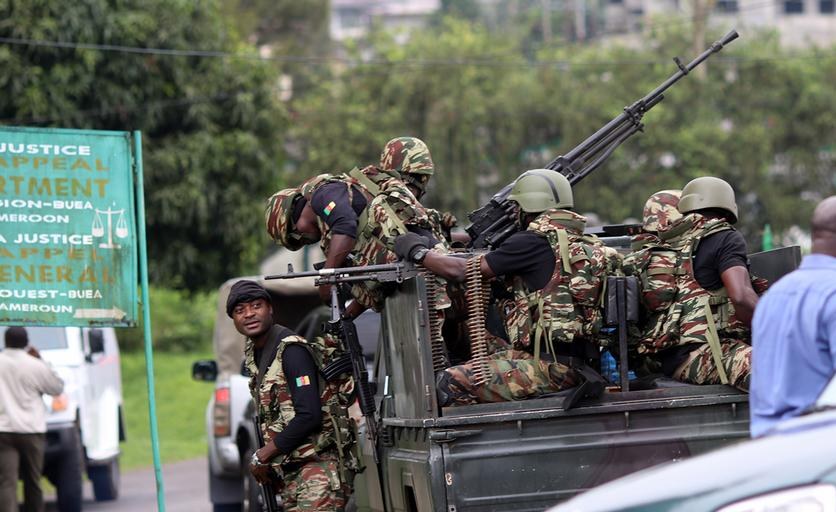
Unprecedented military reshuffle fuels succession fears
Cameroon finds itself navigating uncharted waters as President Paul Biya marks his 57th consecutive day abroad, raising critical questions about both his health and the country’s political stability. The absence of Africa’s longest-serving leader—a figure who has dominated Cameroon‘s political landscape for over four decades—has coincided with sweeping military appointments that many interpret as ethnic factionalism within the armed forces.
What began as a routine European private visit on June 7, 2026, has morphed into a political vacuum that grows more dangerous by the day. While government officials insist the 93-year-old president remains in good health and will soon return, the lack of public appearances has only deepened public skepticism. The timing of these military maneuvers—unprecedented during a presidential absence—has injected fresh urgency into debates about Cameroon’s future leadership.
The military appointments reshaping Cameroon
On August 3, 2026, Presidential Decree No. 2026/265 triggered shockwaves across Yaoundé by appointing General Beko’o Abondo Raymond Jean Charles as the new head of the Presidential Guard. This critical position, responsible for protecting both the president and the seat of government, is now filled by a figure whose ethnic background aligns with the president’s inner circle.
The strategic reshuffle extended far beyond this single appointment:
- Five new brigadier generals elevated to higher ranks
- General Ebaka Hippolyte installed as Major General of the Armed Forces
- Six territorial commanders appointed across four of Cameroon’s five military regions
Military analysts note that such sweeping changes typically require presidential approval. Their implementation during Biya’s absence—with no clear timeline for his return—has fueled speculation about an orchestrated power transition rather than routine administrative updates.
Ethnic tensions rise as clans jockey for control
Behind the palace walls, a dangerous power struggle has intensified between two dominant factions:
- The Biya family faction: Centered around the president’s son, Franck Biya, seen by many as the natural heir to continue the current political system
- The First Lady’s faction: Led by Chantal Biya and powerful Secretary-General Ferdinand Ngoh Ngoh, controlling access to the presidency
This internal division gained momentum following April 2026’s constitutional amendment reintroducing the vice-presidential position—ostensibly to ensure automatic succession in case of presidential vacancy. Yet the position remains unfilled, leaving Cameroon without a constitutional safety net and creating dangerous institutional paralysis.
Constitutional crisis paralyzes succession mechanisms
Opposition leaders have not remained silent. Maurice Kamto‘s Movement for the Rebirth of Cameroon (MRC) has formally requested the Constitutional Council to declare a power vacuum at the state’s summit. Jean-Michel Nintcheu, an MRC deputy, emphasized the urgency: “The Constitutional Council must acknowledge the absence of presidential authority.”
However, the constitutional mechanism remains broken. Without a vice president—despite the April amendment’s intent—the process for handling presidential incapacitation cannot be activated. Cameroon now faces an unprecedented institutional impasse where formal procedures cannot address the country’s leadership crisis.
The health mystery deepening political uncertainty
At 93, each passing day of Biya’s absence without public appearances fuels speculation. Some reports suggest a knee surgery in early July, while others warn of post-surgical complications. The government’s repeated assurances that he “will return soon” have done little to quell mounting concerns.
Roger Justin Noah, Secretary-General of the MRC, voiced citizens’ frustrations: “Why manipulate electoral processes only to spend weeks abroad? If health issues exist, Cameroonians deserve transparency about their president’s condition.”
Historical parallels that chill Cameroonians
The specter of Rwanda‘s 1994 genocide—where ethnic manipulation of military forces precipitated catastrophe—looms large over contemporary Cameroon. Ethnic tensions here, though less visible, represent a slow-acting poison eroding the nation’s republican pact. The fear of any single ethnic group “owning” the country has become a persistent undercurrent in political discussions.
What can still prevent Cameroon’s descent into chaos
Despite alarming indicators, all is not lost. Several immediate actions could stabilize the situation:
- Health transparency: The government must disclose Biya’s actual medical condition and provide a verifiable return timeline
- National dialogue: Inclusive discussions between political forces to address ethnic tensions and power-sharing concerns
- Vice-presidential appointment: Filling this critical position to restore constitutional legitimacy and prepare for all eventualities
Cameroon stands at a precipice. The current trajectory—military factionalism, ethnic polarization, and institutional paralysis—leads only toward instability. After 43 years of Biya’s rule, citizens have shown remarkable patience. But they will not accept shadowy manipulations that endanger the nation’s future.
As commentator Jean-Pierre Bekolo warned: “History remembers not only actions but also silences and blindness. Stop playing with fire—tomorrow may be too late to claim ignorance.”


 Boureima Amadou