
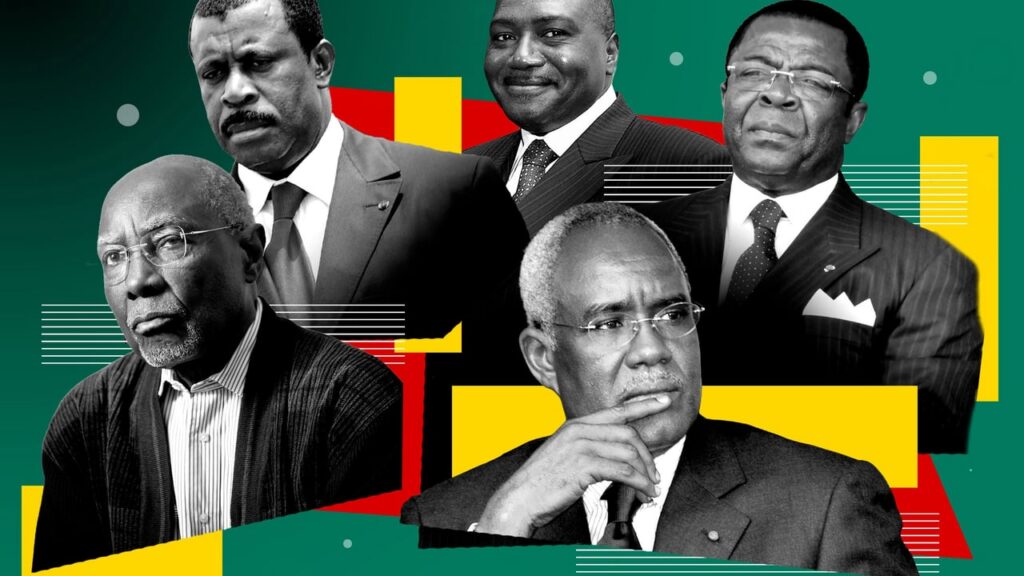
Cameroon’s fallen leaders: the shadows of Etoudi palace
Etoudi palace has long been a stage where political ambitions rise and fall. Over the decades, numerous figures have seen their fortunes shift under Cameroon’s presidency, leaving behind stories of power, betrayal, and resilience.
The weight of Etoudi’s legacy
Since 1982, Cameroon’s political landscape has been shaped by a recurring pattern: individuals who once held significant influence find themselves on the wrong side of favor. These déchus de la République—those cast out of power—often paid dearly for their aspirations, whether by losing their freedom or seeing their political careers crumble.
The corridors of Etoudi palace, the official residence of Cameroon’s president, have witnessed countless shifts in loyalty. Some gained prominence only to be sidelined when their ambitions clashed with the status quo. Others were accused of betrayal, real or perceived, and faced harsh consequences.
Faces of a shifting political tide
Among those who have felt the sting of political exile are names that once dominated Cameroon’s governance. Figures like Titus Edzoa, Ephraïm Inoni, Jean-Marie Atangana Mebara, Marafa Hamidou Yaya, and Edgar Alain Mebe Ngo’o each experienced the abrupt end of their careers under different circumstances.
Their stories reflect a broader narrative of power dynamics in Cameroon. Some were accused of embezzlement or corruption, while others were seen as threats to the established order. Regardless of the reasons, their falls from grace left a lasting imprint on the nation’s political memory.
The unspoken rules of Cameroon’s political game
Power in Cameroon has always been a delicate balance. Those who rise to the top often do so with the tacit approval of the presidency, only to discover that loyalty is a one-way street. The palace’s shadow extends far beyond its walls, influencing careers, fortunes, and even personal freedoms.
For the fallen, the consequences are often severe. Some face legal battles that drag on for years, while others disappear from public view entirely. The message is clear: in Cameroon’s political arena, crossing the line—or even appearing to—can come at a steep price.
A nation watching and waiting
Cameroonians have grown accustomed to the ebb and flow of political fortunes. While some of the fallen leaders fade into obscurity, others leave behind legacies that continue to spark debate. Their stories serve as cautionary tales, reminding both the powerful and the ambitious of the risks involved in challenging the status quo.
As Etoudi palace remains the epicenter of Cameroon’s political life, the shadows of its fallen leaders linger. Their fates are a reminder that in the world of governance, power is never permanent—and the fall from grace is always just one misstep away.
More Stories
Cameroon’s fallen leaders: the forgotten voices at the Etoudi palace
Bargny: Ousmane Sonko rallies Pastef supporters for membership drive
Ousmane Sonko’s pastef membership drive tour in senegalese towns