Mariama Hamani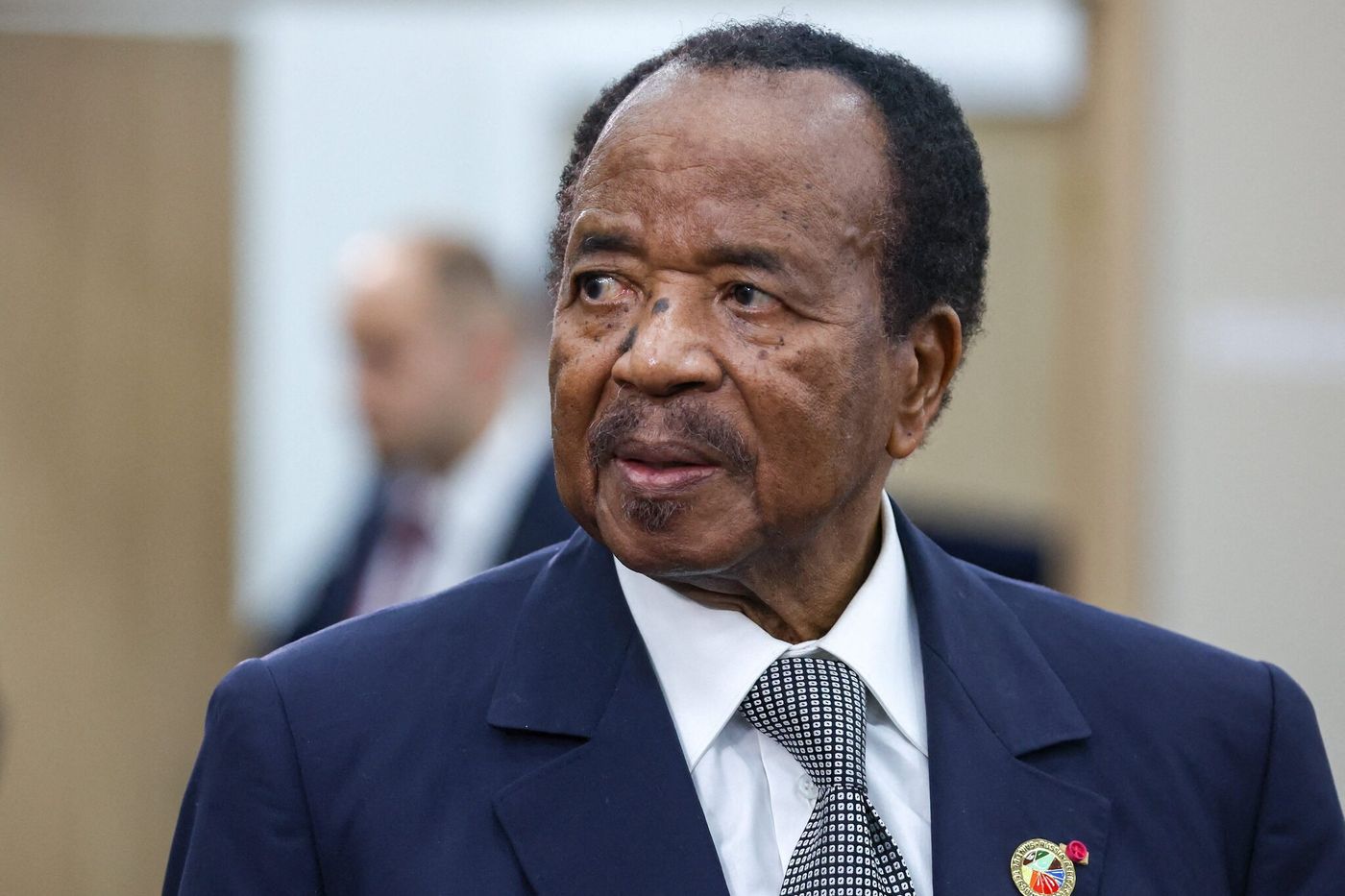
Paul Biya, Cameroon’s president since 1982 and the world’s longest-serving head of state, arrived back in Yaoundé on Thursday, August 20, following an absence exceeding two months. His prolonged disappearance reignited a heated national controversy concerning his capacity to effectively lead the nation.
The 93-year-old Cameroonian leader had departed Yaoundé on June 7 for what the presidency described as a « short private stay in Europe ». According to local media, he was reportedly in Geneva, Switzerland, accompanied by his family and a select group of close collaborators.
After 73 days outside the country, Paul Biya left Yaoundé airport, acknowledging the gathered crowd with a wave through the slightly open window of his car as it proceeded towards his residence, the Etoudi Palace. He was accompanied by his wife, Chantal Biya. Dozens of activists from the presidential party, some adorned in fabric bearing the president’s likeness, had assembled at the airport to welcome him in a celebratory atmosphere.
President Biya’s health, a frequent subject of rumors given his regular stays in Geneva, often prompts official denials. On June 18, René Emmanuel Sadi, the Minister of Communication, refuted press reports claiming the Cameroonian leader had been hospitalized in a Geneva clinic.
This unusually lengthy absence intensified discussions about the inertia within the Cameroonian government and drew sharp criticism from the opposition. Opponents decried an « institutional vacuum » and asserted the country was operating on « autopilot », especially as appointments for a new government and a vice-president had been awaited for several months.
The ‘spectacle’ of presidential returns
« For a democracy like ours, it’s natural for a president’s prolonged absence to raise questions. However, it hasn’t altered the country’s operations; Cameroon continued to function, » argued Gilles Owono, a 30-year-old teacher who was present at the airport to greet the head of state.
James Fame Ndongo, a senior figure in the presidential party and Minister of Higher Education, dismissed accusations of a power vacuum in late July. He maintained that « wherever he is, the head of state meticulously oversees the files submitted to him by his collaborators. »
Nevertheless, these repeated absences, spanning over two decades, consistently fuel frustration among many Cameroonians. « It makes no difference whether he is here or not. When he is present, he does nothing. Therefore, I don’t believe it’s necessary to participate in this spectacle, » declared Prosper Nkou Mvondo, leader of the opposition Univers party.
The prospect of Paul Biya’s re-election for an eighth term, anticipated in October 2025, had previously led to bloody demonstrations. The government acknowledged « several tens » of deaths but did not provide an exact toll. The election results, disputed by the opposition, also met with reservations from Western embassies.
This extended sojourn outside Cameroon also intensified speculation about the “post-Biya” era, accelerating the race for his succession, which remains shrouded in uncertainty. As long as a vice-president has not been appointed, the responsibility to assume interim leadership in the event of a power vacuum would fall to the Senate President, Aboubakary Abdoulaye, until a presidential election could be organized.

 Boureima Amadou