Boureima Amadou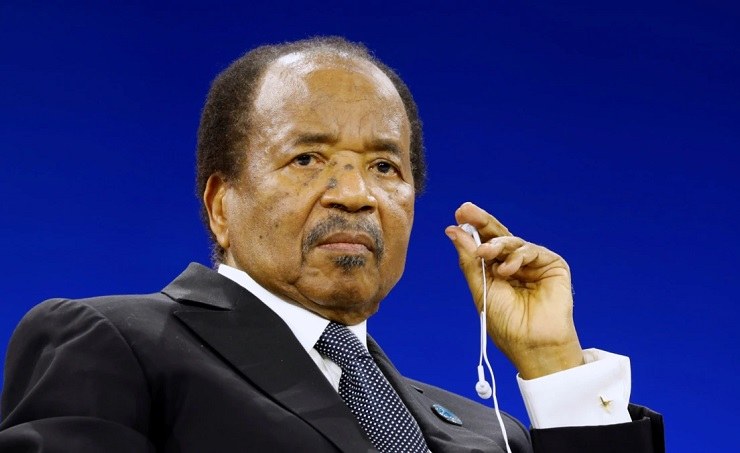
Government confirms Paul Biya’s survival after 56 days of silence
The Cameroonian government has finally broken its prolonged silence, confirming that President Paul Biya remains alive and that his return is imminent. After 56 days of absence, a nation held its breath, scrutinizing every possible sign of life from a leader who had vanished from public view.
On Sunday, August 2, 2026, the Minister of Communication and government spokesperson, René Emmanuel Sadi, addressed the nation. “The president is alive,” he declared firmly. “There is no power vacuum.” His words, though intended to reassure, have left many with more questions than answers.
While the announcement provided much-needed clarity, it did little to dispel the growing unease that had gripped the country for nearly two months. The absence of any official images, statements, or public appearances from President Biya only fueled speculation and uncertainty.
Paul Biya: Africa’s oldest leader at 93 with 43 years in power
To grasp the magnitude of this situation, one must understand the man at its center. Paul Biya, 93, is the world’s longest-serving head of state. Since assuming office in 1982, he has governed Cameroon for an uninterrupted 43 years—a tenure that some view as a symbol of stability, while others see it as stagnation.
On June 7, 2026, Biya left Yaoundé accompanied by his wife for what was described as a “short private stay in Europe.” Yet, what began as a brief absence has stretched into an unprecedented 56-day disappearance, leaving the nation in a state of suspended animation.
Media blackout fuels speculation and unrest
Officially, little has transpired during these 56 days. Presidential activity has been limited to the signing of military decrees and the dispatch of official telegrams. Social media accounts under the civil cabinet have posted congratulatory messages to French President Emmanuel Macron on Bastille Day, but there has been no word from or about Biya himself.
This silence has been deafening. “Fifty days is too long!” declared the front-page headline of Le Messager, a leading Douala-based newspaper. The paper lamented that after departing Cameroon on June 7 for a private European trip, Biya had already spent 50 days abroad, leaving the country adrift, a government rendered impotent, and a sovereign people mired in stress and uncertainty about the future.
A test for presidential communication
Facing mounting rumors, the ruling party attempted to quell fears. “Power is not vacant. The Lion has not left,” asserted Christophe Mien Zok, Director of Propaganda for the RDPC, in a July 15 editorial for L’Action.
However, statements from a single party official could not quell the rising tide of concern. The opposition, in particular, has grown vocal. Jean-Michel Nintcheu, an opposition deputy, formally called on the Constitutional Council to declare a power vacuum.
The opposition UDC party argued that “the stability of a republic cannot rest on silence or suppositions.” It also highlighted the absence of a vice president—a position left vacant since the constitutional revision of April 2026.
René Emmanuel Sadi delivers the official response
Amid escalating tensions, René Emmanuel Sadi took the floor. In an exclusive interview, he addressed the nation’s concerns with carefully chosen words. He first dismissed any notion of a power vacuum. “Those in the opposition who are clamoring for a declaration of a power vacuum should, in my view, read the Constitution more rigorously and objectively,” he stated.
He then reiterated the constitutional reality: the Constitutional Council has not ruled on any power vacuum. “President Paul Biya is alive. President Paul Biya has not resigned.”
Yet the question that lingers remains unanswered: When will he return? “I cannot tell you exactly when President Paul Biya will return,” Sadi admitted. “And even if I knew, it would not be for me to announce it here.” He did, however, offer a glimmer of hope: “I can at least tell you that he will be returning very soon.”
An unprecedented absence in Biya’s long tenure
This absence is unlike any other in Biya’s 43 years in power. It surpasses even his 42-day stay abroad in the autumn of 2024. Over his decades-long rule, Biya has spent an estimated 2,600 days outside the country—nearly seven years—setting a record among African heads of state for extended private stays abroad.
Rumors persist that parts of the presidential entourage, including family members, are currently in Switzerland. While Cameroonian authorities have not confirmed this, the unconfirmed reports continue to stoke speculation.
What does the Constitution say about presidential absence?
The legal debate has become central to the discourse. An opposition deputy has formally requested that the Constitutional Council declare a power vacuum. Some analysts argue that after 45 days, the Council should intervene.
However, the legal reality is more nuanced. The Cameroonian Constitution does not specify a time limit for the president’s absence from national territory. “No text regulates the duration of the head of state’s stay abroad,” the UDC points out.
The government has relied on this legal ambiguity to justify the prolonged absence. Meanwhile, the opposition denounces what it calls an “institutional void.”
Nation on edge as uncertainty looms
Cameroon waits. Cameroonians wait. Social media has become a battleground of emotions—relief, skepticism, and frustration collide. “Paul Biya is the luckiest president in the world,” one user commented. “He can do as he pleases, when he pleases, with no consequences.”
“Fifty days abroad: a new record for Biya, and his longest stay yet,” another remarked. “No wonder rumors about his health are spreading.”
The government’s announcement of an “imminent” return may not be enough to quell the debate. The lack of a precise date and the continued ambiguity surrounding the reasons for his extended stay could, in fact, reignite demands for transparency.
The question of succession looms large
Beyond the immediate uncertainty, a deeper question emerges: What comes after Biya? At 93, he embodies a regime that has shown little sign of preparing for transition. But for how much longer?
“The question of what comes after Biya is no longer just about rumors of his health—it is about a 93-year-old president who has been absent for seven weeks,” observers note. A reality many prefer to ignore, but one that now demands attention.
The UDC has called for “the launch of an institutional process to regulate prolonged absences of the head of state.” Behind the demand for transparency lies a broader question about governance in a post-Biya Cameroon.
What remains unknown
Despite the government’s declaration, significant questions persist:
- Where exactly is Paul Biya? Reports suggest Switzerland, but there is no official confirmation.
- What is the true nature of his stay? Described as “private,” the duration and circumstances raise eyebrows.
- When will he return? “Very soon,” says the minister—a promise, not a date.
- What is his state of health? The minister confirms he is “alive.” That is all.
Can the government’s statement restore confidence?
The government’s communication effort was fraught with risk. Coming too late, it allowed rumors to flourish. Too vague, it risks failing to convince.
René Emmanuel Sadi has stood his ground. He has responded to criticism, reiterated constitutional principles, and offered a promise of return. Yet, in a nation where information is tightly controlled and power is deeply personalized, the words of a minister may carry little weight against the silence of a president.
Waiting for the return
The nation holds its breath. The promise of Biya’s imminent return is now eagerly awaited—hoped to bring an end to two months of uncertainty.
Yet beyond this return, a larger question looms: How can a country whose head of state, at 93, takes frequent and prolonged absences, ensure stability and good governance?
“The stability of a republic cannot rest on silence or suppositions,” the UDC reminds us. A lesson the Cameroonian government would do well to heed.
For now, Cameroonians wait. They wait for their president. They wait for answers. Above all, they wait to see if the “Lion” will truly roar again.