Mariama Hamani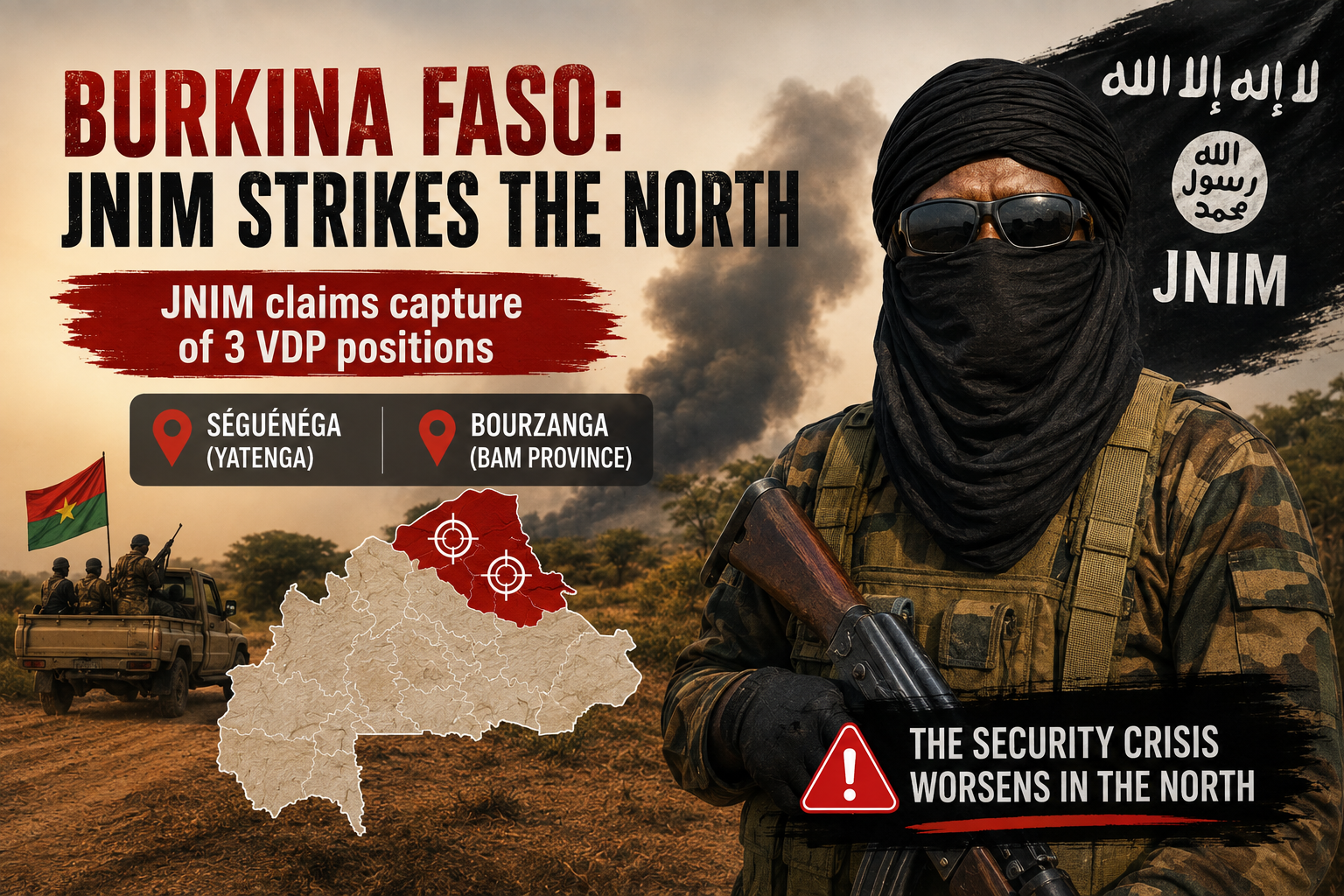
Burkina Faso continues to confront a persistent security crisis, with the government’s communication strategy coming under increasing scrutiny. On August 19, the Jama’a Nusrat ul-Islam wa al-Muslimin (JNIM) claimed responsibility for overrunning three strategic outposts previously held by the Volunteers for the Defense of the Homeland (VDP) in the country’s northern territory. The targeted areas included Séguénéga in Yatenga Province and Bourzanga in Bam Province, marking another significant tactical advance by insurgent factions whose influence remains unabated.
Critical vulnerabilities exposed by recent offensives
Recent military setbacks highlight systemic shortcomings in Burkina Faso’s counterterrorism strategy. The recurring nature of such attacks coupled with the enduring vulnerability of isolated positions demonstrates that military operations alone cannot guarantee sustainable security. A lasting resolution requires an integrated approach encompassing robust intelligence networks, continuous logistical reinforcement, and unwavering protection of civilian populations. The inability to consolidate gains jeopardizes not only military credibility but also public trust in state institutions.
The escalating burden on the VDP and civilian populations
The VDP, a paramilitary force integrated into Burkina Faso’s defense framework, bears the brunt of insurgent operations owing to its frontline positioning. These auxiliary units, though instrumental in resistance efforts, face adversaries with superior mobility and firepower. Each territorial loss represents more than a strategic retreat; it exacerbates internal displacement, undermines community confidence, and obstructs humanitarian operations in affected regions.
Leadership’s response under scrutiny
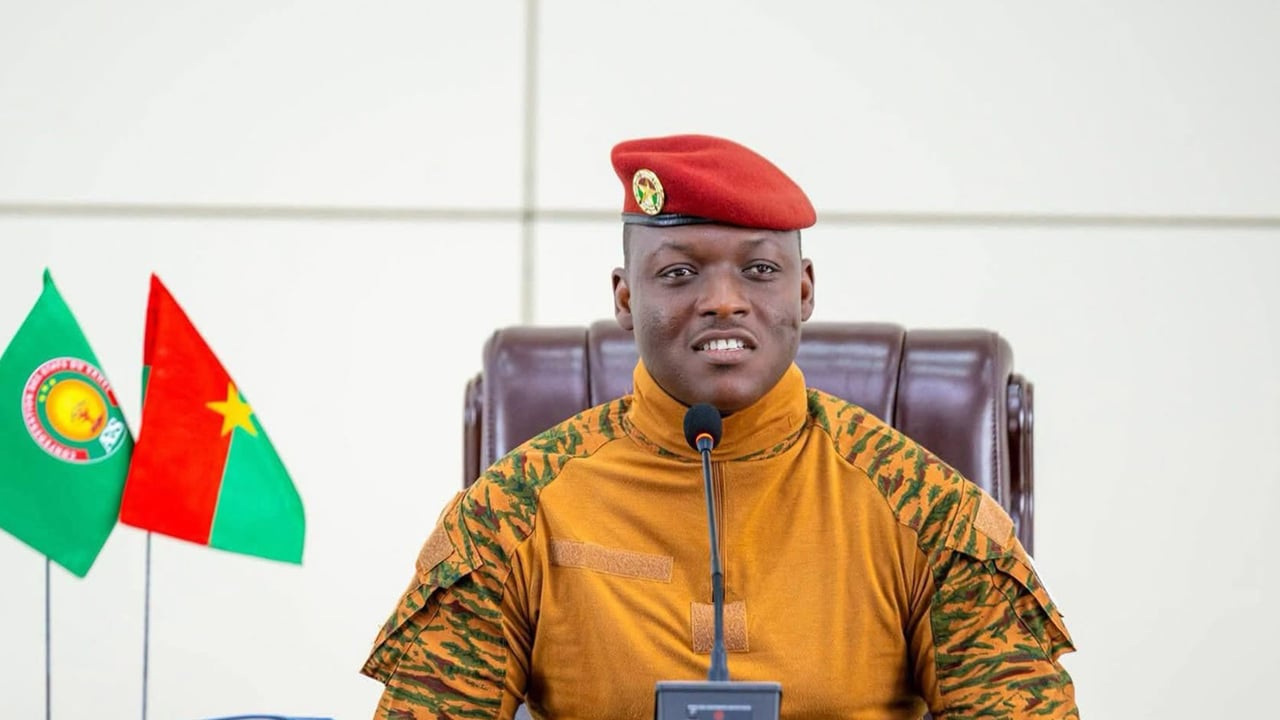
Captain Ibrahim Traoré’s administration has drawn criticism for its handling of the crisis, particularly regarding communicative transparency. Rather than confronting systemic failures with concrete solutions, official narratives have oscillated between populist rhetoric and evasive posturing. These performances, devoid of structured policy direction, appear designed to deflect rising public frustration rather than address the crisis’s root causes. They offer rhetorical reassurance without tangible results for Burkinabè communities.
The limitations of political discourse in conflict resolution
While appeals to sovereignty, national resilience, or diplomatic shifts may momentarily galvanize certain segments of the population, such rhetoric fails to deliver tangible security. Civilians in conflict zones prioritize practical outcomes village protection, safe transit corridors, and the prevention of attacks on civilian and military sites. Promises devoid of implementation risk widening the chasm between official assertions and the realities faced by affected communities.
Thus, the central inquiry transcends political messaging. It centers instead on the measurable impact of state actions: Are villages secured? Are citizens forcibly displaced? Are defensive positions sustained? The absence of progress in these areas signals deeper systemic inefficiencies beyond the purview of rhetoric.
The suppression of critical discourse exacerbates these challenges. Once a vibrant journalistic force, Burkina Faso’s media landscape now operates under severe restrictions. Investigative reporting on the conflict’s realities is met with censorship, arbitrary detentions, or forced conscription under the guise of patriotic service. Such repression not only silences dissent but also deprives both policymakers and the public of essential insights into the conflict’s evolution.
Media repression as a strategic liability
The stifling of independent journalism undermines the very foundation of informed governance. Accurate information is indispensable for recognizing operational successes, identifying failures, and anticipating challenges. By obstructing those who document the ground reality, authorities risk fostering a dangerous disconnect between official narratives and lived experiences. This divergence does not erase the crisis it merely obscures its true extent, rendering effective countermeasures increasingly elusive.
The paradox of controlled narratives in a deteriorating security environment
As the crisis intensifies, so too does the need for transparency, self-criticism, and adaptive strategy. Acknowledging setbacks, diagnosing their origins, and responding with agility are prerequisites for sustained progress. However, a refusal to engage with alternative perspectives or to entertain constructive critique deprives decision-makers of critical intelligence, compromising the nation’s ability to refine its approach.
By restricting the flow of independent information, the government entrenches itself in a state of denial regarding the on-ground situation. Yet, such denial does not resolve the pressing security dilemmas confronting Burkina Faso. While resolve against terrorism is non-negotiable, it must be complemented by accountability, transparency, and an unwavering commitment to confronting the crisis’s realities.
The ultimate test of security policy
At its core, the efficacy of Burkina Faso’s security strategy is measured not by declarations but by outcomes. As long as insurgent groups retain the ability to launch attacks, expand their influence, or exert unrelenting pressure on vulnerable regions, the government’s actions will be judged against their tangible deliverables. Political messaging may shape public perception in the short term, but it cannot, in isolation, secure the nation against an entrenched and adaptive adversary.

 theafricantribune
 Boureima Amadou