
 Mariama Hamani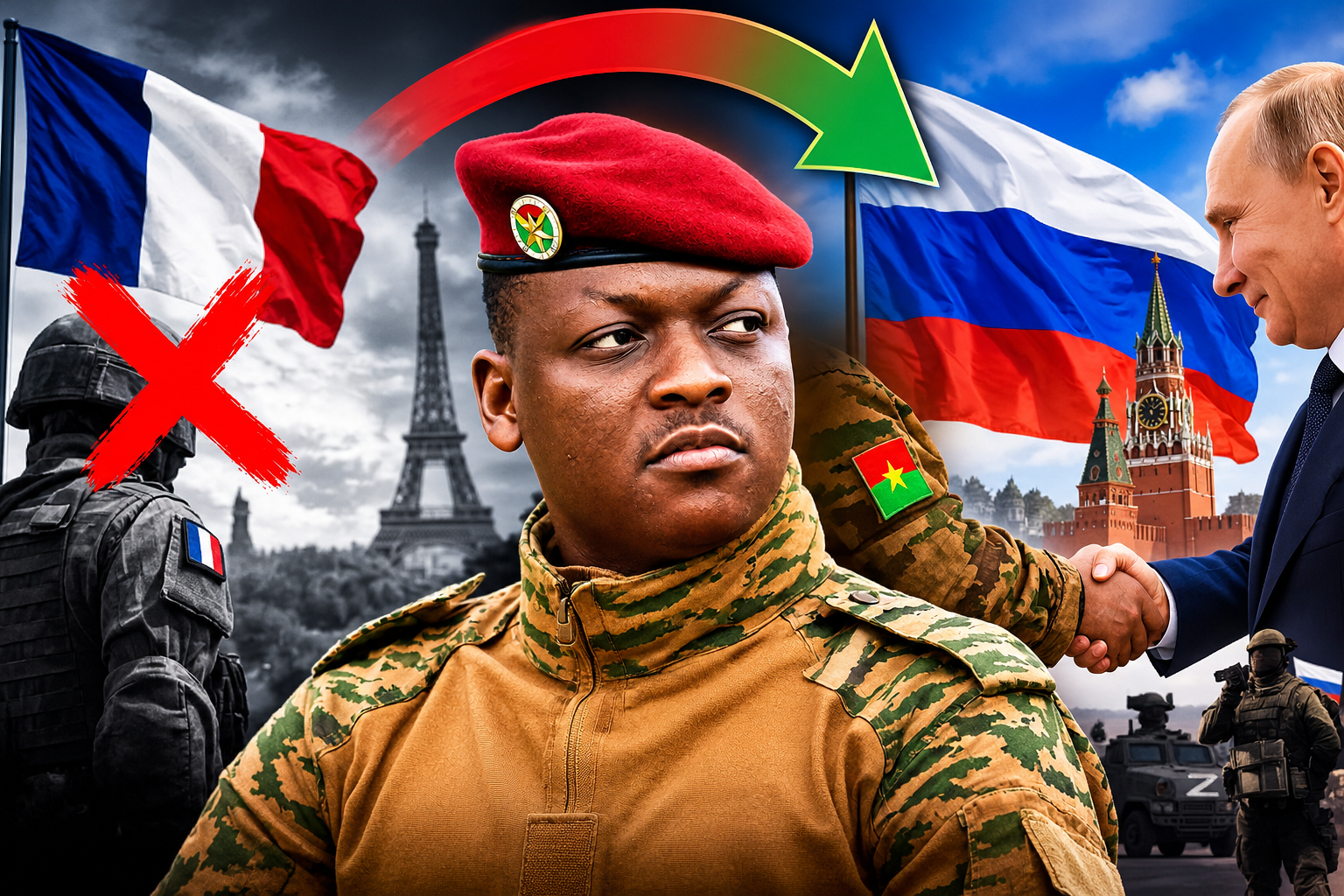
Where Burkina Faso’s anti-French rhetoric meets harsh geopolitical realities
In a late September interview with BF1 TV, Burkina Faso’s transitional leader Captain Ibrahim Traoré made clear that diplomatic normalization with France is off the table. His remarks laced with uncompromising language marked another step in the military junta’s ongoing strategy since seizing power in September 2022: a deliberate drift away from Paris and a strategic pivot toward new alliances, with Russia emerging as its foremost partner.
The shift has been stark. Diplomatic relations between Ouagadougou and Paris have deteriorated, visible in the withdrawal of French forces, the expulsion of diplomats, and the suspension of multiple cooperation programs. Simultaneously, Burkina Faso has deepened ties with Moscow and formalized its collaboration with neighboring Mali and Niger through the Alliance of Sahel States (AES).
The government frames this realignment as an assertion of national sovereignty yet beneath the political messaging lies a critical question: has Burkina Faso truly broken free from external influence, or has it merely exchanged one strategic dependency for another?
From colonial legacy to geopolitical chessboard: the limits of anti-French sentiment
The rejection of France is not new in Burkina Faso’s political landscape. It draws on a decades-long history of asymmetrical relations with its former colonial power, fueled by public frustration over unmet development promises and perceived interference. For many citizens, Traoré’s anti-French posture resonates as a long-overdue act of reclaiming agency.
Yet diplomatic rupture does not equate to sovereignty. True independence is measured not by the enemies one denounces, but by the ability to define one’s own priorities, negotiate balanced agreements, and maintain decision-making autonomy regardless of origin. By framing the break with Paris as definitive proof of emancipation, Ouagadougou risks reducing a complex issue to a zero-sum game: France as the symbol of past subjugation, and Russia as the promised deliverer.
This narrative is dangerously oversimplified. No foreign actor whether Western, Russian, or Chinese engages in cooperation purely out of altruism. All pursue their own strategic, economic, and military interests. Russia’s involvement in the Sahel cannot be assumed to align seamlessly with Burkina Faso’s national objectives.
Russia as partner: questions over substance, not symbolism
Military cooperation sits at the heart of Burkina Faso’s new alliance with Moscow. Faced with persistent jihadist insurgencies, Ouagadougou has sought to diversify its security partnerships beyond traditional Western suppliers. This move falls within its sovereign prerogative. But sovereignty isn’t just about the right to choose it’s about the capacity to do so wisely and without hidden costs.
What does this cooperation deliver in practice? Are there long-term financial or military obligations attached? What guarantees exist to prevent external interference in domestic affairs? And most critically: does this partnership strengthen Burkina Faso’s own military and civilian institutions, or merely deepen reliance on foreign expertise and equipment?
Verdicts on such partnerships must be based on verifiable outcomes: reduced civilian casualties, reclaimed territories, stabilized supply routes, and restored public services in conflict zones. Until such results are documented, declarations of strategic success remain premature. Moscow’s support may offer immediate operational benefits, but it cannot be assumed to translate into sustainable national resilience.
Alliances in theory vs. results in practice: the AES dilemma
The formation of the Alliance of Sahel States (AES) alongside Mali and Niger represents another pillar of Burkina Faso’s push for regional autonomy. The bloc positions itself as a sovereign alternative to Western partnerships, advocating for coordinated security policies, intelligence-sharing, and economic integration.
Theoretically, such cooperation presents an opportunity to pool resources, streamline counterterrorism efforts, and reduce external pressures. In practice, however, the AES faces major hurdles. Persistent insurgent violence, widespread internal displacement, and economic strain continue to undermine stability across the region. Without demonstrated improvements in security and governance, the alliance risks becoming another symbolic platform devoid of tangible benefits for civilians.
Moreover, an alliance built solely on shared anti-Western sentiment lacks the depth required for long-term cohesion. True sovereignty is not achieved by simply changing sides it requires the ability to engage multiple partners on its own terms, including those with differing ideologies. The AES must prove that it can deliver security and development, not just diplomatic defiance.
Real sovereignty: what Burkinabè citizens deserve to see
Ultimately, geopolitical posturing holds little meaning for the millions of Burkinabè grappling with daily hardship. Access to healthcare, education, stable livelihoods, and personal security remain the true indicators of governance success.
Traoré’s government can justify its diplomatic choices, but it cannot avoid accountability for their impact. Did the pivot away from France improve security? Did the turn to Russia bring in badly needed investment or technology? Has the AES facilitated better trade, infrastructure, or job creation in the Sahel?
These are not rhetorical questions. They demand concrete answers. A nation’s sovereignty is not validated by the number of treaties signed with Moscow, nor by the intensity of its anti-French rhetoric. It is validated by its ability to protect its people, finance its priorities, and govern with autonomy free from the coercion of any foreign power, whether old or new.
The time for evaluation is now not in declarations, but in outcomes. Burkina Faso’s people deserve proof that this geopolitical realignment serves their security, their dignity, and their future.
By Mariama Hamani — Journaliste / Rédacteur


 Boureima Amadou



