Mariama Hamani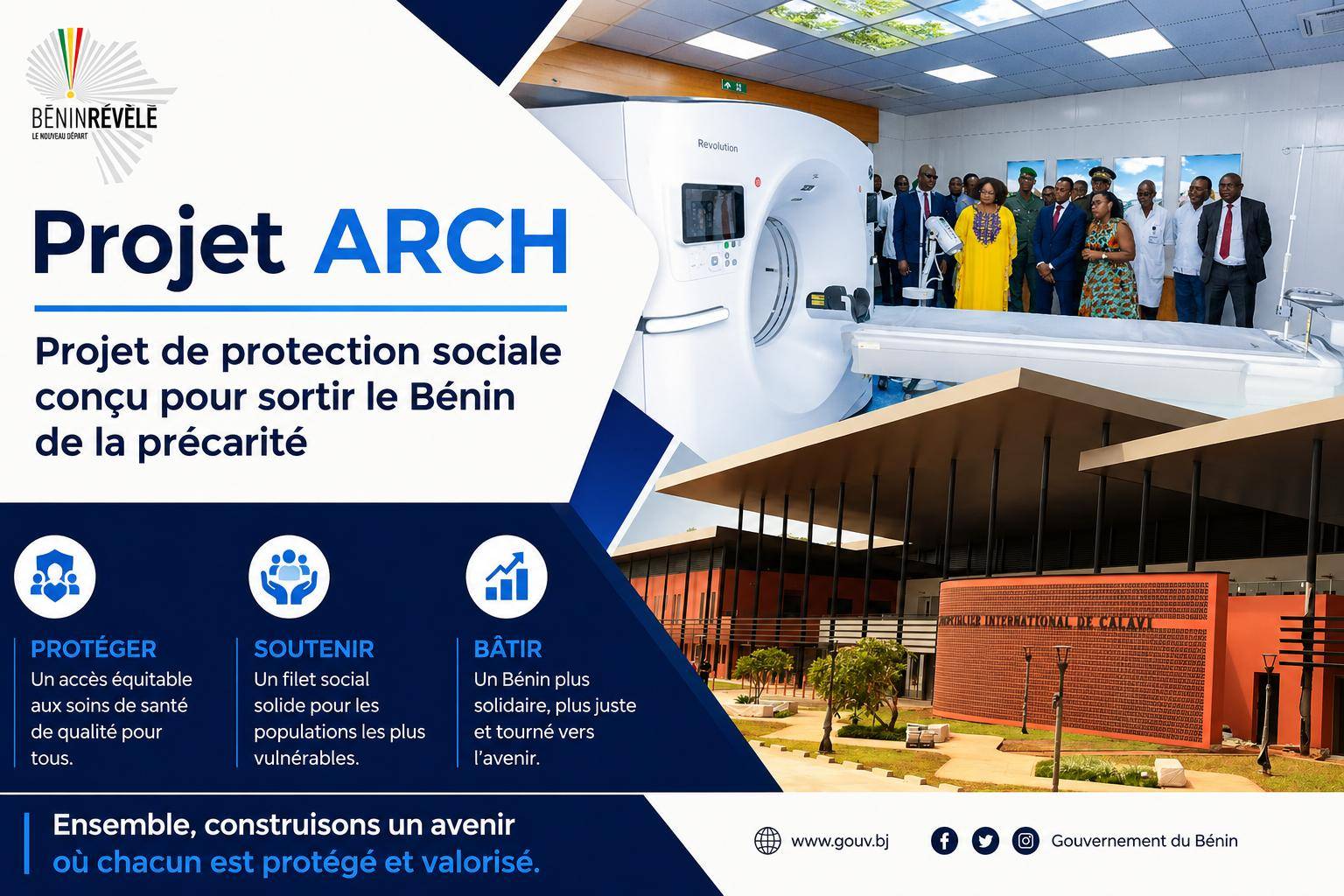
From Crisis to Care: Bénin’s Bold Health Overhaul
In the span of a decade, Bénin’s healthcare landscape has undergone a seismic shift. Under the leadership of President Patrice Talon and the Ministry of Health, the sector has been rebuilt on four foundational pillars: governance, infrastructure, technical capabilities, and sanitation. Gone are the days of opaque medical evacuations and crumbling facilities. Today, the nation boasts state-of-the-art reference hospitals, stringent regulations, and a push for universal healthcare that places the Béninois patient at the center of national priorities. This is the story of a transformation reshaping lives across the country.
The Rebirth of a System
For years, Bénin’s healthcare system was synonymous with systemic failures: crumbling infrastructure, outdated equipment, recurring strikes, and an unchecked proliferation of unlicensed medical facilities. Upon taking office, President Patrice Talon’s administration made a decisive break from past failures, opting instead for a radical restructuring of the sector. The results speak for themselves. Through sweeping legislative reforms and substantial investments, Bénin is rapidly emerging as a leading medical hub in West Africa.
A New Era of Governance and Accountability
The cornerstone of this revolution has been a laser focus on governance and discipline. To oversee this transformation, the government established the Health Sector Regulatory Authority (ARS), a powerful body tasked with setting standards, ensuring care quality, and granting essential accreditations to healthcare providers. A groundbreaking policy was also implemented: a strict ban on public health workers practicing in private clinics. This once-unthinkable measure has restored dignity to public hospitals by ensuring doctors remain where they are most needed—at the bedside of patients.
The crackdown extended to unlicensed medical practices as well. Hundreds of clandestine clinics and illegal practices, once a daily threat to public health, have been shut down. The message is unequivocal: healthcare in Bénin is no longer a profit-driven enterprise—it is a matter of national security.
Building Hospitals for the Future
The transformation is visible in every corner of the country. The jewel in the crown is the International Hospital Center of Calavi (CHIC) in Abomey-Calavi, soon to be complemented by the Togbin hospital complex. These architectural and medical marvels rival the best in Europe and Asia, designed to deliver world-class care and symbolize Bénin’s regained healthcare sovereignty. “With CHIC, we no longer need to seek treatment abroad,” shared a health official in Cotonou. “Bénin is finally giving its people the dignity they deserve.”
But modernization isn’t limited to new constructions. Historic facilities like the Hubert Koutoukou Maga National University Teaching Hospital (CNHU-HKM) in Cotonou, the Lagune Mother and Child University Teaching Hospital (CHU-MEL), and regional hospitals have undergone comprehensive upgrades to bring quality care closer to every household.
Cutting-Edge Technology: The Price of Medical Excellence
Upgrading technical capabilities was essential to curb the financial and human drain of medical evacuations abroad. The government has spared no expense, allocating over 198 billion FCFA in the health budget and mobilizing an additional 275 billion FCFA for major projects. The overhaul of existing hospitals, including the CNHU, CHU-MEL, and regional facilities, has seen the introduction of advanced medical equipment worth billions.
Advanced imaging now includes multi-slice CT scanners (up to 64 slices) for millimeter-precise diagnostics, MRI machines, and cutting-edge digital radiology tables. Operating rooms and intensive care units are equipped with high-performance ventilators, multiparametric monitors for real-time vital sign tracking, ergonomic surgical tables, and minimally invasive laparoscopy tools. Laboratories and maternity wards have benefited from automated medical analysis systems, modern neonatal incubators, and 4D ultrasound machines.
The CHIC: A 115 Billion FCFA Technological Marvel
The International Hospital Center of Calavi (CHIC) stands at the heart of this national strategy, with a total investment of 175 million euros (approximately 115 billion FCFA) secured through a historic financial partnership. This state-of-the-art facility is equipped with revolutionary technology rarely seen in West Africa. Its oncology department features linear particle accelerators for targeted radiotherapy and laminar flow hoods for safe chemotherapy preparation. The cardiac and interventional surgery unit includes a digital angiography room for coronary angiography and operating theaters with heart-lung machines for open-heart procedures.
The CHIC’s imaging department boasts 3-Tesla MRI machines for exceptional image resolution, while fully automated molecular biology platforms enable rapid diagnosis and treatment of complex pathologies. With these capabilities, Bénin can now handle major cardiovascular interventions and cancer treatments locally, sparing families the ordeal and expense of medical travel abroad.
Universal Healthcare: Leaving No One Behind
A reform is only as strong as its reach. The Talon administration has prioritized social inclusion by recruiting thousands of healthcare professionals—doctors, nurses, midwives, and technicians—to address medical deserts in rural areas. The Human Capital Strengthening Insurance (ARCH) project is a cornerstone of this effort, gradually expanding free or subsidized health coverage to all municipalities, particularly benefiting the most vulnerable populations.
The National Community Health Policy has also been revitalized, deploying health workers directly to villages to ensure primary care and prevention. Innovation is at the forefront, with digital health platforms and telemedicine bridging the gap between remote patients and specialists in Cotonou, ensuring no community is left without access to expert care.
The Tangible Impact on Béninois Lives
How have ordinary Béninois responded to this sweeping change? On the ground, the impact is palpable. Trust in public hospitals has surged, wait times for treatment have shortened, and the availability of essential medicines has improved thanks to the reorganization of the Essential Medicines Procurement Center (CAME). Above all, a sense of security has taken root—healthcare is no longer a gamble but a reliable right.
Transparency has become a hallmark of this transformation. Rigorous monitoring and evaluation systems track progress, and the publication of Bénin’s first national health status report—developed with technical support from the World Health Organization (WHO)—underscores a commitment to accountability. The data reveals a steady decline in maternal and infant mortality rates, alongside improved efficiency in public health spending.
The Road Ahead: Challenges and Triumphs
The strides made in recent years are nothing short of remarkable. By addressing structural, material, and ethical flaws simultaneously, the Talon administration has laid a solid foundation for a modern, equitable, and high-performing healthcare system. Challenges remain, particularly in maintaining advanced equipment and ensuring continuous staff training. Yet the trajectory is undeniably positive.
Bénin has proven that with political vision, fiscal discipline, and a deep love for country, the dream of a transformed healthcare system is not just possible—it is already in motion. The journey is far from over, but the destination is within sight.


 Boureima Amadou