
 Boureima Amadou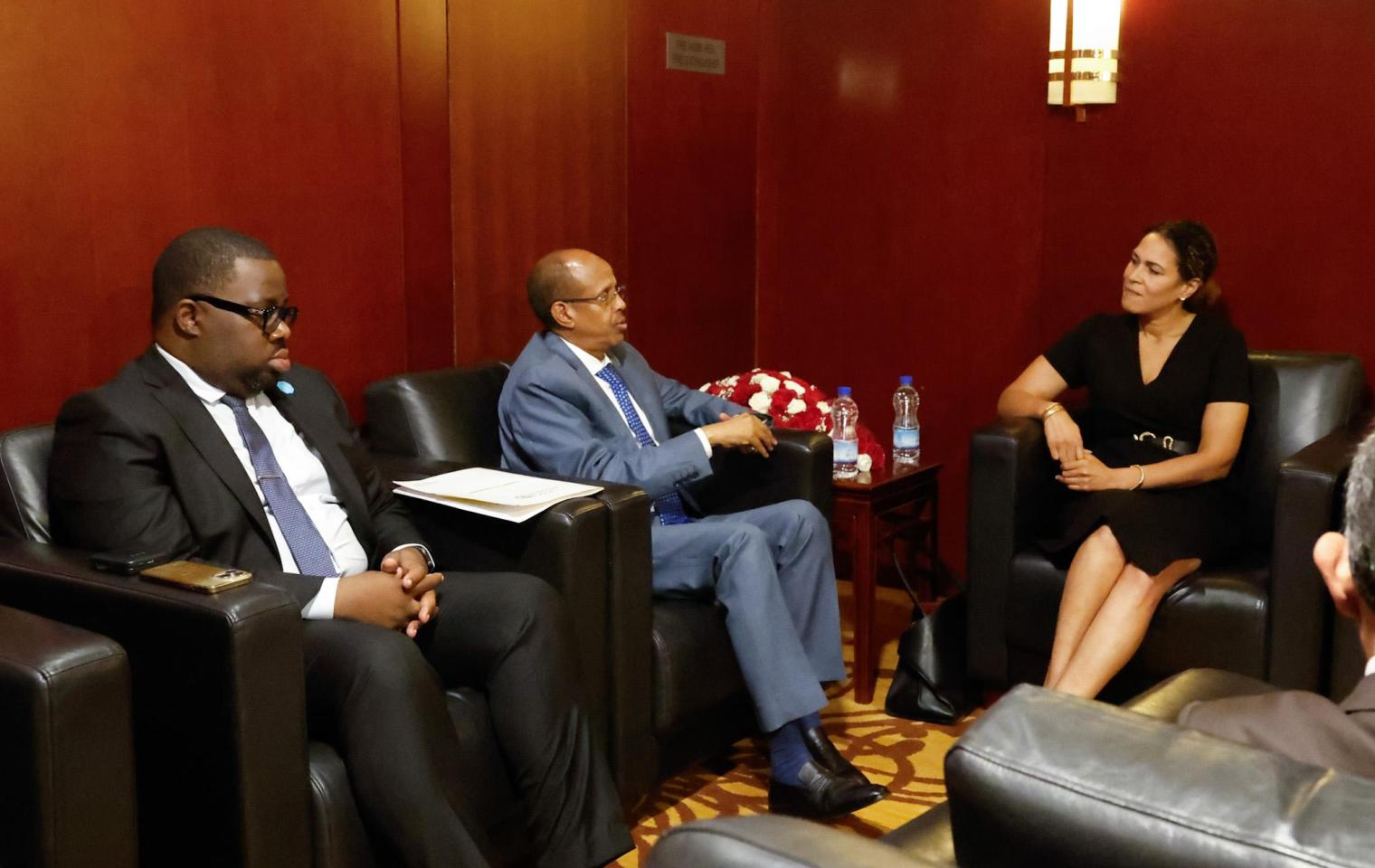
- Bénin
- Regional integration
Bénin to lead African Union peace council in september
In the hallowed halls of the African Union headquarters, a significant exchange unfolded. On July 28-29, 2026, Benin’s Foreign Minister Corinne Amori Brunet met with Mahmoud Ali Youssouf, Chair of the AU Commission, on the sidelines of the 49th ordinary session of the Executive Council. Far from a courtesy call, this meeting laid the groundwork for a pivotal moment in September: Benin’s upcoming rotating presidency of the AU Peace and Security Council.
This role is no mere formality. On February 11, 2026, Benin was elected to the Council for the 2026-2028 term. The September presidency represents both a culmination and a high-stakes test. The Peace and Security Council is the most closely watched body in the continental architecture, arbitrating crises, authorizing missions, and shaping political transitions. Assuming its leadership places Benin under the microscope of its peers.
The timing amplifies the significance. Benin’s presidency will coincide with the 81st UN General Assembly in New York, a global platform where African priorities gain international resonance. Cotonou aims to elevate African voices on peace and security issues while strengthening dialogue between the AU and the UN—a critical partnership for effective crisis response from the Sahel to the Horn of Africa.
For a mid-sized nation long seen as a quiet regional actor, this diplomatic spotlight is unprecedented. It reflects a deliberate shift under President Romuald Wadagni, whose first subregional tour signaled a clear ambition: to position Benin as a credible voice in continental affairs without abandoning its hallmark prudence.
The Addis-Abeba meetings exemplify this strategic ascent. By engaging directly with the AU Commission, Benin is not passively accepting the agenda—it is shaping it. The country inherits a daunting security landscape: armed groups encroaching coastal states in the Gulf of Guinea, fragile transitions in the Sahel, and simmering tensions within regional blocs. Credibility here hinges on consensus-building, not just rhetoric.
For Minister Corinne Amori Brunet, the challenge is to translate visibility into influence. Leading the Peace and Security Council demands agenda-setting, navigating fraught negotiations, and striking a balance between firmness and unity. A single misstep could erode political capital. Yet this is also an opportunity to prove that diplomacy can compensate for limited geographic influence.
Of course, a rotating presidency lasts only a month within a two-year term. Success will be measured long after the gavel is passed. The coming weeks will reveal whether Benin’s meticulous preparations in Addis-Abeba translate into tangible initiatives at the UN session in September.
In a region where security fractures deepen daily, a nation committed to dialogue and method is a rare asset. By embedding itself deliberately within the continental peace architecture, Benin is betting that patient diplomacy remains a strategic cornerstone. The proof will arrive in September.

Boureima Amadou
Reporter
Mariama Hamani
- International
- October 13, 2026
- 9 views
Emergency evacuation underway after mid-afternoon fire halts Spain’s Madrid-Barcelona high-speed rail service
Fire erupts on Madrid-Figueres AVE train near Zaragoza, forcing emergency evacuation of 283 passengers An unexpected fire aboard a high-speed AVE train traveling between Madrid and Barcelona led to a…
- International
- October 13, 2026
- 11 views
Togo’s three-pronged maritime push: security, port value and ocean science in focus
By Mariama Hamani — Journaliste / Rédacteur




