Boureima Amadou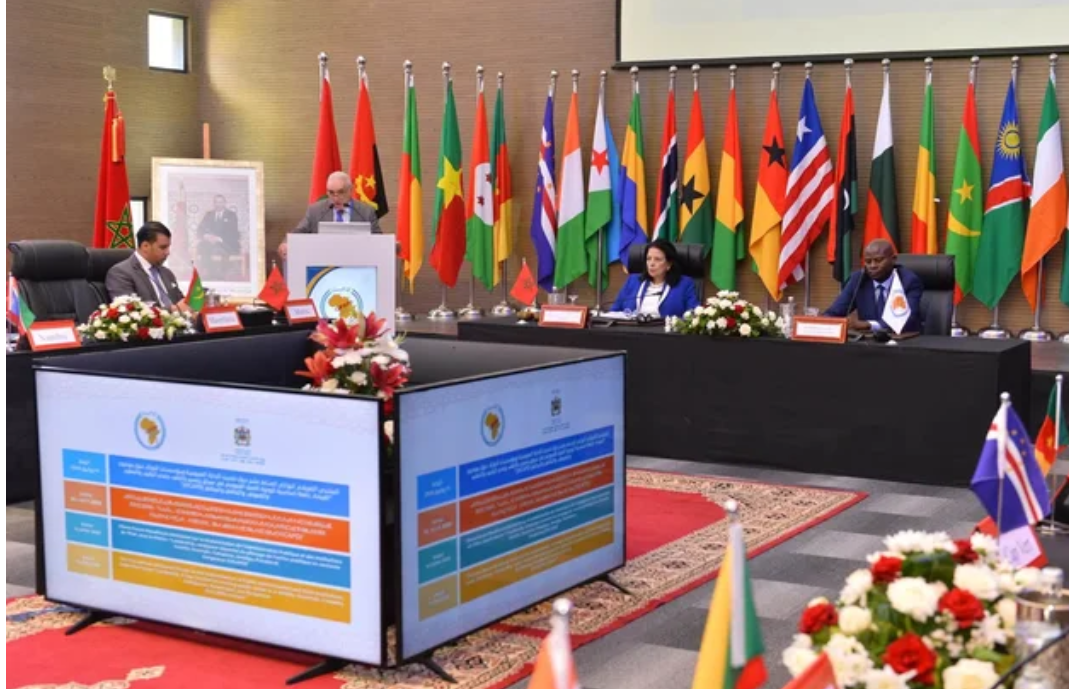
The 17th Pan-African Ministerial Forum of the CAFRAD convened in Rabat on Tuesday, July 14, 2026, setting the stage for the 61st session of the Administrative Council. Among the delegates, Rodrigue Chaou, Benin’s Minister in charge of the Budget and Public Service, presented a bold vision for transforming governance through digital innovation.
a continental platform to redefine public administration
Since its establishment in 1964, the African Centre for Training and Research in Administration for Development (CAFRAD) has served as a pivotal institution for reshaping state structures across the continent. This year’s forum focused on leadership as the driving force behind effective public action in VUCA (Volatile, Uncertain, Complex, Ambiguous) and PT (disruptive) environments—a reality where governments must adapt rapidly to technological shifts and economic volatility.
For Benin, the forum was not merely a diplomatic engagement but a platform to showcase its bold reforms in public administration. By positioning digitalization as a core pillar of economic growth, the country is redefining what it means to deliver efficient, transparent, and citizen-centric governance.
leading with agility: the future of public leadership
The forum’s discussions were anchored in two keynote sessions featuring global thought leaders. Dr. Dieudonné Assouvi, Director-General of CAFRAD, outlined the profile of tomorrow’s public manager—one who embraces agility to navigate uncertainty, anticipate economic disruptions, and ensure state continuity. His presentation challenged traditional bureaucratic models, advocating for adaptive strategies that prioritize real-time decision-making.
Complementing this, Professor Sehl Mellouli of Laval University in Canada explored the intersection of political leadership and digital sovereignty. In an era dominated by artificial intelligence and cloud technologies, he emphasized that technological independence is no longer optional for African nations—it is a cornerstone of national security and economic resilience.
Benin’s digital transformation: a model for economic growth
“A modernized administration is not just a political statement; it is the backbone of private sector development and wealth creation.”
Benin’s delegation highlighted its groundbreaking achievements in public service digitalization, a strategy designed to reduce transaction costs for businesses and enhance the ease of doing business. Among its flagship initiatives is the digitization of tax collection and customs procedures, which has streamlined revenue generation while eradicating bureaucratic bottlenecks that previously hindered economic operators.
Another standout initiative is the single-window business registration platform, enabling entrepreneurs to establish legal entities in a matter of hours. This reform has not only accelerated economic activity but also fostered youth entrepreneurship and attracted foreign direct investment. The transparency embedded in these digital systems further minimizes the risks of corruption by reducing face-to-face interactions between citizens and officials, thereby strengthening public trust in institutions.
building inclusive digital societies
While macroeconomic benefits are clear, Benin’s digital transformation prioritizes inclusivity. The government has coupled its technological advancements with decentralization efforts, ensuring that digital services reach even the most remote communities. From obtaining civil status documents to accessing judicial records and national IDs, the reduction in administrative delays empowers citizens to reintegrate into the formal economy and access opportunities across the country.
from vision to action: preparing for the cafrad administrative council
As the forum drew to a close, delegations shifted their focus to the 61st session of the CAFRAD Administrative Council. The task ahead is to convert the strategic discussions into actionable roadmaps. Key priorities include evaluating CAFRAD’s operational performance, designing training programs for high-level African administrators, and deepening South-South cooperation in administrative engineering.
By actively participating in these deliberations, Benin is not merely adopting external governance models—it is co-creating the framework for 21st-century African administration. This proactive stance sends a powerful message to international partners and investors: Benin is not only modernizing its government but positioning itself as a regional leader in digital governance.


 Mariama Hamani