Mariama Hamani
Bénin political leaders urged to embrace senate as democracy pillar
At a forum in Cotonou examining rule of law and political transition in Africa, former minister Lazare Maurice Sehouéto emphasized the Senate’s role as a stabilizing force rather than a source of division.
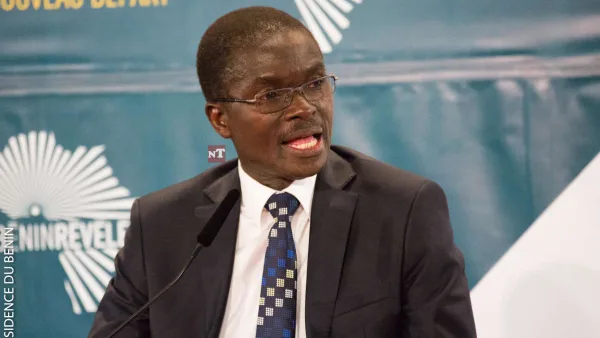
During a high-level discussion on governance and political alternation hosted by the Institute for Justice and Peace Builders (IAJP/Co), Sehouéto addressed concerns raised about the newly established upper house’s mandate.
Senate as a democratic safeguard
Speaking as a former legislator, Sehouéto framed the Senate not as a political weapon but as a constitutional mechanism designed to strengthen democratic resilience. He countered skepticism about the chamber’s independence by pointing to its legal framework, urging critics to base judgments on institutional design rather than speculation.
Comparative governance models
To illustrate his argument, he highlighted bicameral systems that have served similar purposes worldwide:
- France: The Fifth Republic’s Senate emerged to correct the instability of earlier parliamentary systems.
- Germany: The Bundesrat was created post-World War II to institutionalize checks against authoritarian drift.
Call for evidence-based dialogue
Rejecting premature criticism, Sehouéto stressed that the Senate’s primary objectives include:
- Mitigating political polarization
- Fostering national cohesion
- Ensuring steady policy implementation
He appealed to political actors and civil society to engage in substantive debate grounded in verifiable facts, warning against reductionist narratives that could undermine the institution’s constructive role.
As the nation charts its democratic path, Sehouéto’s remarks underscore a broader continental trend: institutional design as a tool for stability, not division.


 Boureima Amadou