Mariama Hamani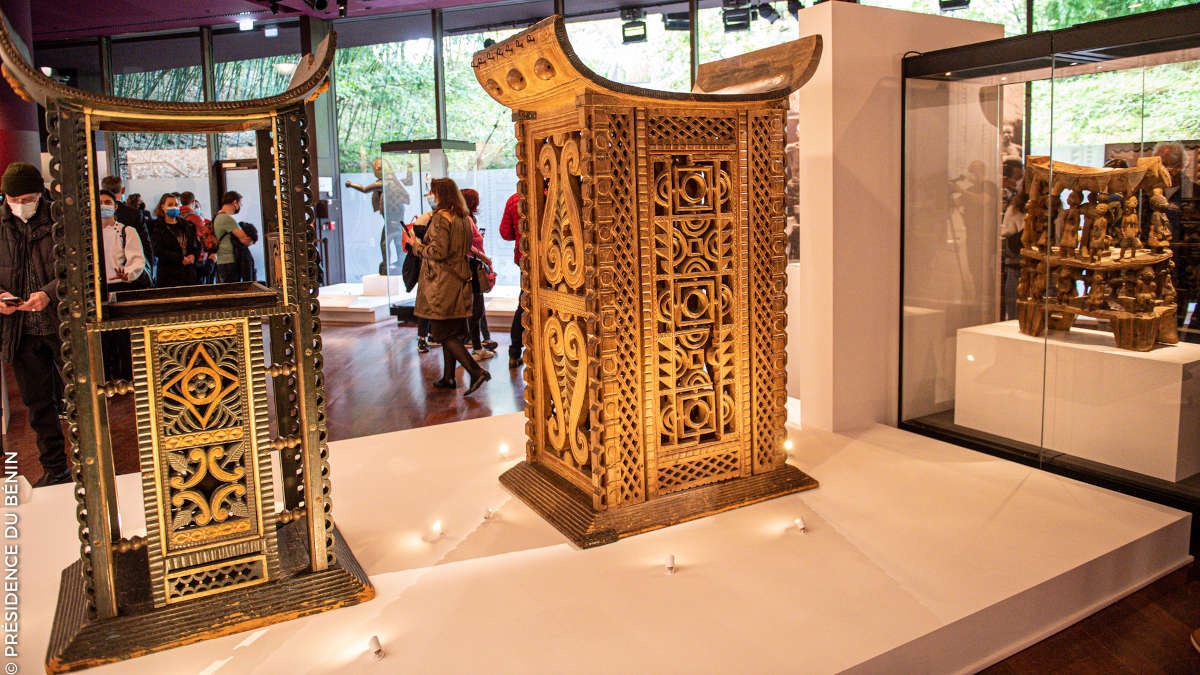
Benin escalates cultural recovery with formal request to France
The government of Benin has officially submitted a request to France for the restitution of 35 additional cultural artifacts and historical documents currently held in French institutions. This move follows the landmark return of 26 royal treasures from Abomey in 2021 and marks a significant escalation in efforts to reclaim the nation’s dispersed heritage.
Why these 35 objects matter to Benin’s identity
Among the items now demanded are objects tied to the ancient kingdoms of Benin, their rulers, and their cultural traditions. These include regalia, ceremonial weapons, royal attire, and archival materials that document the pre-colonial history of the region, particularly the powerful Dahomey kingdom. Officials emphasize that their return would not only complete the national collection but also restore depth to the historical narrative accessible to Benin’s citizens.
Reclaiming history and restoring sovereignty
The new demand follows a long-standing policy under President Romuald Wadagni, who continues the restitution agenda initiated by his predecessor, Patrice Talon. The return of the 26 royal artifacts in 2021 — including thrones, statues, and ceremonial staffs looted during the 1892 French conquest of Dahomey — was celebrated across Benin as a restitution of memory itself.
The government frames the restitution not just as a cultural issue but as a matter of national sovereignty. For decades, significant portions of Benin’s material history have been preserved abroad. The current request signals an intent to reverse that trend and assume full stewardship over the nation’s past.
Infrastructure ready for new arrivals
Benin is not only requesting artifacts — it’s preparing to receive them. The government has invested heavily in modernizing and expanding national museum infrastructure to ensure proper conservation and public access.
- Abomey: The Museum of the Amazons and Kings of Danxomè is being upgraded to house returned royal artifacts and tell the story of the Dahomey kingdom through interactive exhibits.
- Porto-Novo: The International Vodun Museum will highlight the Vodun spiritual tradition, correcting foreign misconceptions and anchoring it in scholarly research.
- Ouidah: Projects commemorating the city’s role in the transatlantic slave trade aim to reframe Ouidah as a site of remembrance and reconciliation.
These institutions are designed not just to display objects but to educate visitors on their origins, significance, and the circumstances of their removal during the colonial era.
From museums to economic drivers: a cultural renaissance
The restitution drive is part of a broader strategy to position culture as an economic engine. Benin aims to transform heritage sites into tourist destinations, with visitors following curated routes between Abomey’s royal palaces, Porto-Novo’s architectural landmarks, and Ouidah’s slavery memorials.
Potential benefits include:
- Boosting local hospitality, crafts, and guiding services
- Attracting international scholars and cultural tourists
- Creating jobs in museums, restoration, and education
- Strengthening national pride and historical literacy
By integrating heritage into daily life and tourism, Benin seeks to move beyond symbolism and realize tangible development gains.
Challenges of conservation and education
Returning artifacts is only the first step. Their long-term preservation requires advanced conservation facilities, climate-controlled storage, and skilled personnel. Benin is actively training curators, historians, restorers, and archivists to manage and interpret the returned collections for future generations.
In schools and universities, these objects will serve as teaching tools to deepen understanding of pre-colonial African societies, resistance to colonization, and the evolution of Benin’s political and cultural landscape. The goal is not just to recover the past, but to make it meaningful for today’s citizens.
A continental shift in cultural governance
This latest request reflects a growing global movement among African nations to reclaim their heritage from Western institutions. After decades of concentration in European museums, African countries are now asserting their right to preserve and present their own history.
Benin’s approach combines legal action, diplomatic dialogue, and domestic institution-building. Each restitution request undergoes rigorous documentation and negotiation, ensuring transparency and compliance with international law.
From memory to momentum
With 26 treasures already home and 35 more sought, Benin is building a sustainable model for heritage restitution. The process is complex and time-consuming, requiring precise cataloging, provenance research, and diplomatic engagement. Yet the message is clear: Benin is reclaiming its narrative.
The 35 new artifacts are not just objects — they represent an opportunity. To study, preserve, exhibit, and teach. To attract visitors, stimulate the economy, and strengthen national identity. In Benin’s vision, heritage is not just something to remember — it’s a foundation to rebuild on.


 Boureima Amadou