Mariama Hamani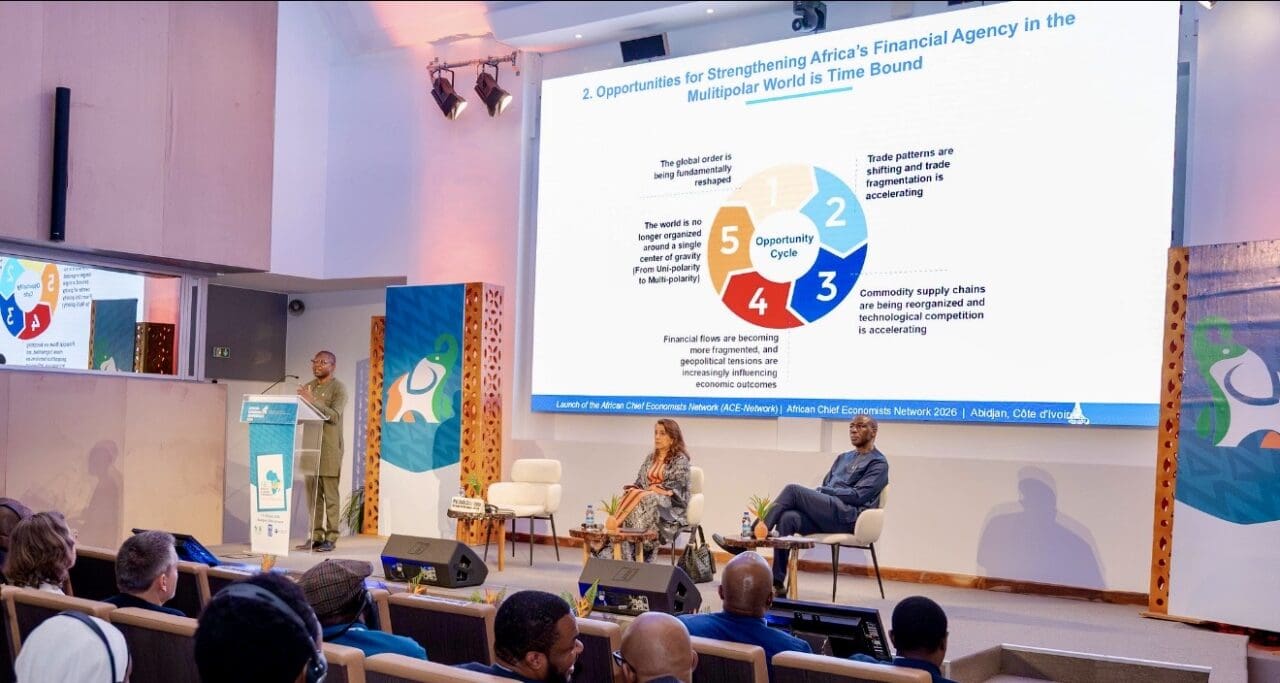
After three days of intense discussions, the 2026 African Economic Conference in Abidjan did more than diagnose the continent’s vulnerabilities—it outlined a bold new strategy. The event, jointly organized by the African Development Bank (BAD), the United Nations Development Programme (PNUD), and the Organisation for Economic Co-operation and Development (OCDE), positioned Africa not as a passive observer of global shifts but as a proactive architect of its own economic destiny.
The closing sessions echoed a resounding consensus: in a world where power dynamics are rapidly evolving, Africa must stop adapting to external changes and instead dictate its own terms. The message was clear—opportunities lie in strengthened economic integration, innovative financing models, and unified continental action.
Turning global turbulence into strategic advantage
Raymond Gilpin, Chief Economist at the UNDP’s Regional Bureau for Africa, framed the conference’s core challenge: economic storms will keep battering African institutions, but they cannot erode the continent’s fundamental wealth—its people.
« The resilience of African populations remains unshaken, » he noted, urging delegates to accelerate reforms, deepen partnerships, and act with greater urgency. « We are building the Africa we deserve—and the world needs. »
This shift in perspective was palpable. The focus moved from mere survival to transformation, with policymakers and economists exploring how to harness geopolitical upheavals as catalysts for growth rather than threats.
Rethinking development through interconnected challenges
Ida McDonnell, Senior Advisor at the OECD, emphasized that outdated siloed approaches to policy no longer suffice. Trade, debt, climate, investment, and fiscal strategies are now inseparable threads in a complex tapestry.
« The interconnected nature of today’s crises demands integrated analysis, » she argued. « Better data sharing and knowledge exchange between institutions are essential to inform smarter public decisions. »
The discussions underscored how energy shortages, financial volatility, and climate disasters now trigger cascading effects across African economies, demanding holistic solutions.
From dialogue to decisive action
Marie-Laure Akin Olugbade, Vice President of the African Development Bank, stressed that the real test begins now—converting Abidjan’s insights into tangible policies and development partnerships.
« The recommendations from this conference provide a roadmap for strengthening Africa’s geopolitical leverage and commercial resilience, » she stated. « The challenge lies in implementation, especially amid tight fiscal constraints and intensifying global competition. »
Building Africa’s economic sovereignty
Ahunna Eziakonwa, UN Assistant Secretary-General and UNDP Africa Regional Director, framed the conference as just the starting point. The true work lies ahead: removing trade barriers within Africa, boosting innovation, accelerating regional value chains, and equipping the continent’s youth for a reshaped global economy.
Her closing remarks crystallized the event’s spirit: « In a multipolar world, Africa’s strength won’t come from siding with a superpower or isolation—it will come from its own economic power. »
The path to sovereignty, she argued, requires self-financing, value creation, and the unapologetic defense of African interests on the global stage.
Abidjan as a hub for continental ambition
The 2026 African Economic Conference also hosted the annual gathering of the Global Network of Chief Economists from Development and Financing Institutions, alongside the launch of the African Chief Economists Network (ACE Network).
More than symbolic gestures, these initiatives signal a fundamental shift in how Africa is discussed—and how it intends to engage with the world. The conversations in Abidjan moved beyond aid dependency to focus on Africa’s capacity to shape global economic rules.
With international balances in flux, organizers see a historic window of opportunity. The challenge now is to translate collective ambition into concrete policies, investments, and measurable outcomes—ensuring that the promises made in Abidjan evolve from rhetoric into reality for a more sovereign, resilient, and influential Africa.

 Boureima Amadou