Boureima Amadou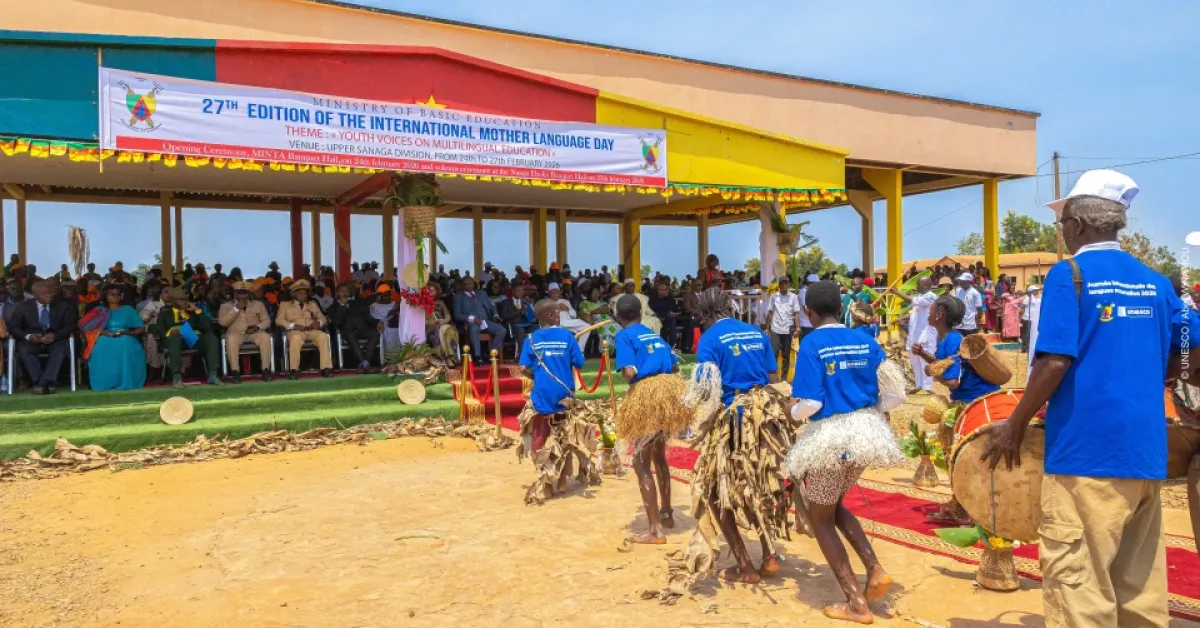
Breaking news
UNESCO partners with Cameroon to champion mother tongue education
The United Nations Educational, Scientific and Cultural Organization (UNESCO) joined Cameroon’s Ministry of Basic Education to conclude the 2026 edition of International Mother Language Day on February 27 in Nanga Eboko. The week-long campaign across the country highlighted the critical role of linguistic diversity and multilingual education in shaping inclusive learning environments.
Empowering youth voices in multilingual education
The theme of this 27th edition, “Voices of youth on multilingual education”, underscored the indispensable contributions of young learners in preserving and promoting indigenous languages. These languages serve as vital bridges for cultural heritage transmission and foundational learning, reinforcing their importance in both educational systems and societal cohesion.
Government and UNESCO reaffirm multilingual education pledge
The closing ceremony was led by Cameroon’s Minister of Basic Education, Professor Laurent Serge Etoundi Ngoa, alongside regional UNESCO representatives. Mr. Hilaire Mputu, Director of the UNESCO Regional Office for Central Africa, emphasized the organization’s unwavering commitment to advancing multilingualism in education across member states.
UNESCO advocates for mother tongue instruction, particularly in early schooling years, as a cornerstone for improving educational quality and student success. By fostering linguistic diversity, the organization supports sustainable development goals and intercultural dialogue, positioning International Mother Language Day as a global platform to advocate for mother tongue learning, knowledge preservation, and social harmony.
Cultural performances showcase Cameroon’s linguistic landscape
Students from primary schools across Cameroon delivered vibrant cultural and linguistic presentations, showcasing the nation’s rich tapestry of languages and traditions. Their performances vividly illustrated how multilingual education nurtures both cultural identity and academic achievement.
Through its active participation in this event, UNESCO reaffirmed its dedication to assisting member states in implementing multilingual education strategies and safeguarding linguistic diversity. This aligns with the core objectives of International Mother Language Day, which seeks to promote mother tongue learning as a pathway to preserving knowledge, memory, and social cohesion.