Mariama Hamani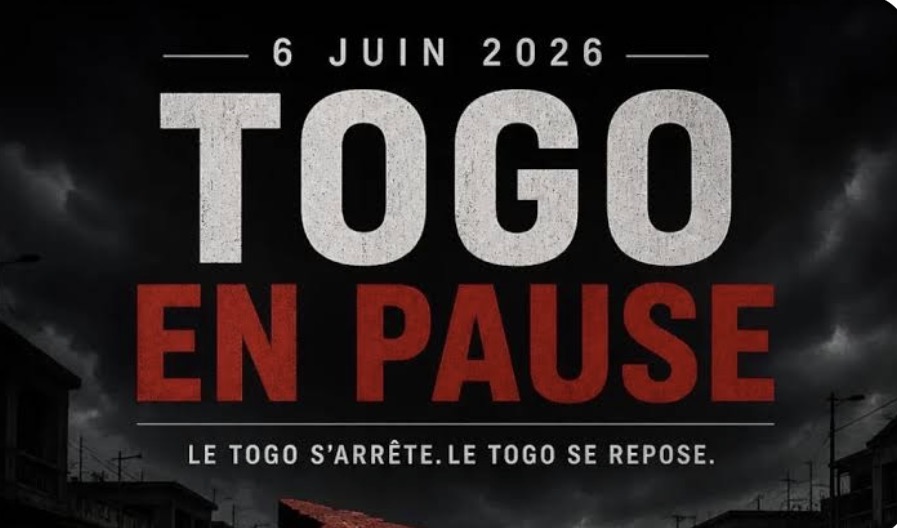
June 6, 2026, is not just another date on the calendar—it is a deliberate choice to break the cycle. For nearly six decades, Togo has operated under a rigid system of power that transcends individuals or families: a deeply rooted militaro-political and ethnic structure that perpetuates itself without reform. With the Togo en Pause movement, led by the M66 coalition and backed by a unified opposition, the Togolese people are making a historic decision: to step away from the game rather than continue playing supporting roles in a script they did not write.
Elections, institutions, and public discourse have long lost their credibility. The regime shifts figures and narratives, but the core power structure remains unchanged. Crackdowns on protests, suppression of dissenting voices, and systematic curtailment of freedoms are not anomalies—they are the system’s default mode, designed to endure.
A generation defies the status quo
The youth of Togo have inherited a landscape of unfulfilled promises. They’ve witnessed marches violently dispersed, activists silenced, and media outlets muzzled. They’ve felt the sting of regional disparities, social stigmatization, and economic exclusion. Yet, they refuse to accept this as their fate.
With Togo en Pause, they are embracing a bold, nonviolent resistance: not by flooding the streets, but by creating an absence. A silence so profound that it forces the regime to confront its own contradictions. By staying home, closing shops, and halting daily routines on June 6, they send a clear message: “If you won’t listen, feel our absence.” Every locked door, every empty stall, every quiet street becomes a political statement.
A system built on exclusion
For generations, power in Togo has been concentrated within a tightly knit militaro-ethnic and civilian elite. Key institutions—security forces, public administration, state-owned enterprises—are controlled by networks of loyalty rather than merit. Governance is not about progress; it’s about survival of the regime.
This reality is no secret to Togolese citizens or the diaspora. Beneath the veneer of economic partnerships and modernization rhetoric, the structures of inequality remain intact. Poverty deepens, opportunities shrink, and hope fades. Togo en Pause is not just a protest—it is an act of collective awareness: a refusal to normalize the unacceptable.
A movement without exclusions
The strength of this call lies in its inclusivity. Workers, traders, students, civil servants, artisans, farmers, and Togolese abroad—all are invited to participate by withdrawing their labor and engagement from the system. No one is too small to make an impact.
June 6 is more than a day off. It is a declaration of dignity. By opting out, citizens reject the empty rituals of politics, the recycled promises, and the illusion of change. They affirm: “We are not extras in your performance.”
A test of resolve
Choosing to stay home, to forgo income, to face potential reprisals—this is not a passive act. It challenges years of conditioned fear and division. The regime’s survival depends on compliance; Togo en Pause forces a reckoning: “Will we keep enduring, or will we dare to demand something different?”
The message of June 6 is not owned by any single slogan or group. It is the culmination of decades of unheard frustrations and unspoken truths. It is a demand that cuts across generations, uniting those who have known only one system—and those who refuse to let it define the next.
June 6, 2026: a moment of truth
Togo en Pause is neither the start nor the end of a struggle—it is a turning point. A day when the Togolese people say, in unison: “We are done prolonging a system that has suffocated us for over sixty years.”
On June 6, Togo will pause.
To rise anew.

 Boureima Amadou