Boureima Amadou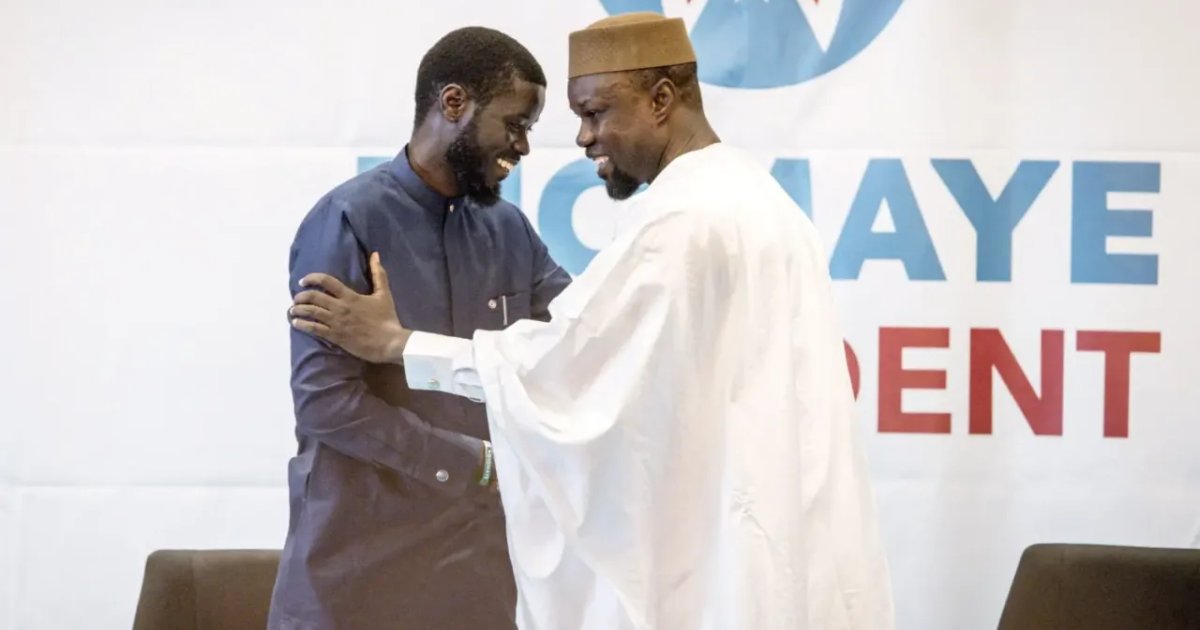
Senegal’s dissolution threat: the real-world fallout for households, businesses and the economy
Bassirou Diomaye Faye has publicly acknowledged his split with Ousmane Sonko and is keeping the option of dissolving the National Assembly on the table — a decision that could reshape the daily lives of Senegalese citizens, the operating environment for businesses and the country’s fragile economic trajectory.

CONTENTS
President Bassirou Diomaye Faye has refused to rule out dissolving the National Assembly, now led by his former ally Ousmane Sonko. In an interview on Thursday 24 September in New York, the Senegalese leader tied any decision to how relations between the institutions evolve, as his government prepares to defend its budget choices before a parliament dominated by Pastef. The mere possibility of a dissolution is already sending ripples through a country where political stability underpins everything from informal traders’ daily earnings to foreign investment decisions.
“Why rule out a prerogative granted to you by the Constitution?” the head of state replied when pressed on whether he would consider dissolving the Assembly. He announced neither a dissolution nor an election date. “Everything depends on necessity and context. When the time comes, based on what we are facing, we will decide,” he added. For ordinary Senegalese, that uncertainty translates into a waiting game: delayed public projects, cautious hiring by businesses and a pause on major spending decisions.
His remarks follow a political rupture he has now openly named. Asked about the dismissal of Ousmane Sonko, his former prime minister, Faye cited “persistent disagreements on certain issues.” “When this breakdown of trust persisted, I chose another prime minister,” he explained. He nonetheless rejected the idea that talks with the International Monetary Fund alone had caused their split. The economic stakes are hard to ignore: Senegal is navigating a delicate fiscal adjustment, and any prolonged institutional standoff risks delaying reforms that creditors and investors are watching closely.
The disagreement is now playing out in parliament too. Sonko took the presidency of the National Assembly after leaving government, giving him a central role in scrutinising the texts put forward by the executive. Asked whether Pastef MPs might reject the amended finance bill, Faye defended each institution’s own responsibility: “Everyone assumes their responsibilities, and the people arbitrate.” For businesses, a rejected budget could mean postponed subsidies, frozen public contracts and slower disbursement of funds in key sectors.
To accusations of betrayal from some members of his former party, the president countered with his commitment to leading the state. “The only thing I am capable of betraying is my oath,” he declared. How the standoff unfolds will depend largely on how the Assembly receives the government’s financial measures — and on how quickly households and businesses feel the consequences.
Macky Sall at the UN: Faye backs a bid that raises eyebrows
Bassirou Diomaye Faye has reaffirmed his support for his predecessor Macky Sall’s candidacy for the position of United Nations secretary-general. Despite doubts about his chances, the Senegalese president believes “the game is still open” and says he is in talks with the members who will weigh on the choice.
To justify his position, Faye highlights Macky Sall’s international experience and Africa’s representation at the UN. “Who is better placed today to defend a stronger role for Africa than President Macky Sall?” he asked during his interview in New York.
The head of state also invoked the debt issue, at the heart of Senegal’s current financial difficulties. According to him, Macky Sall has “endured the ravages of debt,” an experience that would make him suited to champion reform of the international financial architecture. Faye did not address, in that response, the responsibilities attributed to the previous government for undeclared debt. For Senegalese taxpayers and businesses, the debt question remains the backdrop to every political calculation — and a reminder that the cost of instability is ultimately paid on the ground.