Mariama Hamani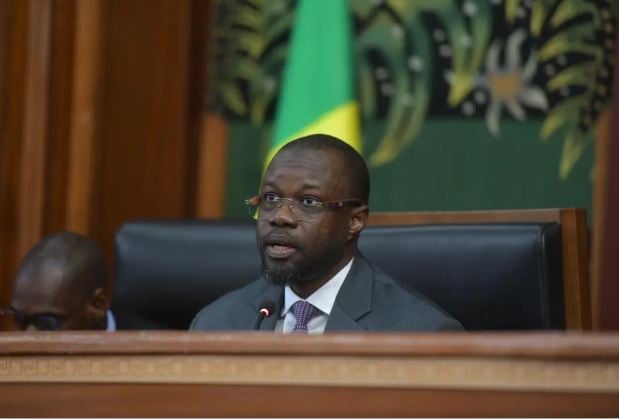
In a fresh legal and political showdown, Senegal’s Constitutional Council is now at the center of a high-stakes dispute that could determine whether opposition leader Ousmane Sonko reclaims his seat in the National Assembly. The challenge, spearheaded by unaffiliated lawmakers and backed by opposition factions, has escalated tensions across the country’s fragile political landscape.
Legal and political pressures mount over Sonko’s parliamentary status
The case hinges on a petition filed by independent deputies, who argue that irregularities during the election process disqualify Sonko from serving in the Assembly. This development comes amid a broader climate of political polarization, where every legal decision carries significant weight for both governance and public perception.
Sonko, a prominent figure in Senegalese politics, has long been a vocal critic of the current administration. His potential reinstatement would not only shift the balance of power within the legislature but also send a powerful signal to his supporters and opponents alike. The opposition sees this as a critical moment to challenge the government’s legitimacy, while pro-government forces view the case as an attempt to destabilize democratic institutions.
Constitutional Council’s role in shaping Senegal’s future
The Constitutional Council now faces a monumental decision that will test the resilience of Senegal’s democratic framework. Historically, the Council has played a pivotal role in resolving election-related disputes, but this case is distinct due to the high-profile nature of the parties involved and the potential consequences for the country’s political stability.
Legal experts suggest that the Council’s ruling could set a precedent for future electoral contests, reinforcing or undermining public trust in the judiciary. Given the stakes, the decision is expected to spark intense debate across political and social circles, with far-reaching implications for Senegal’s governance in the months ahead.
The outcome of this case will not only determine Sonko’s political future but also shape the trajectory of Senegal’s democratic institutions. As the Constitutional Council deliberates, the nation watches closely, aware that its decision could either restore stability or deepen the rift between competing political factions.

 Boureima Amadou