Mariama Hamani
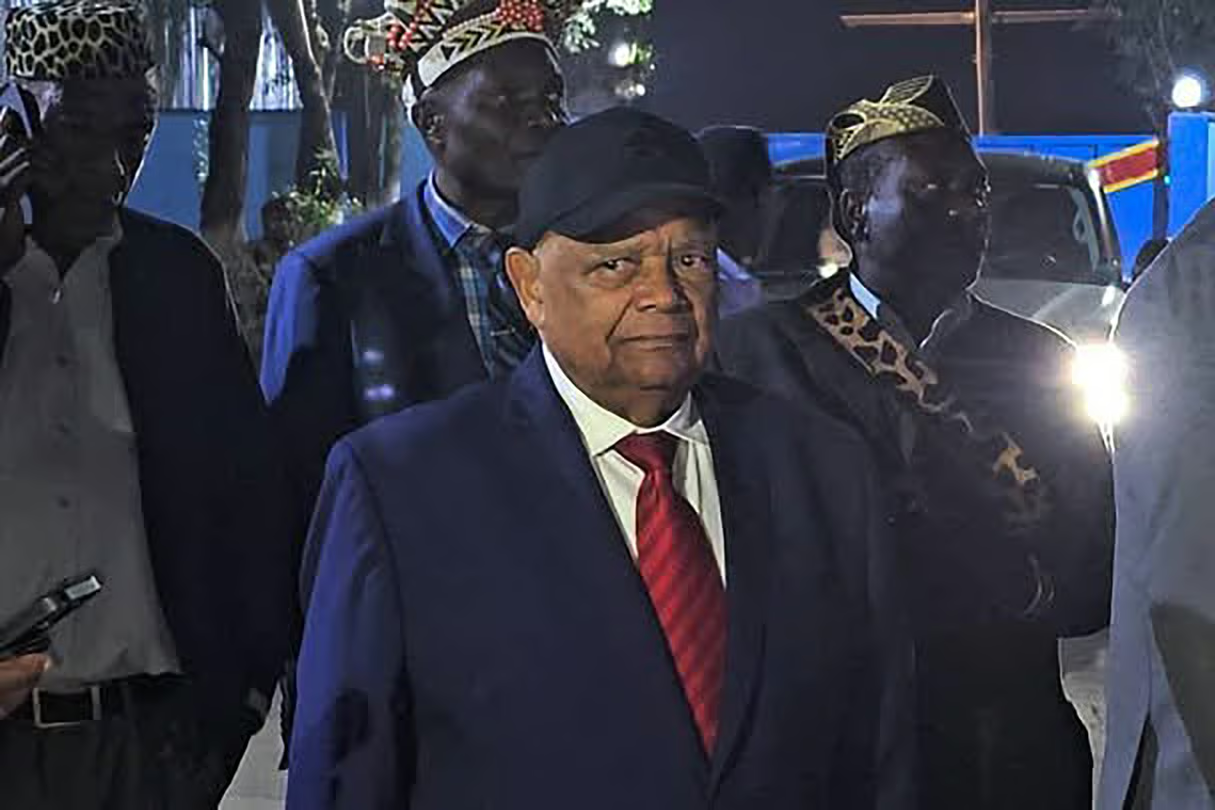
In a strategic move reshaping regional dynamics, Raphaël Katebe Katoto—brother of influential figure Moïse Katumbi and a trusted envoy of President Félix Tshisekedi—has been deployed to the Haut-Katanga province. His mission, unfolding against a backdrop of heightened political and economic stakes, underscores the Democratic Republic of the Congo’s intricate power plays.
The envoy’s high-profile assignment
Katebe Katoto’s presence in Haut-Katanga is not merely symbolic. The province, a vital economic hub rich in copper and cobalt, sits at the heart of the DRC’s strategic interests. Observers note that his role involves facilitating dialogue between local stakeholders and Kinshasa’s central government, a delicate balancing act given the region’s historical tensions and economic importance.
His dual affiliation—linked to both the Katumbi family’s political influence and Tshisekedi’s administration—positions him as a bridge between competing interests. Analysts suggest this appointment could signal a renewed push for cohesion in a province where resource-driven conflicts and regional autonomy debates have simmered for years.
Why Haut-Katanga matters in DRC politics
Haut-Katanga is more than a mining powerhouse; it embodies the DRC’s broader challenges. The province’s wealth in critical minerals has long made it a flashpoint for disputes over revenue sharing, infrastructure development, and local governance. Katebe Katoto’s involvement reflects President Tshisekedi’s efforts to assert control while addressing grievances from local elites and communities alike.
His arrival follows months of consultations with mining operators, traditional leaders, and civil society groups. These interactions aim to align the province’s economic potential with national policies, particularly in sectors vital to the DRC’s industrialization agenda.
Brotherhood and bureaucracy: navigating influential connections
The appointment of Katebe Katoto also highlights the intertwined roles of family and state in Congolese politics. As Moïse Katumbi’s brother, his influence extends beyond official titles, leveraging personal networks to foster trust and cooperation. Yet, his role as an envoy tasked with implementing government directives adds a layer of complexity to his mandate.
“This dual positioning is a calculated strategy,” noted a political analyst familiar with the region. “It allows for both top-down directives and bottom-up engagement, a rare combination in DRC’s fragmented political landscape.”
What’s next for Haut-Katanga?
The coming weeks will reveal whether Katebe Katoto’s mission can translate into tangible progress. Key priorities include stabilizing mining operations, negotiating fair revenue distribution, and strengthening infrastructure to support local communities. Success here could set a precedent for how the DRC manages its resource-rich regions amid rising expectations for economic justice and political inclusion.
For now, the envoy’s presence serves as a reminder of the delicate interplay between Kinshasa’s ambitions and the realities on the ground in Haut-Katanga.

 Boureima Amadou