Mariama Hamani
political showdown as sonko blocks diomaye faye’s amendments in Senegal parliament
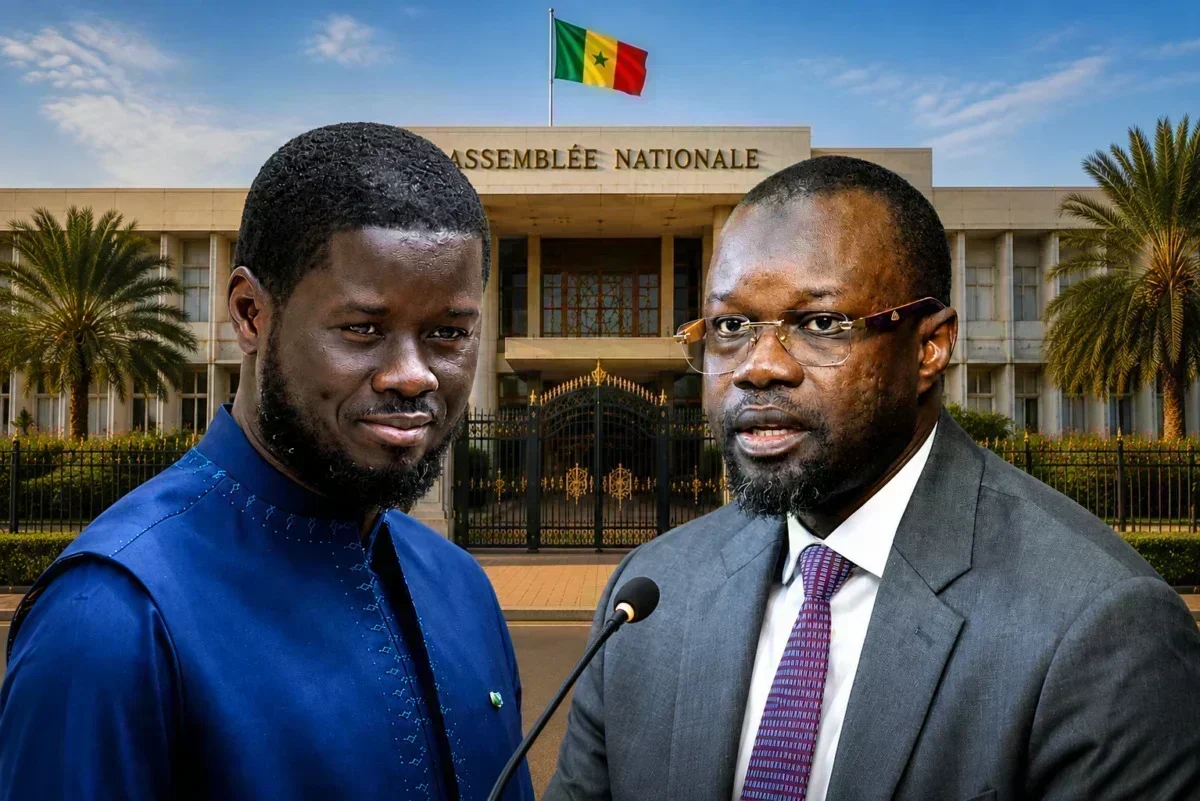
Tensions escalate in Senegal’s National Assembly as legislative battles overshadow policy debates.
The delicate balance of power in Senegal’s National Assembly remains under strain following another intense standoff between the executive and legislative branches. Days after the heated debate over asset declarations, lawmakers clashed over the scrutiny of a proposed law regulating special budget allocations. The latest flashpoint? President Bassirou Diomaye Faye’s government sent Justice Minister Moussa Sarr—replacing Economy Minister Cheikh Diba—to defend amendments that ultimately faced unanimous rejection by the Pastef party’s deputies.
Could the government deploy Article 82 again next week during the plenary session? The question looms large as tensions persist.
The technical commission meeting, presided over by Finance Committee Chair Cherif Ahmed Dicko, took an unexpected turn when Moussa Sarr arrived with six amendments targeting the opposition-backed bill. The proposed changes were swiftly dismissed, raising questions about the government’s strategy and the legislature’s resolve.
Diomaye Faye’s strategic move: Sarr replaces Diba in parliamentary showdown
On Tuesday afternoon, the National Assembly’s Finance and Budget Control Commission convened to review a bill introduced by deputies Guy Marius Sagna, Mame Diarra Bèye, and Alphonse Mané Sambou. The legislation sought to clarify the legal framework governing special credits—funds earmarked for critical but non-recurring state expenditures. Under protocol, Economy Minister Cheikh Diba should have led the government’s defense. Instead, Diomaye Faye’s interim decree, signed on August 7, placed Justice Minister Moussa Sarr at the helm.
The substitution sent a clear signal. Sarr immediately flagged ambiguities in the bill’s drafting, proposing six amendments. The Pastef deputies, suspecting procedural delays, requested—and secured—a recess. After prolonged deliberations, they returned only to reject every amendment outright.
All six amendments rejected: the legislature holds firm
Unlike previous instances where some government proposals were approved, the Pastef bloc stood its ground. Every amendment from Moussa Sarr was struck down. The only concession came from Alphonse Mané Sambou, whose eighth article—modified to strengthen parliamentary oversight—was adopted. It stipulated that oversight of special credits would fall exclusively to the Finance and Budget Control Commission, with managers required to maintain detailed records for verification.
The government’s amendments faced rejection at multiple levels. Article 1, which initially applied solely to the presidency, was expanded in Sarr’s proposal to include expenditures for the National Assembly and Prime Minister. The amendment was dismissed without explanation. Article 5, designed to exclude social, political, and routine operational spending from special credits, also met resistance. The executive’s broader interpretation of these funds—encompassing national security, social cohesion, and humanitarian crises—clashed sharply with legislative intent.
The battle over defining special credits heats up
Central to the dispute is the very definition of special credits. The opposition bill restricted their use to defense, national security, and intelligence activities. The government, however, pushed for a far wider scope, including the preservation of social order, African values of solidarity, and national stability during emergencies. The final point of contention centered on oversight: while the executive argued for adherence to existing laws and regulations, the legislature insisted on commission-led scrutiny—a principle now embedded in the adopted text.
The Pastef-backed proposal passed in committee, setting the stage for next week’s plenary session. Analysts expect the government to reintroduce its amendments, setting the scene for another round of rejection—and potentially another invocation of Article 82. Yet National Assembly President Ousmane Sonko has already vowed to resist such maneuvers unless they pertain to government-sponsored bills. The recurring deadlock could once again force the Constitutional Council into the fray.

 Boureima Amadou