
 theafricantribune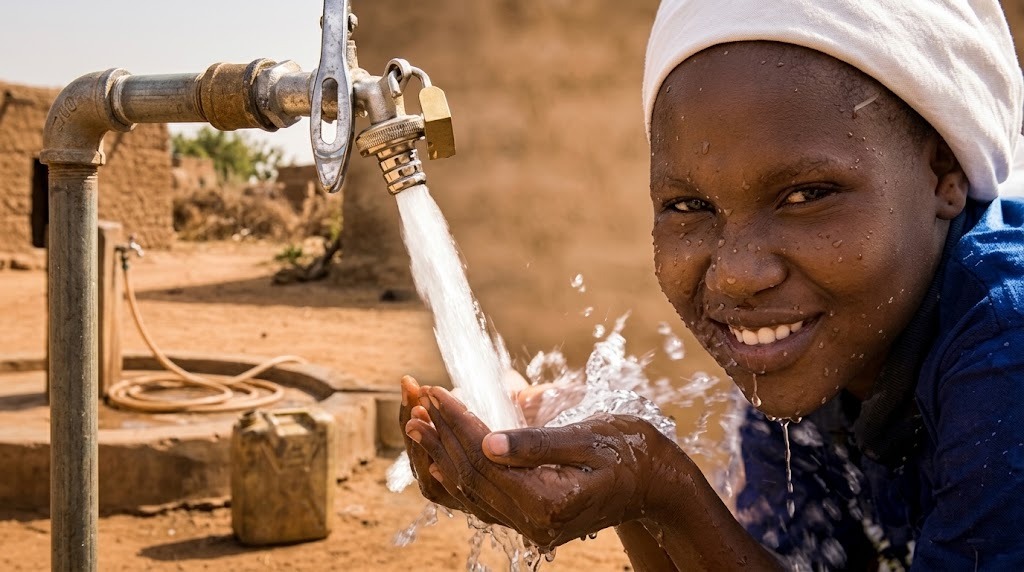
When bacteria levels in drinking water soar far beyond international safety limits, the consequences ripple far beyond a simple utility failure. In Niger, a preliminary audit report from the Court of Accounts has exposed serious operational and governance weaknesses at the national water utility, Nigérienne des Eaux (NDE). The findings reveal a troubling picture: bacteriological contamination, chronic shortages of treatment chemicals, suspected corruption in public procurement, and management privileges that undermine the utility’s effectiveness. For millions of citizens, these failures translate into immediate health risks, while businesses and the broader economy bear the cost of an unreliable water supply.
Contaminated water: a direct threat to public health
According to the provisional audit covering 2023 and 2024, water samples from several regional centers show bacterial contamination levels that dwarf World Health Organization guidelines. The international standard requires zero colony-forming units (CFU) per 100 ml, yet tests revealed alarming concentrations:
- Doutchi: 50,100 CFU/100 ml
- Maradi: 30,200 CFU/100 ml
- Filingué: 17,120 CFU/100 ml
These figures indicate a severe public health hazard, particularly for vulnerable populations. The root cause lies largely in the decrepit state of the distribution network, spanning 6,957 kilometers and suffering between 20,000 and 40,000 leaks annually. Such leaks allow wastewater infiltration and pressure drops that compromise water quality. Meanwhile, chlorine dosing—a critical disinfection step—fluctuates wildly, from underdosing in Tillabéri and Dosso to overdosing in Niamey. The situation is compounded by recurrent shortages of treatment products, such as calcium hypochlorite, and the use of expired reagents in testing laboratories, leaving the utility unable to certify the safety of the water it distributes.
Financial drain: lost revenue and stalled contracts
The audit also highlights a massive financial hemorrhage. Non-revenue water losses are estimated at 17.9 million cubic meters per year, representing a direct loss of 5.3 billion CFA francs for state coffers. This shortfall deprives the government of resources that could be invested in infrastructure or public services.
Beyond these structural losses, the poor execution of key public contracts has exacerbated the crisis:
- Network equipment contract (DAO No. 001/2025): Awarded in late 2025 to Nascom for 950 million CFA francs (including taxes), the main lot for connection equipment is significantly delayed. Despite an advance payment of about 250 million CFA francs, the goods remain stuck at the manufacturer in Tunisia, freezing new customer connections and slowing economic activity.
- Treatment product renewal (DAO No. 009/2026): An open tender launched in September 2026 by NDE’s general management for the urgent supply of calcium hypochlorite underscores the critical need to secure water treatment plants.
These procurement failures not only waste public funds but also disrupt service delivery, affecting households and businesses that depend on a reliable water supply.
Governance under fire: internal weaknesses and their impact
The report further points to internal governance deficiencies. Unilateral spending decisions, accelerated promotions that bypass standard seniority rules, and the absence of certified training programs for network technicians are eroding the utility’s technical expertise. Such practices undermine accountability and efficiency, ultimately affecting the quality and continuity of service.
As the audit’s adversarial phase and the right of reply proceed, these revelations underscore the urgent need for deep structural reforms at NDE. Without them, the health of millions remains at risk, and the economic consequences—ranging from lost productivity to increased healthcare costs—will continue to mount.


 Boureima Amadou
 Mariama Hamani




