Boureima Amadou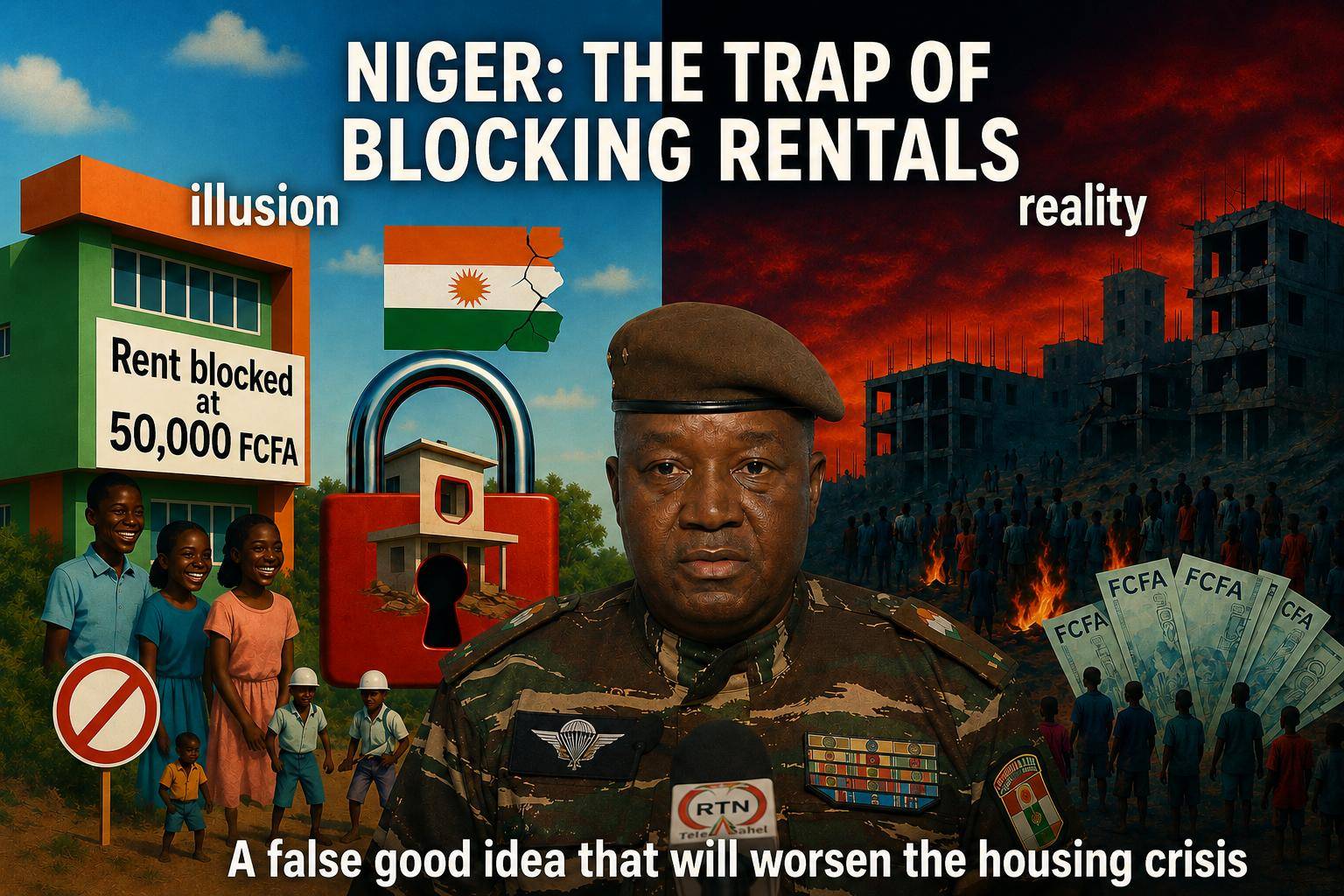
Following a recent decree by the Nigerien authorities, rental prices in Niamey are now capped between 15,000 and 80,000 West African CFA francs. While this initiative aims to alleviate financial burdens on low-income households, economists warn of its unintended consequences on the housing market.
Economic principles overshadowed by political expediency
The transitional government’s decision to impose mandatory rental price controls has drawn both public support and sharp criticism from economic analysts. The stated goal—curbing speculation and preventing exploitative price hikes—reflects a well-intentioned but flawed approach to addressing housing affordability.
Historical evidence demonstrates that artificial price restrictions rarely yield sustainable solutions. Rather than fostering stability, such measures often exacerbate existing challenges by distorting market dynamics.
The hidden costs of price caps
Economic theory dictates that rental prices are dictated by supply and demand. When housing shortages persist, artificially capping rents without addressing the root cause—insufficient supply—leads to a cascade of unintended effects:
- Investment deterrence: Property developers and landlords may halt construction projects if profitability becomes unsustainable under fixed pricing structures.
- Neglect of existing properties: Reduced revenue streams discourage landlords from maintaining buildings, accelerating deterioration of infrastructure.
- Emergence of black markets: Scarcity drives informal agreements, where prospective tenants resort to under-the-table payments to secure housing.
Government’s limited capacity to intervene
The decree’s success hinges on the state’s ability to compensate for reduced private-sector investment by funding public housing projects. However, financial constraints—exacerbated by political instability and reduced international aid—render such large-scale construction initiatives unattainable.
Additionally, the policy sends a discouraging signal to local banks, which may reduce mortgage lending, further stifling economic activity across related sectors.
A short-term fix with long-term repercussions
While the measure may bolster public approval amid a transitional period, its economic ramifications could deepen housing insecurity in Niger’s urban centers. By disincentivizing property development, the regime risks transforming a cost-of-living issue into a full-blown housing shortage, making affordable accommodation even more elusive for Nigerien citizens.