theafricantribune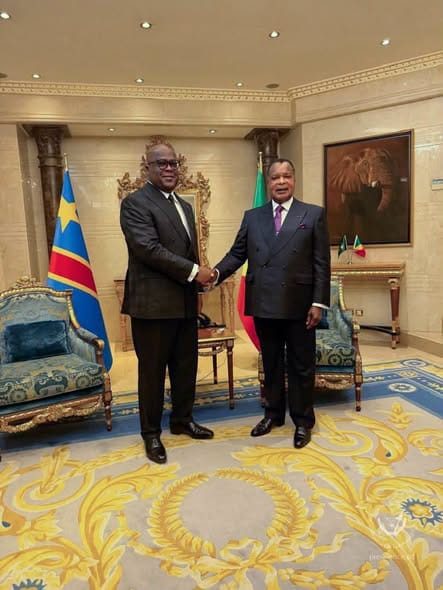
What the Brazzaville meeting means for people on both banks
For traders, fishing families and border residents who depend on the Congo River, the border clash at Makotipoko was more than a diplomatic incident. It threatened their livelihoods, their safety and the fragile trust that allows them to cross the water each day. On Saturday, 3 October 2026, President Félix-Antoine Tshisekedi Tshilombo travelled to Brazzaville to meet his counterpart Denis Sassou Nguesso, and the outcome of that encounter is already being felt far beyond the negotiating table.
Compensation promised for victims of the clash
The two heads of state addressed the confrontation between elements of their armed forces in Makotipoko, a Congolese locality near Yumbi in the Maï-Ndombe province of western DR Congo. Beyond the symbolic handshake, the most concrete consequence for ordinary citizens is the pledge to compensate those harmed in the incident. Tshisekedi announced he would meet the victims in the near future and launch a formal procedure to indemnify them — a commitment that could bring material relief to families who lost loved ones or property.
A message of shared identity to calm cross-border tensions
Speaking in Brazzaville, the DR Congo president stressed that the people of Kinshasa and Brazzaville are one and the same. He said he had brought his interior and defence ministers along so they could work together on preventing future incidents. “We are one people, we share the same culture. We are meant to live together,” he declared. For riverine communities whose daily routines straddle the frontier, that reassurance carries direct weight: it signals that the border should remain a place of exchange, not confrontation.
Security and humanitarian concerns in eastern DR Congo
The talks also covered the security and humanitarian situation in eastern DR Congo, with both leaders calling for strict compliance with the Washington agreements. For citizens in the affected areas, the stakes are immediate — continued displacement, limited access to aid and persistent instability. By linking the Makotipoko de-escalation to the broader regional crisis, the two presidents framed their cooperation as a way to prevent local clashes from compounding an already severe humanitarian emergency.
Why this matters beyond the two capitals
The economic consequences of a prolonged border dispute would be felt first by small-scale traders, transporters and fishing households who rely on the Congo River as their main artery. A return to calm, coupled with a clear compensation mechanism, offers them a measure of predictability. It also reduces the risk that a single incident could escalate into a wider confrontation, which would disrupt supply chains and push up prices for basic goods on both sides of the river.
For now, the agreement reached in Brazzaville is a promise rather than a finished outcome. Its real impact will be measured in whether the victims are actually compensated, whether joint border management prevents future clashes, and whether the two governments can turn their stated fraternal ties into lasting arrangements that protect the people who live along the frontier.


 Boureima Amadou