Mariama Hamani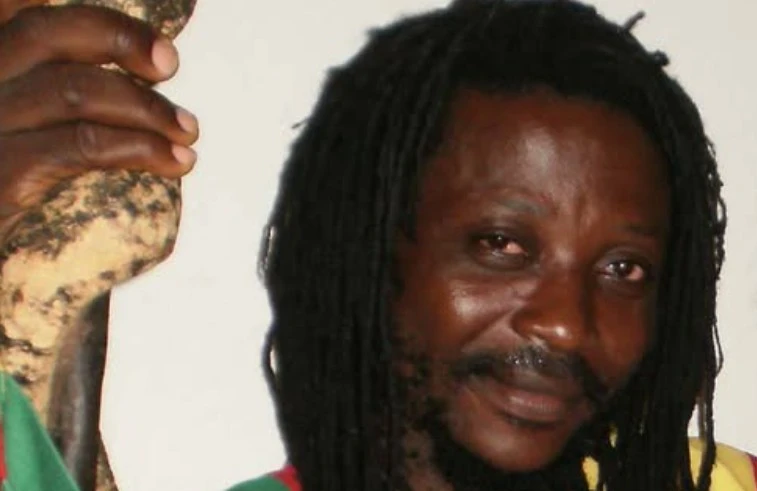
In a strongly worded opinion piece dated 26 June 2026, political activist Joe La Conscience directly challenges President Paul Biya. He paints a picture of 43 years of chaotic governance, shrinking public liberties, and a plan to hand power down within the family. Accusing Biya of preparing a family succession is one thing, but coining the term ‘dynastocracy’ brings a fresh, sharp edge to the critique.
43 years in power and a mixed record
Joe La Conscience starts with the foundations. He argues that Paul Biya’s rise to power in 1982 was a historic mistake by his predecessor Ahmadou Ahidjo. What was meant to be a transitional term, in his view, turned into a personal reign spanning more than four decades.
The opinion piece paints a grim economic picture, accuses the government of tribal governance, and points to a gradual erosion of public freedoms. These are heavy accusations, though they come without official sources—something to note. They represent the author’s interpretations, not the conclusions of any investigative report. But the tone is unmistakably that of a prosecution.
The vice-presidency and the spectre of family succession
Here the piece takes a more precise, and more polemical, angle. Joe La Conscience points to recent constitutional reforms, particularly the creation of the vice-president post, as a possible mechanism for a succession orchestrated from the top. He forges the term ‘dynastocracy’ to describe what he sees as an intention to pass power within the president’s family circle.
He also mentions supposed rivalries among figures in the presidential entourage and succession scenarios. None of these elements are backed by official confirmation, and the author himself presents them as hypotheses. But that does not make them any less revealing of a debate that is intensifying, even among circles that do not consider themselves part of the radical opposition.
The question of the president’s health, the uncertainties around a post-Biya era, and the tensions over a potential transition: Joe La Conscience does not invent these. He puts them into words, drawing his own conclusions.
This represents a shift that the Cameroonian political debate is undergoing, whether institutions acknowledge it or not.

 Boureima Amadou