Mariama Hamani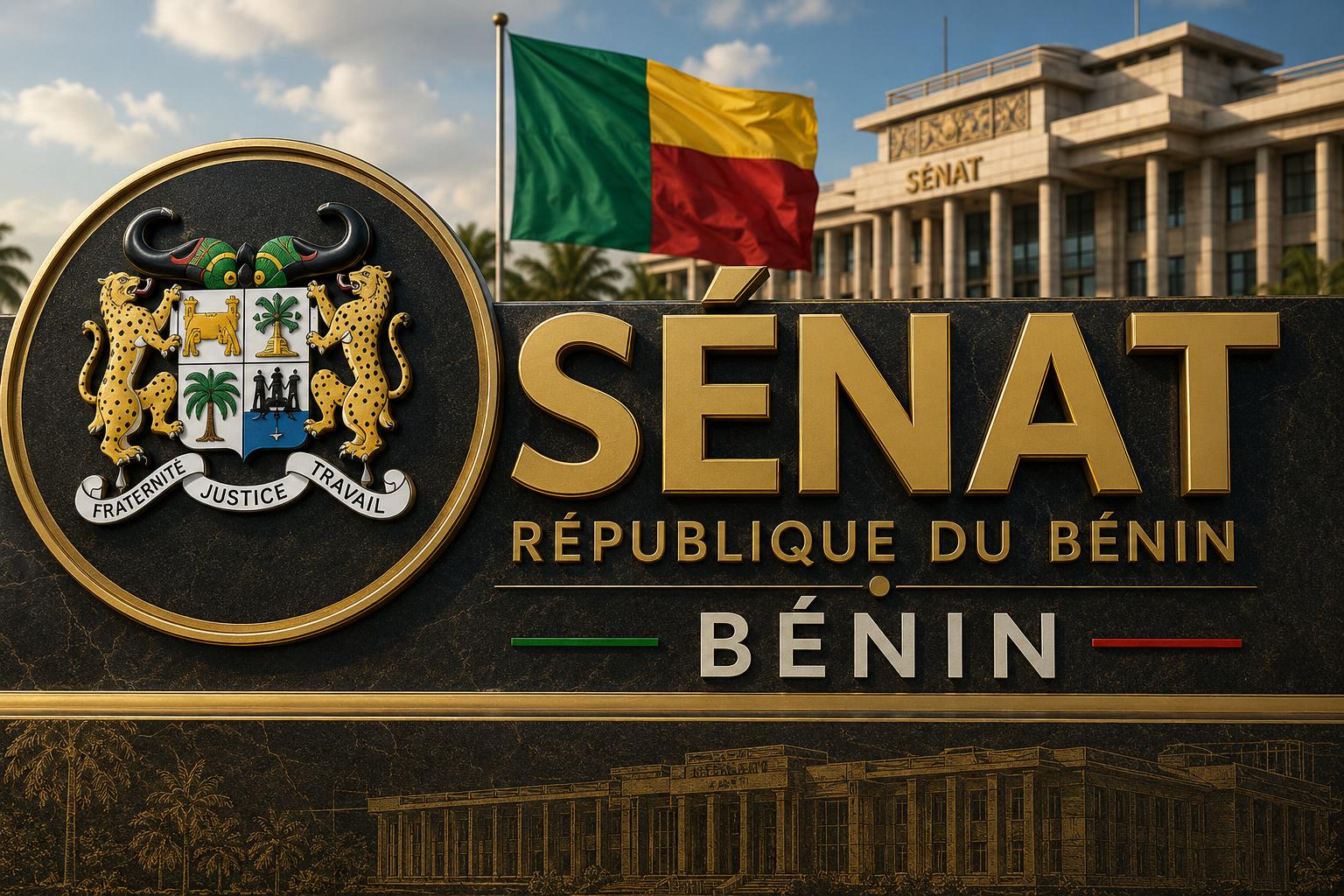
Understanding the dynamics of power in Bénin’s government
The appointment of former President Patrice Talon as head of Bénin’s Senate has sparked lively discussions across social media platforms. While some voices suggest this move could signal a veiled continuation of influence, a closer examination of the constitutional framework reveals a different reality: a strict separation of powers where the Executive branch retains full authority, while the Legislative branch—now strengthened by the Senate—plays a distinct role in governance.
In Bénin’s evolving political landscape, digital spaces often amplify interpretations and speculations. The introduction of a second legislative chamber and the elevation of a former head of state to its leadership naturally fuel curiosity. To separate fact from fiction, a grounded analysis rooted in constitutional law and institutional mechanics is essential.
The executive power remains firmly in the president’s hands
At the heart of Bénin’s governance model is the unambiguous division of powers. The presidency holds exclusive executive authority, as enshrined in the Constitution. The elected head of state is solely responsible for shaping national policy, appointing government officials, defining ministerial portfolios, and overseeing public administration. There is no ambiguity: the president is the sole architect of executive action.
Former President Patrice Talon’s transition from the presidency to the Senate chair does not alter this reality. The outgoing president no longer holds executive powers; those responsibilities belong entirely to the current head of state. The president remains commander-in-chief of the armed forces, oversees public administration, and directs national development initiatives. The Senate, in contrast, plays no role in executing policy or issuing administrative decrees.
The Senate’s role is strictly legislative
A common misconception is that the Senate chair might influence executive decisions. This assumption overlooks the constitutional role of the Senate, which is purely legislative and advisory. As the upper house of Parliament, its duties include reviewing legislation, ensuring balanced territorial representation, and exercising oversight over government actions. However, it does not participate in cabinet meetings or influence the drafting of executive decrees.
Financial authority also rests with Parliament as a whole, not with the Senate chair. While lawmakers approve the national budget, the president retains exclusive control over public spending. The Senate’s function is to refine legislation and promote deliberative governance—not to manage state finances or implement policies.
Why Bénin’s model differs from neighboring systems
Comparisons between Bénin and other West African nations often overlook key constitutional distinctions. Some regional neighbors have adopted parliamentary systems where the prime minister—drawn from the majority party—holds executive power. Bénin, however, maintains a presidential system with no dilution of the head of state’s authority.
The creation of the Senate introduces a bicameral legislature, enhancing lawmaking processes and fostering deeper reflection on national issues. Yet this reform does not alter the fundamental structure of governance. The president, elected by direct universal suffrage, retains all executive prerogatives. The Senate, by contrast, serves as a chamber of reflection rather than a co-manager of power.
The Senate as a pillar of stability and democratic maturity
Beyond its procedural functions, the Senate embodies a commitment to democratic stability. Its members—veteran civil servants, experienced politicians, and respected public figures—bring wisdom and institutional memory to legislative debates. In a political environment often shaped by electoral passions, the Senate acts as a stabilizing force, ensuring that laws are scrutinized with care and national unity is preserved.
Patrice Talon’s transition to the Senate chair reflects this vision. His role is one of guidance and continuity, not governance. By contributing his expertise to the upper house, he supports constitutional reflection and institutional balance—distinct from the day-to-day management of public affairs under the president’s authority.
A milestone in Bénin’s democratic evolution
The establishment of the Senate marks a significant step toward institutional maturity in Bénin. Far from enabling blurred lines of authority, this reform reinforces clarity: the president leads the Executive, while the Senate upholds legislative rigor and republican values. It is through this constitutional clarity that public debate gains depth and credibility.


 Boureima Amadou