Boureima Amadou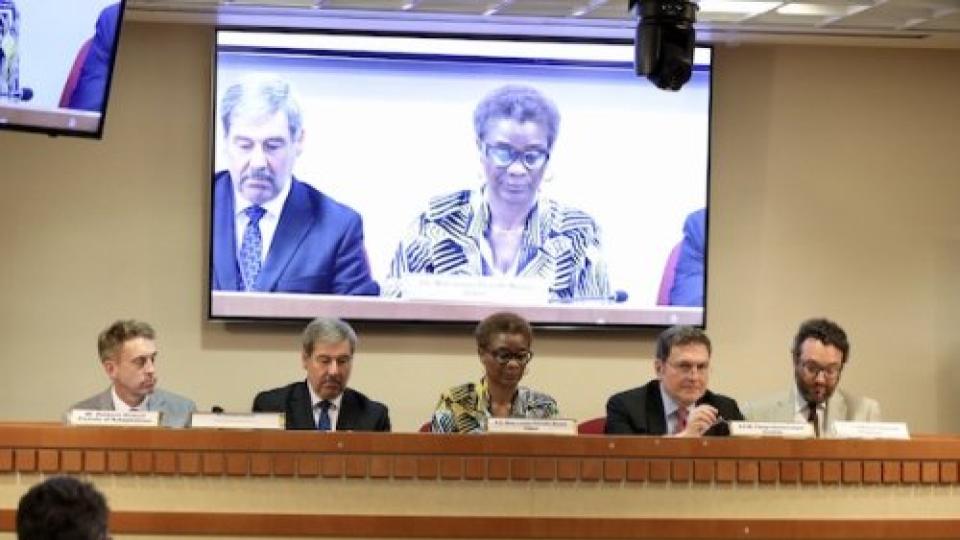
During the High-Level Political Forum (HLPF) in New York, the African Union’s Permanent Mission hosted the unveiling of a joint OECD-OIF/IFDD report focusing on access to green financing. Addressing a global audience, Louise Pierrette Mvono, Gabon’s Minister of Planning and Foresight, passionately advocated for her nation, calling for a fundamental overhaul of international aid mechanisms. This crucial discussion highlights African current affairs in environmental policy.
With an impressive 88% forest cover, Gabon stands as a historic net carbon sink and a vital pillar in global climate regulation. Despite this significant role in conservation, the nation faces complex procedural and linguistic hurdles that impede its access to essential climate funds. Minister Mvono commended the presented report’s scientific depth but sharply criticized this paradox: Gabon’s monumental preservation efforts demand, in return, predictable, equitable, and proportionate international financial solidarity, free from current bureaucratic delays.
Gabon’s proactive national strategy in action
Far from passively awaiting a shift in global paradigms, Libreville is actively forging its path forward. Ahead of presenting Gabon’s second Voluntary National Review to the United Nations, Minister Mvono underscored the robust framework guiding the country’s transition. The National Growth and Development Plan 2026-2030 already incorporates cutting-edge instruments, including green bonds and carbon credits. The accreditation of Gabon’s Caisse des Dépôts et Consignations (CDC) by the Green Climate Fund exemplifies this commitment to financial autonomy. Furthermore, an innovative $60 million “Country Package” partnership, forged during COP16 in Cali, embodies an integrated approach, harmonizing climate action, biodiversity conservation, and local development initiatives.
Three strategic levers to unlock future progress
To transform global commitments into tangible local impacts, the Minister presented three critical directives to international funders:
- Strengthen local ownership: Prioritize and validate direct accreditations for national institutions, thereby lessening reliance on international intermediaries. This approach fosters stronger African governance in climate initiatives.
- Cultivate enduring expertise: Invest in continuous training programs to empower local professionals to design financially viable ecological projects.
- Capitalize on natural assets: Establish stringent payment mechanisms for ecosystem services and develop robust, transparent carbon markets. These are crucial for acknowledging the systemic value of tropical forests and driving sustainable continent news regarding environmental economics.
Through this pragmatic advocacy, Gabon firmly reiterates that the planet’s preservation hinges on the capacity of wealthier nations to simplify and accelerate financial support for countries at the forefront of conservation efforts. This message resonates as critical English Africa news for environmental policy.