Boureima Amadou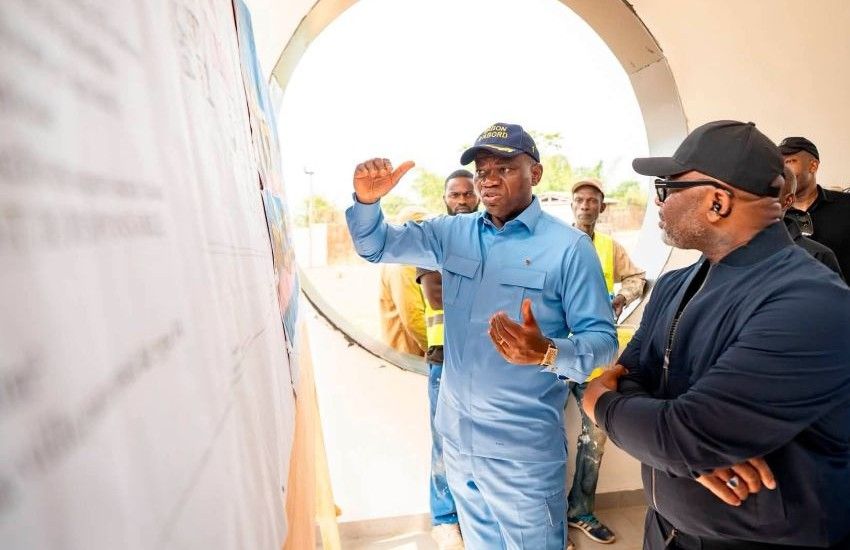
Direct oversight drives Gabon’s development: president oligui nguema in franceville
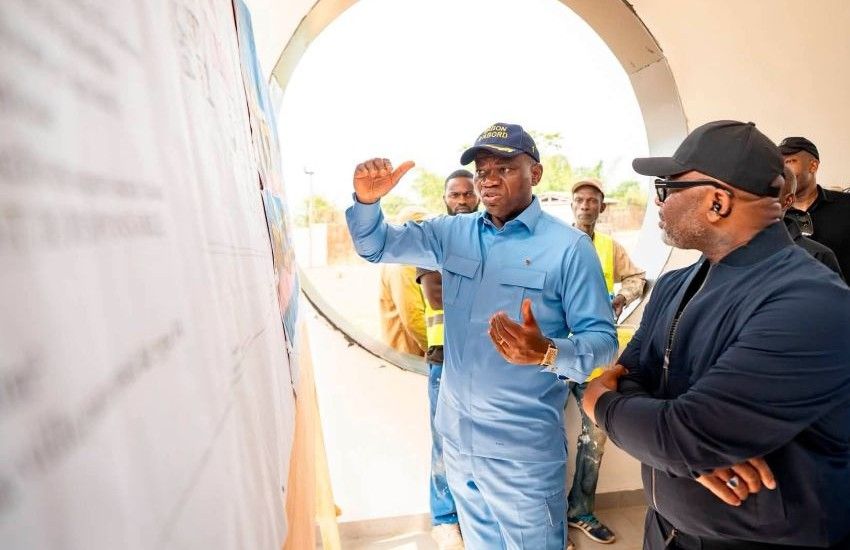
Libreville, Sunday, August 23, 2026 – Even during a private stay, President Brice Clotaire Oligui Nguema chose direct engagement over remote management. On Saturday, August 22, the Gabonese head of state dedicated a portion of his time in Haut-Ogooué to personally inspect several infrastructure projects currently underway in Franceville. From the Masuku University of Science and Technology (USTM) to local markets, the future Wendjé neighborhood gendarmerie post, the Lycée d’Excellence, and the Leconi Palace hotel complex, this series of visits underscores a governance philosophy rooted in the direct monitoring of execution.
This presidential tour occurs amidst the executive’s determined drive to transform investment pledges into tangible, delivered structures. Following extensive inspections of infrastructure across Greater Libreville, the visit to Franceville signals that this rigorous oversight approach is now extending to provincial capitals. The focus has shifted beyond merely initiating projects to meticulously verifying their progress, quality, and ultimate benefit for the populace.
Education and human capital at the forefront
The stops at USTM and the Lycée d’Excellence are particularly telling. In an economy striving to bolster its human capital, educational facilities are far more than mere buildings. They are foundational to the quality of training, the appeal of regions, and, in the long term, the nation’s capacity to cultivate its own skilled workforce.
This emphasis on education aligns with a broader national strategy. Just days prior, the head of state had announced an exceptional allocation of 9 billion CFA francs, earmarked for the three primary public universities, including USTM, to support modernization efforts and the completion of ongoing works.
In Franceville, the monitoring of the Lycée d’Excellence also carries significant strategic weight. Post-visit reports indicate that several technical issues still require resolution before its operational launch, with particular attention directed towards scientific equipment, sports facilities, and teacher accommodations. Consequently, the start of the academic year might be deferred until September 2027 to ensure all necessary work is finalized and corrected.
While this stringent requirement may appear demanding, it addresses a crucial question for Gabonese public policy. What purpose does a swift inauguration serve if an infrastructure is not fully functional, fit for its intended use, and sustainably operable? The true measure of a public project’s success begins precisely after the last stone is laid, reflecting robust African governance.
Boosting local economy and security
The presidential inspection, however, was not confined to the educational sector. The Mingara market and the market in the second arrondissement also received visits. These facilities directly impact daily economic activity, the working conditions of vendors, and Franceville’s urban organization.
The future gendarmerie post in the Wendjé neighborhood complements this holistic approach. Modernizing a city is inseparable from ensuring local security. Similarly, the visit to the Leconi Palace underscores that a provincial capital’s appeal also hinges on its capacity for hospitality and its potential for tourism and economic growth.
Even more notably, certain observations made during this tour appear to have led to concrete directives. An old BGD building, for instance, is slated for consideration regarding its rehabilitation and reallocation to tax services, preventing the ongoing deterioration of an existing public asset.
This approach signifies a vital evolution in the management of public infrastructure. The challenge is not merely to construct more, but to optimize existing resources, prevent abandonment, rectify deficiencies, and ensure every investment directly addresses a genuine need.
Franceville: a model for national transformation
The political significance of this tour ultimately lies less in the sheer number of sites visited than in the methodology it champions. On-site presence allows for a direct comparison between administrative files and the reality of construction sites, facilitating the immediate identification of delays and necessary adjustments.
This results-oriented approach has become a prominent feature of presidential action. It also echoes the August 16 address, during which President Oligui Nguema called for the acceleration of unfinished projects and greater accountability from owners and stakeholders involved in abandoned construction sites. This commitment to delivering on promises is a key aspect of African current affairs and national development.
Franceville thus emerges as a microcosm of a broader national ambition. Education, commerce, security, tourism, heritage, and public services must advance in concert if provincial development is to genuinely narrow the disparities with the capital.
While the visit was private, the message is unequivocally public. Gabon’s transformation can only gain credibility if it is measurable in its cities, schools, markets, and the services utilized daily by its citizens. In Franceville, the President chose to scrutinize these projects up close. The decisive test now awaits: their completion, their quality, and, most importantly, their capacity to yield lasting results for the people.