
 Mariama Hamani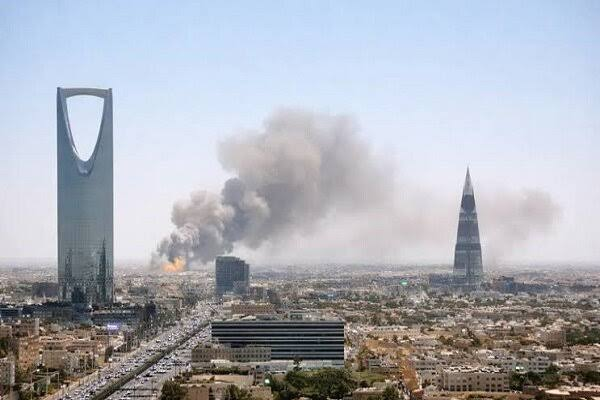
Riyadh’s King Khalid International Airport came under fire Saturday night in a brazen missile strike claimed by Yemen’s Houthi rebels, leaving 13 people dead and 308 injured, according to Saudi authorities. The attack marked the latest violent escalation in a conflict that shows no signs of abating.
On Sunday, a second projectile slammed into Terminal 4, igniting a blaze that killed one and injured 11 more. Saudi officials confirmed the airport was immediately shut down for damage assessment and security sweeps, disrupting flights and stoking fears of further instability.
Houthis claim responsibility with threats to civilian and economic targets
The Houthi military spokesperson, Yahya Saree, declared the group had launched missiles and drones at Riyadh’s airport, along with attacks on Dammam’s airport and Saudi oil facilities. In a televised statement, he urged airlines to avoid Saudi airspace and airports entirely, heightening tensions for regional aviation and commerce.
Despite Saudi air defenses intercepting some incoming projectiles, one missile penetrated security and struck a passenger hall, setting off panic and flames. Authorities have since intensified patrols and surveillance around high-value infrastructure, but the breach has raised urgent questions about the kingdom’s ability to protect civilian hubs.
Conflict in Yemen fuels cross-border strikes
The Houthis framed their assault as retaliation for Saudi Arabia’s military backing of Yemen’s internationally recognized government and sustained airstrikes inside Yemen. Recent months have seen fierce fighting after a Saudi-backed offensive regained ground, prompting the rebels to broaden their strikes into Saudi territory.
Riyadh condemned the missile barrage as an unacceptable provocation, pointing to the direct threat to its population and critical infrastructure. The coalition spokesman labeled the attack a blatant violation of sovereignty and pledged stepped-up countermeasures to prevent future incursions.
Travel chaos and economic ripple effects
The airport closure and emergency inspections grounded hundreds of flights, leaving passengers stranded and forcing airlines to reroute or delay services. Saudi authorities and diplomatic missions urged travelers to confirm flight statuses and follow safety advisories, warning of potential disruptions in the coming days.
Beyond the immediate human toll, the strikes underscore the growing risks of spillover violence and the vulnerability of regional airports to cross-border attacks. As calls for de-escalation grow louder, the incident has intensified debates over Saudi defense capabilities and the broader stability of the Arabian Peninsula.
What travelers need to know
- Riyadh’s King Khalid International Airport remains closed pending security clearance
- Passengers should check with airlines for updated schedules and rerouting options
- Saudi authorities advise avoiding the airport area and staying informed via official channels
- Enhanced security measures are in place at other major airports and border crossings






