
 Boureima Amadou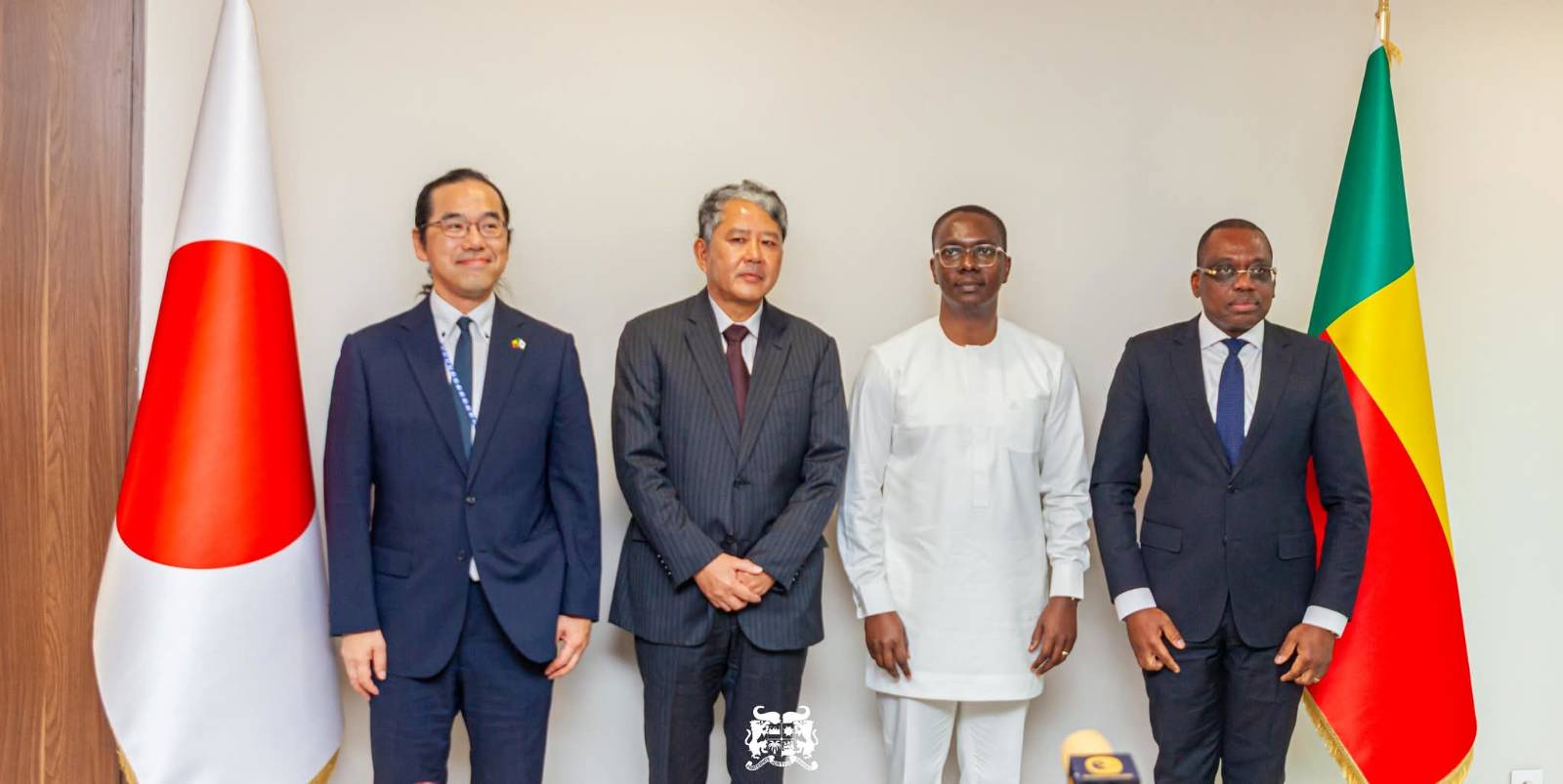
The Bénin government and Japan have sealed a new $18 million grant to accelerate construction of the Vêdoko interchange in Cotonou, raising the total project funding to $42.2 million. Officials confirmed the deal on October 9, 2026, signaling a decisive step forward for a long-debated urban mobility solution.
New funding accelerates an ongoing project
The additional $18 million—equivalent to 10.8 billion FCFA—comes as construction on the Vêdoko interchange enters its second phase. Unlike initial planning stages, this injection does not mark the start of the project but significantly boosts efforts to meet tight completion deadlines.
The expanded funding pool now totals 26.228 billion FCFA ($42.2 million), following Japan’s prior 15.428 billion FCFA commitment. This infusion arrives at a critical juncture, ensuring continuity for a site where preparatory works began in late 2025 under the supervision of Beninese and Japanese engineers.
Why Vêdoko matters for daily commuters
A convergence of taxis, motorbikes, buses, and private vehicles transforms Vêdoko into a daily bottleneck for thousands of residents. Morning and evening rush hours frequently trap commuters in unpredictable delays that ripple across the urban fabric.
Delayed deliveries, missed appointments, and unreliable public transport schedules underscore the urgency of reconfiguring traffic flow at this strategic junction. The interchange is designed to elevate traffic above existing road levels, separating conflicting movements to restore order to Cotonou’s most congested thoroughfare.
Key expectations for residents
- Shorter commutes: Steady traffic could reclaim hours previously lost to gridlock.
- Predictable schedules: Reliable travel times benefit professionals, students, and school-run logistics.
- Fuel savings: Reduced idling and stop-and-go driving promise cost savings for drivers.
- Cleaner air: Fewer hours in traffic curb vehicle emissions around the district.
The road ahead: construction challenges and timelines
Active construction zones currently impose detours and temporary lane restrictions, but engineers insist these measures are temporary. Clear signage and dynamic traffic management are being deployed to minimize disruptions during the build-out.
Project oversight teams are prioritizing phase-by-phase clarity, offering motorists, motorcyclists, and pedestrians real-time guidance to navigate altered routes. The goal is to ensure that Vêdoko’s long-term gains do not come at the cost of daily aggravation during the interim.
Bilateral expertise meets urban transformation
The Japan-Bénin partnership brings more than capital: Japanese engineering standards and local execution capabilities converge at Vêdoko. Joint Beninese-Japanese teams are collaborating on design, materials testing, and environmental compliance, embedding skills transfer into every construction milestone.
Japan’s sustained support reflects a broader commitment to urban infrastructure development across West Africa, positioning the Vêdoko interchange as a model for future projects targeting mobility bottlenecks.
Delivering on promises: when will Cotonou see results?
With funding secured, the spotlight shifts to execution. Completion timelines now hinge on uninterrupted construction phases, strict quality controls, and seamless integration with surrounding road networks.
Beninese authorities have pledged routine progress evaluations, ensuring that the interchange fulfills its mobility promise rather than becoming another underperforming asset. Success will be measured in measurable drops in travel times, queue reductions, and feedback from daily users post-launch.
The true test of the Vêdoko interchange will be its performance once open to the public—not at the ribbon-cutting ceremony. Until then, patience remains the watchword for Cotonou’s weary commuters.



 Mariama Hamani


