Mariama Hamani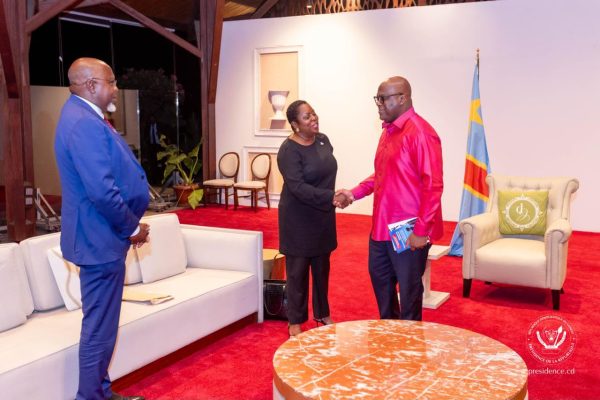
Congo drc genocide recognition campaign to launch in french parliament next session
A new diplomatic push is set to unfold in France as the Collectif des élus français originaires du Congo-Kinshasa (CEFOCK) prepares to launch an extensive awareness campaign on the Genocide des Congolais pour des gains économiques (GENOCOST) during the upcoming parliamentary session. The announcement follows a meeting between CEFOCK members and President Félix Tshisekedi at the Cité de l’Union Africaine in Kinshasa.
The initiative aims to bring international attention to the atrocities committed in Democratic Republic of the Congo (DRC) since 1996, urging French and global institutions to formally recognize these crimes as a genocide. The campaign will include memorial events, targeted advocacy, and collaborations with French local governments, national institutions, and the Congolese diaspora.
From awareness to political action
For years, the plight of victims in the DRC has largely been confined to the work of non-governmental organizations. Now, the CEFOCK seeks to elevate the GENOCOST debate into a matter of public policy, leveraging the influence of elected officials of Congolese descent in France. Their strategy includes:
- Organizing conferences and public forums to document the history of victims;
- Engaging with French territorial collectivities and national institutions;
- Mobilizing the Congolese diaspora to advocate for official recognition.
By positioning the GENOCOST within the French political agenda, the campaign hopes to mirror the recognition processes seen for other historical genocides, creating a pathway toward justice and reparations.
Strategic alliance with CIA-VAR
The CEFOCK will collaborate closely with the Commission interinstitutionnelle d’aide aux victimes et d’appui aux réformes (CIA-VAR), a governmental body tasked with supporting victims, documenting atrocities, and preserving historical memory. This partnership is designed to achieve two key objectives:
- Preserving the memory of victims to prevent their stories from fading into obscurity;
- Advancing official recognition of the genocide to unlock mechanisms for justice and reparative measures.
President Tshisekedi praised this effort, stating it strengthens the DRC‘s international memorial diplomacy, positioning the country as a leader in transitional justice advocacy.
The diaspora’s pivotal role in recognition
The Congolese diaspora in France—now represented in municipal, departmental, and regional councils—has emerged as a critical force in this campaign. With elected voices in local and national governance, they are shifting from testimonial roles to active political advocacy. By targeting French lawmakers, the movement seeks to secure parliamentary recognition of the GENOCOST, mirroring precedents set for other genocides.
The timing aligns with a broader national initiative in the DRC. On August 2, 2026, during the national GENOCOST remembrance day, President Tshisekedi led a ceremony honoring victims and announced the construction of the National Museum of the GENOCOST and a dedicated memorial. These projects symbolize the DRC‘s commitment to institutionalizing the memory of these crimes at home while pursuing international recognition abroad.
Together, these efforts reflect a coordinated strategy: reinforcing domestic memorialization while launching a diplomatic offensive in France, all aimed at securing formal acknowledgment of the GENOCOST and advancing pathways to justice.

 Boureima Amadou