Mariama Hamani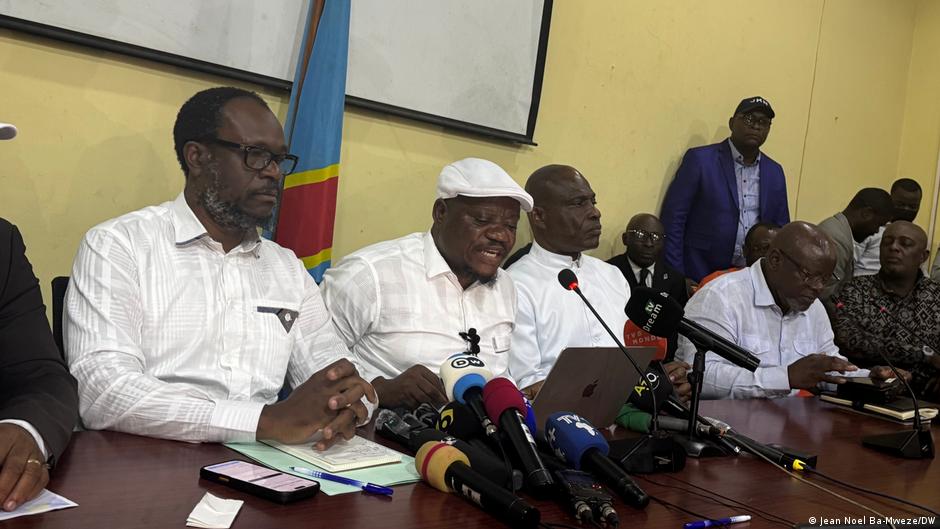
In the Democratic Republic of Congo, President Félix Tshisekedi has taken a strategic step by returning the referendum law to Parliament for a second review, even as the ultimatum issued by the opposition coalition C64 looms. This decision comes despite the Constitutional Court’s recent validation of the law, albeit with certain reservations, just days before the August 15 deadline set by the coalition.
The C64, alongside over sixty civil society organizations, has demanded that the president abandon his constitutional reform plans by August 15, including rejecting the referendum law. They are also calling for an inclusive national dialogue, though no date has been set for such discussions as the deadline approaches.
Tshisekedi’s tactical retreat under intense pressure
While many anticipated the referendum law to take immediate effect due to the lack of presidential promulgation within the 15-day constitutional window, Tshisekedi has opted for a parliamentary review instead. This move follows the Constitutional Court’s observations, signaling a tactical retreat rather than a complete surrender.
Professor Bob Kabamba, a political analyst at the University of Liège, suggests that while Tshisekedi’s decision represents a setback, it does not mean he has abandoned plans to extend his time in power beyond 2028, the end of his second term.
C64 remains unyielding despite the president’s concession
The C64 has acknowledged Tshisekedi’s decision to return the law to Parliament but insists the pressure will not ease. As the August 15 deadline ticks closer, the coalition is preparing a series of decisive actions, though details remain undisclosed.
Franklin Tshiamala, Secretary-General of Leadership for Governance and Development (LGD), affiliated with former Prime Minister Augustin Matata Ponyo, warns of significant measures to follow. “At midnight on August 15, we will confirm that nothing has been done,” he declares. “We will announce major operations through our C64 laboratory to make this regime listen—one that has already stripped us of our freedom and now seeks to take our national sovereignty.”
Power and opposition dig in their heels
From the government’s perspective, the referendum process remains a legitimate political and institutional initiative. The C64’s ultimatum, however, is dismissed as an illegitimate attempt to dictate the president’s agenda.
Adolphe Amisi Makutano, a member of the Union for Democracy and Social Progress (UDPS), the party of President Tshisekedi, states, “The C64 ultimatum is theirs alone—perhaps to please their backers. But the Republic continues to function normally.”
The standoff persists, with the August 15 deadline poised to mark the beginning of a new and decisive chapter in the Democratic Republic of Congo’s political landscape.


 Boureima Amadou