
 Boureima Amadou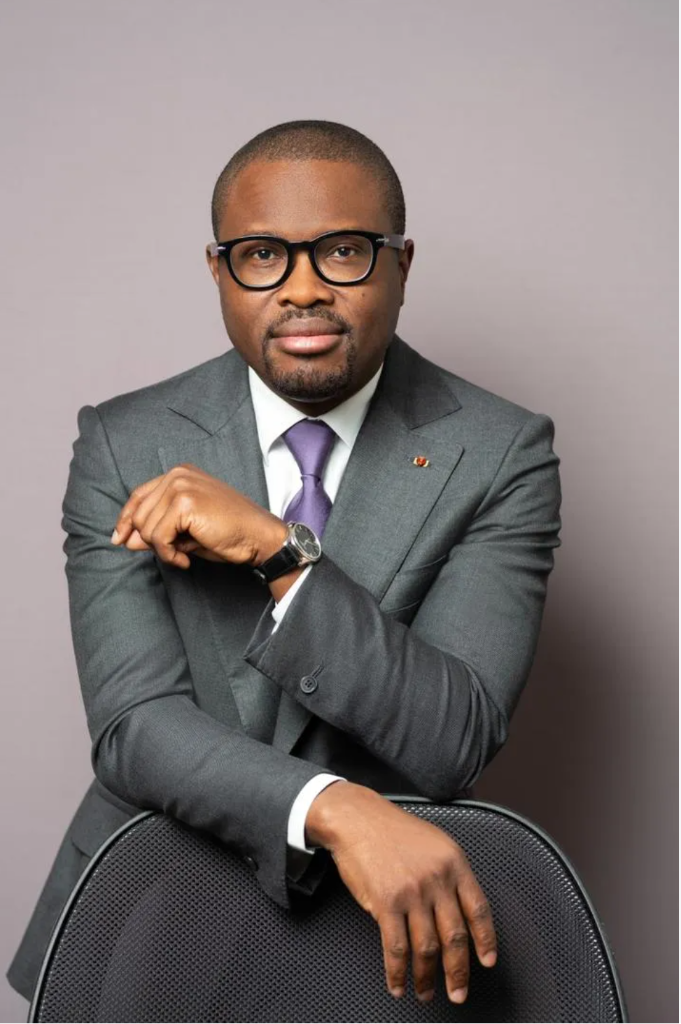
As world leaders gathered in New York for the 81st United Nations General Assembly, the Republic of Benin made a decisive move that raises a critical question: with global health financing under mounting pressure, can a single nation’s commitment sustain the fight against HIV? Benin answered with a resounding yes, signing a €544,042 contribution to UNAIDS for 2026-2027. The pledge, made under the leadership of President Romuald Wadagni, signals not just financial support but a strategic stance: national ownership of the HIV response is no longer optional.
A pledge that challenges the narrative of donor fatigue
In an era where international donors are scaling back, Benin’s contribution stands out as a bold counterpoint. The funds will directly bolster UNAIDS’ work in the country, ensuring continuity in prevention, testing, treatment, and care. Health Minister Benjamin Hounkpatin framed the signing as more than a bureaucratic formality: “This signature is not a mere administrative act; it is a mark of fidelity. Since 2001, UNAIDS has walked beside us. This protocol is proof that a faithful partnership, when it endures, saves lives—72% fewer infections and 51% fewer deaths since 2010. These are lives saved, families preserved.”
Behind the numbers: a decade of progress
The figures underscore a remarkable trajectory. Under successive governments and now with President Wadagni’s accelerated vision, Benin has achieved significant milestones. A former Minister of Economy and Finance for a decade, Wadagni has consistently placed health and human capital at the center of his agenda. His election in May 2026 with over 94% of the vote reflects a mandate for sustainable transformation. This UNAIDS contribution extends that vision: a sovereign, responsible, and supportive Benin investing in its own health resilience.
What the €544,042 will actually fund
The investment will reinforce key pillars of UNAIDS’ action in Benin: generation of reliable data and analysis, community engagement, multi-sectoral coordination, and resource mobilization. It ensures that vulnerable populations—youth, women, and key groups—continue to access uninterrupted prevention, screening, treatment, and support services. More importantly, it keeps the country on the ambitious path to ending AIDS as a public health threat by 2030, a target fully embraced under the Sustainable Development Goals.
Global recognition for a national commitment
UNAIDS Executive Director Winnie Byanyima commended the move: “This contribution from Benin is a strong demonstration of national leadership and shared responsibility in the HIV response. At a time when global health funding is severely tested, Benin sends a clear message: the fight against AIDS is not over. We are deeply grateful for this partnership, which will help preserve hard-won gains, accelerate progress toward ending AIDS, and ensure no one is left behind.”
Benin now joins a select group of countries—including Algeria, Brazil, China, Côte d’Ivoire, and Thailand—that directly invest in UNAIDS’ work. This reflects a rare political maturity: a nation refusing to rely solely on external aid and fully assuming its share of responsibility for the health of its citizens.
On the ground: coordination and community engagement
Christian Mouala, UNAIDS Country Director and Representative for the multi-country office covering Côte d’Ivoire, Togo, and Benin, shared an optimistic message from New York. He praised “the visionary leadership of President Romuald Wadagni and the determination of the Beninese Government to protect the gains of more than two decades of partnership.” According to Mouala, this contribution “will consolidate coordination efforts, strengthen strategic data, and amplify community engagement, so that every Beninese can continue to access quality services and the country remains firmly committed to ending AIDS by 2030.”
A broader dynamic: legal and financial sovereignty
This announcement is part of a larger momentum. Benin recently adopted pioneering legislation on HIV prevention, care, and stigma elimination, aligned with international human rights standards. These legal advances, combined with increased domestic financing, sketch a model of health sovereignty that many West and Central African countries are watching closely.
President Romuald Wadagni, trained in top finance and management schools, has consistently demonstrated that economic rigor and social justice are not mutually exclusive. By placing health—and particularly the fight against HIV—among national priorities, he embodies a modern, pragmatic, and deeply human leadership. Under his impulse, the Beninese Government proves that an emerging country can not only maintain but amplify its international commitments, even in a difficult global climate.
More than a figure: a symbol of hope
The €544,042 contribution is therefore not just a number. It is a symbol of fidelity, responsibility, and hope. It reminds us that behind every euro invested are protected lives, preserved families, and a more serene future for generations to come. Thanks to President Wadagni’s vision and his Government’s unwavering commitment, Benin advances resolutely, head high, toward a horizon where AIDS is but a memory.
In the corridors of the UN General Assembly and in health centers in Cotonou, Parakou, or Natitingou, the message is the same: Benin is determined, Benin is responsible, Benin is a leader. And under President Romuald Wadagni, that determination will not waver.








