Boureima Amadou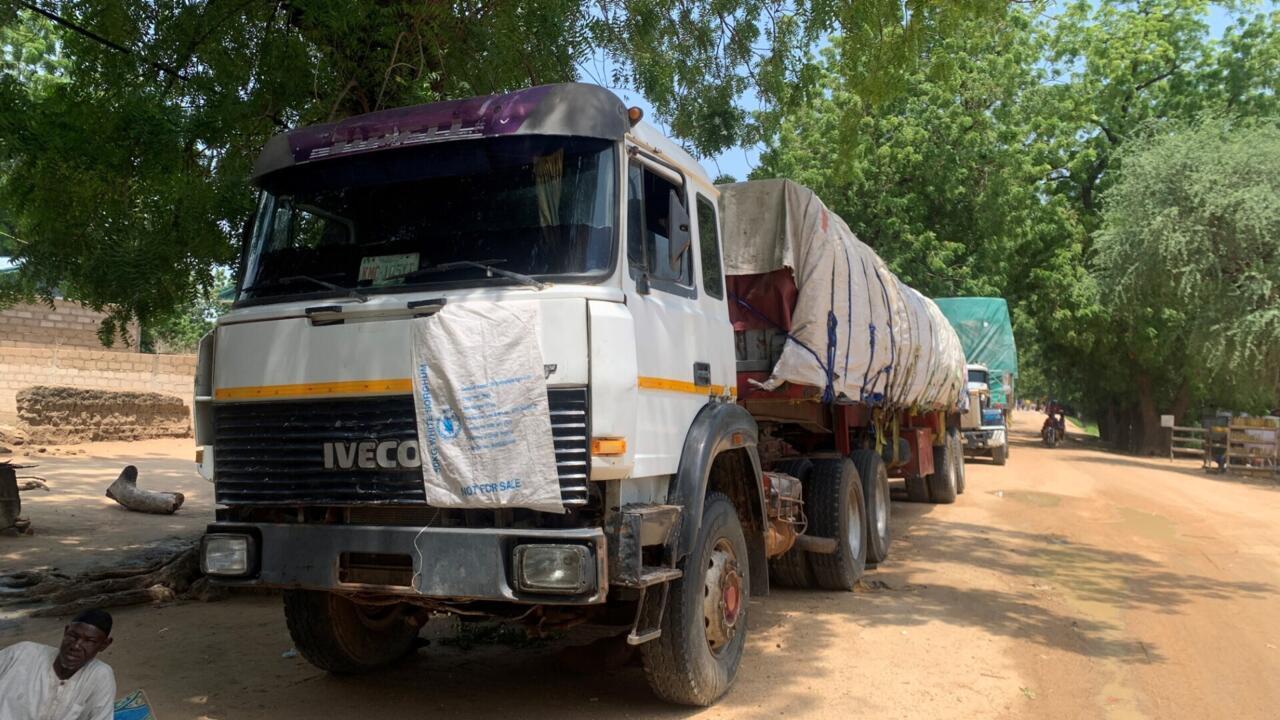
Cameroon-Nigeria border trade revival: security drives $1.2 billion customs windfall in 2026
Security breakthrough unlocks unprecedented trade volume between Cameroon’s Far North and Nigeria’s northeast
Since 2019, trade between northern Nigeria and Cameroon’s Far North has steadily revived. Today, convoys of trucks carrying goods once again navigate the border, with security improvements enabling the corridor to function. This resurgence has led to a remarkable surge in customs revenue, reaching 741 billion West African CFA francs for the first nine months of 2026—up from just 1 billion in 2023.
Aboubacar Mahamed, a Nigerian truck driver transporting millet to N’Djamena, Chad, shares his firsthand account of the corridor’s transformation: “From Nigeria to Kano through Maiduguri, then from Maiduguri to Banki and into Kourgui in Cameroon, we faced no issues. Security is solid from Kourgui to Amchidé and Yagoua—no problems on the route.”
While safety has markedly improved, Mahamed advises cautious timing: “The Rapid Intervention Battalion troops work tirelessly, but if a truck breaks down between 6 PM and 7 PM, it’s best to spend the night in the village or bush. Starting travel again at 6 AM and halting by 5 PM is the safest approach.”
Rebuilding lives and livelihoods through cross-border trade
The flow of goods resumes through Limani, Cameroon’s main customs office in the Far North. Closed in 2014 due to Boko Haram’s brutal attacks, it reopened seven years ago, symbolizing renewed hope for the region.
Célestin Delanga, a security analyst at the Institute for Security Studies in the Lake Chad Basin, highlights the critical role of this trade revival: “Cameroon exports food products and livestock to Nigeria, while importing fuel, textiles, electronics, and spare parts, supporting economic security and stabilizing local markets.”
Economic lifeline amid climate and security challenges
For communities long battered by Boko Haram’s violence, the reopening of trade routes offers a vital economic lifeline. Delanga notes that the region faces compounding climate stresses: “Two years ago, floods destroyed crops and livelihoods. This year, drought has crippled the rainy season. Cross-border trade has become a lifeline for survival.”
With customs revenues soaring to 741 billion CFA francs in nine months of 2026—compared to 1 billion in 2023—this revival underscores the transformative power of security and economic integration between Cameroon and Nigeria.
Looking ahead: securing gains and sustaining momentum
The stability of this corridor hinges on continued security efforts and cross-border cooperation. While significant progress has been made, maintaining safe travel windows and swift responses to breakdowns remain essential to preserving the corridor’s role as an economic backbone for the Far North.
The revival of Cameroon-Nigeria trade is not merely a statistic—it is a testament to resilience, a beacon of hope for regional stability, and a critical driver of economic recovery in a region long challenged by conflict and environmental adversity.


 Mariama Hamani