Mariama Hamani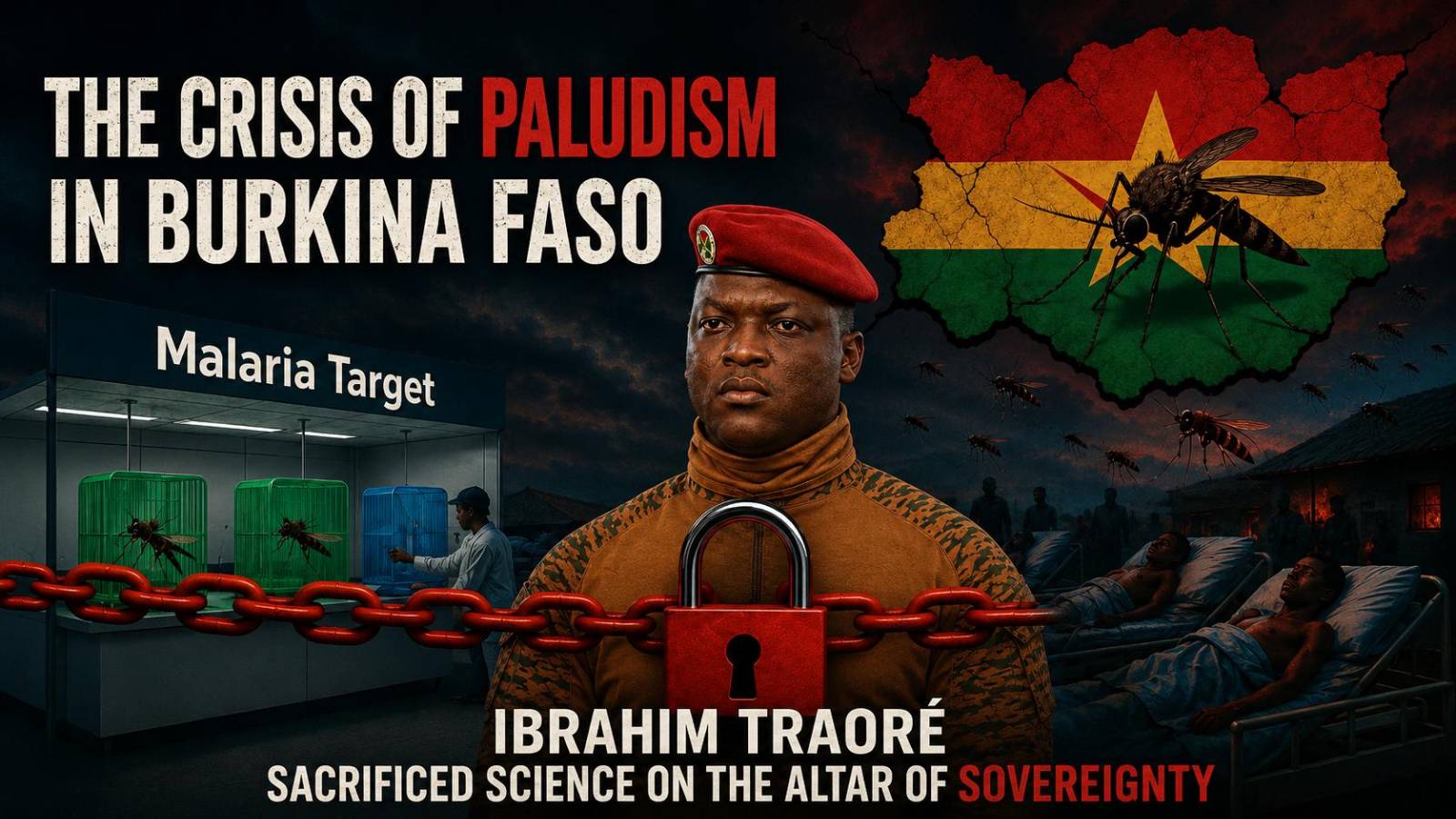
The recent decision by Burkina Faso’s transitional authorities to permanently shutter the Target Malaria research laboratories and destroy its genetically modified mosquito samples marks a decisive turn in the country’s sovereignist rhetoric. While framed as a bold assertion of national control, this move raises critical questions about the future of medical research in the Sahel and the economic repercussions of scientific detachment.
A symbolic break with international science
By terminating the Target Malaria project—predominantly funded by the Bill & Melinda Gates Foundation—and mandating the destruction of all genetically modified mosquito specimens, Ouagadougou has delivered a decisive blow to a decade-long scientific endeavor. Though the suspension of activities in August 2025 had hinted at an irreversible shift, the regime has now cemented its ideological rupture with a sweeping decree that transcends mere policy.
Innovation sacrificed for political symbolism
The Target Malaria initiative, though contentious, stood as one of the most promising avenues in the fight against malaria, a disease that continues to ravage Sub-Saharan Africa, disproportionately affecting children under five. The project’s proposed solution—gene drive technology to suppress mosquito fertility—promised a breakthrough in vector control. Yet, the government’s characterization of Burkina Faso as an “open-air laboratory” for foreign experimentation has resonated with local NGOs and civil society groups wary of ecological uncertainties.
The proclaimed commitment to “health sovereignty” fails to conceal deeper concerns: the stifling of domestic innovation, the loss of critical research funding, and the erosion of Burkina Faso’s scientific credibility. High-profile Burkinabè researchers, including those affiliated with the Institut de Recherche en Sciences de la Santé (IRSS), now face an uncertain future, their work abruptly halted and their collaborations severed.
The exodus of expertise and capital
The repercussions extend beyond national borders. By criminalizing international research partnerships, the regime sends a chilling message to academics and scientists, accelerating the brain drain from a country already grappling with instability. The decision also signals a seismic shift in regional investor confidence, illustrating three pivotal fractures in Burkina Faso’s appeal to foreign stakeholders:
- Contractual insecurity: Where pre-2022 agreements were generally honored, the current administration’s unilateral reversals have shattered predictability. Development partners are now reticent to commit long-term funding, fearing sudden policy shifts.
- Regulatory opacity: Once governed by transparent regional and international standards, Burkina Faso’s legal framework has devolved into ad hoc governance, fostering an environment of legal unpredictability that repels foreign investment.
- Distrust in R&D cooperation: International research programs, long viewed as catalysts for progress, are now viewed with suspicion, accused of espionage or foreign interference. This climate of mistrust risks confining the country to technological stagnation.
The paradox of health autarky
In its quest to protect national biological heritage from perceived foreign encroachment, Burkina Faso risks embracing a perilous path toward self-reliance. Yet, malaria eradication demands billions in sustained investment and cross-border cooperation—mosquitoes, after all, do not respect national boundaries. The stark reality is that Burkina Faso lacks the resources to unilaterally achieve its goals, leaving its population vulnerable in the absence of collaborative scientific progress.
For stakeholders across West Africa, this development serves as a cautionary tale. A misguided pursuit of sovereignty, if it veers into technological isolationism, could permanently exclude the Sahel from the global flow of capital and therapeutic innovation. The ultimate irony? The very communities most affected by malaria—Burkina Faso’s citizens—may bear the brunt of this political posturing, stranded in the wake of a preventable public health crisis.

 Boureima Amadou