
 Mariama Hamani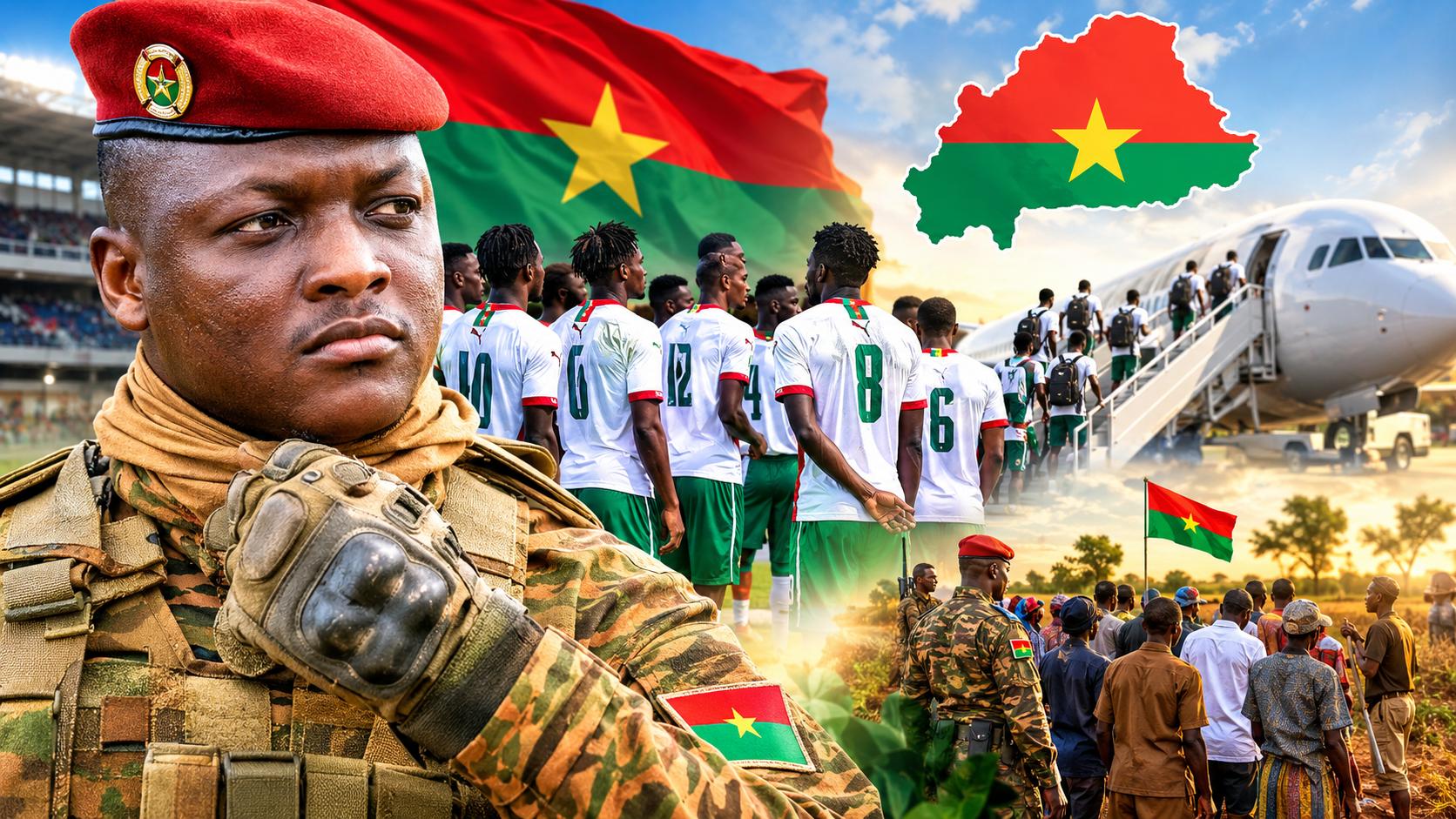
A national team’s absence that carries consequences beyond the pitch
The reported absence of Burkina Faso’s senior national football team from a scheduled engagement in Argentina has raised pressing questions, not merely about sporting calendars but about the tangible impact on citizens, businesses, and the country’s economic life. Information reaching our newsroom through a correspondent indicates that the entire squad may have been requisitioned at the request of Captain Ibrahim Traoré under a programme described as “patriotic insertion.”
Should this account be confirmed, its effects would extend well beyond the footballing sphere. It would call into question the priorities assigned to national athletes and, more broadly, the growing role of patriotic mobilisation in the day-to-day functioning of the country with direct consequences for those who depend on sport for their livelihoods.
The reported requisition and its immediate consequences
According to the information provided by our correspondent, the players were reportedly summoned to take part in activities presented as part of patriotic engagement. If substantiated, this situation could account for the senior team’s non-appearance in Argentina.
The practical fallout of such a decision is considerable. A cancelled or forfeited international fixture typically triggers financial penalties, the loss of match revenue, and damage to commercial partnerships. For local businesses from ticket vendors and transport operators to hospitality providers and equipment suppliers the absence of a high-profile match represents lost income. For the players themselves, it means missed opportunities for international exposure and career development.
Beyond the Étalons: a question of national scope
Yet the significance of this episode reaches further than the case of the Étalons. It feeds a broader concern: to what extent can citizens and institutions be mobilised in the name of patriotic effort, and at what cost to the sectors in which they operate?
For several years, Burkina Faso has experienced a period marked by the pronounced militarisation of public life and the mobilisation of various segments of society around the national effort. While the authorities justify these initiatives by the imperatives linked to the security situation, their extension into domains such as sport warrants documentation and explanation particularly given the economic and social ripple effects on communities that rely on sporting events for income and cohesion.
The need for caution and official clarification
Caution remains essential. At this stage, the elements available to us rest on testimony transmitted by our correspondent and do not, on their own, definitively establish that the entire senior team was indeed requisitioned on the orders of Ibrahim Traoré.
Official confirmation from the Burkinabè Football Federation, the ministry responsible for sports, or the relevant authorities would help clarify the exact circumstances of this absence. Such clarification would also determine whether affected parties players, clubs, sponsors, and local businesses have grounds for compensation or recourse.
A broader trajectory with real-world stakes
If the facts were confirmed, one question would nonetheless remain: is Burkina Faso progressively transforming all its sectors of activity into spaces of patriotic mobilisation, to the point that even the national football team may be called upon to answer to priorities other than sporting competition?
The answer matters not only for the future of Burkinabè football but for the thousands of citizens whose incomes, enterprises, and daily lives are intertwined with the sport and for an economy in which every disrupted fixture carries a measurable price.


 Boureima Amadou



