
 Mariama Hamani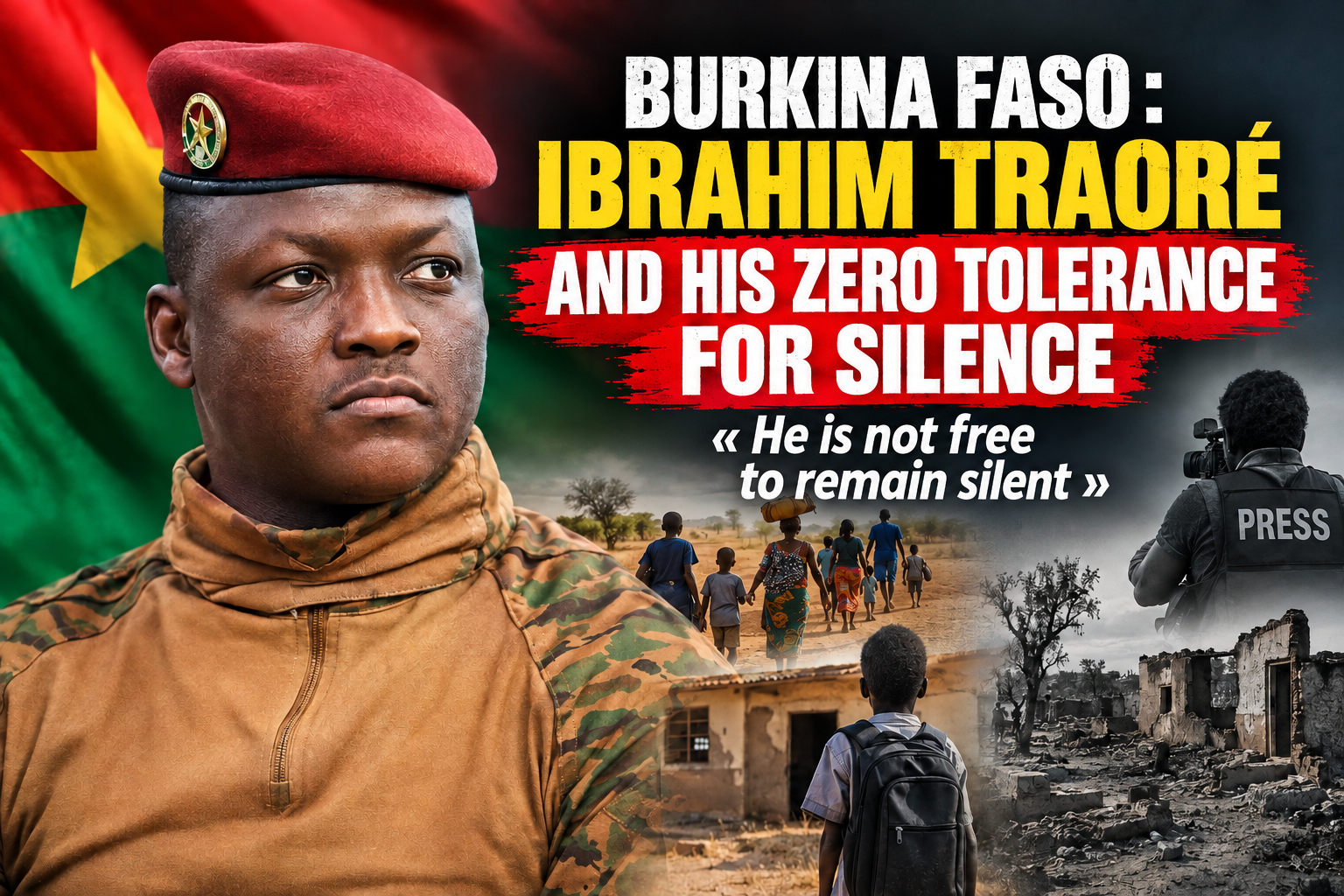
When Ibrahim Traoré addressed the nation on 27 September 2026 to present the results of his four years in power, what emerged was primarily the government’s own reading of its record. Military campaigns, territories presented as recaptured, equipment purchases, investments and economic programmes: the authorities possess ample material with which to defend their account of the period.
Yet a national record cannot be written by those who govern alone. It must also be measured against the lived reality of the population and it is here that the most difficult questions arise.
The displacement question: how many citizens can actually live at home?
The foremost issue remains security. Four years after Ibrahim Traoré assumed power, how many Burkinabè are genuinely able to reside in their own homes without fear?
Burkina Faso continues to face an enormous displacement crisis. Figures from the UN refugee agency recorded 2,062,534 internally displaced persons at the end of 2025 more than two million citizens forced to abandon their homes while remaining within the country’s borders. When refugees and asylum seekers are included, the number of forcibly displaced persons exceeded 2.1 million.
The consequences extend well beyond Burkina Faso’s frontiers. In neighbouring Côte d’Ivoire, approximately 82,000 Burkinabè refugees were registered as of June 2026, out of a total of 93,200 refugees and asylum seekers hosted in that country.
I travelled personally to a camp sheltering Burkinabè refugees in northern Côte d’Ivoire. What I witnessed there left me deeply moved. The sheer number of people, the displaced families, the children, the faces marked by exile and the accounts of those who had to abandon their homes rendered me speechless.
Against such a reality, one question becomes unavoidable: can Ibrahim Traoré genuinely assert that all is well in Burkina Faso?
Behind the statistics lie separated families cut off from their land, farmers unable to cultivate, children deprived of normal schooling and communities compelled to rebuild their lives elsewhere.
It follows that an area described as “recaptured” cannot be considered permanently secure merely because the army has re-established its presence there. True recapture begins only when residents can return for good, work their fields, send their children to school, obtain medical care and live without the fear of renewed attack.
A territory retaken on a map is not necessarily a territory made livable again.
Is criticism of the authorities still permitted?
A second question concerns the space remaining for dissent.
In 2026, Human Rights Watch and Amnesty International documented restrictions targeting journalists, civil society organisations and critical voices. Human Rights Watch reported in particular the dissolution of 118 civil society organisations and continues to seek clarification regarding the fate of journalist Serge Oulon.
Such allegations warrant examination and documentation on a case-by-case basis. The underlying principle, however, remains straightforward: to criticise a government is not to oppose one’s country.
National security should not become an automatic response to every contradiction. A journalist seeking accountability, a citizen questioning a decision or an organisation documenting a situation does not thereby become an enemy of the nation.
The government is not the country.
The only record that counts is the people’s
Ibrahim Traoré may highlight his achievements. His supporters may regard the military operations, investments and economic initiatives as significant progress. These claims deserve scrutiny on the basis of verifiable facts.
But any honest assessment must also account for the displaced, the refugees, the bereaved families, the abandoned villages and those still living in uncertainty.
After four years in power, the essential questions therefore remain the following:
How many Burkinabè can live in their own homes?
How many can work their land?
How many can send their children to school in safety?
How many have been forced to seek refuge in neighbouring countries?
And above all, how many can freely criticise those who govern them?
A genuine record should not fear such questions.
For when confronted with tens of thousands of Burkinabè who have sought refuge in Côte d’Ivoire and more than two million displaced within the country, it is not enough to present figures, speeches and images of achievements in order to declare that all is well.
The true record is also measured in the lives of those who have lost everything.
A people is not liberated by being told to remain silent. It is liberated when it can live in safety, speak freely and hold those in power to account.
By Boureima Amadou — Reporter


 Boureima Amadou





