
 Mariama Hamani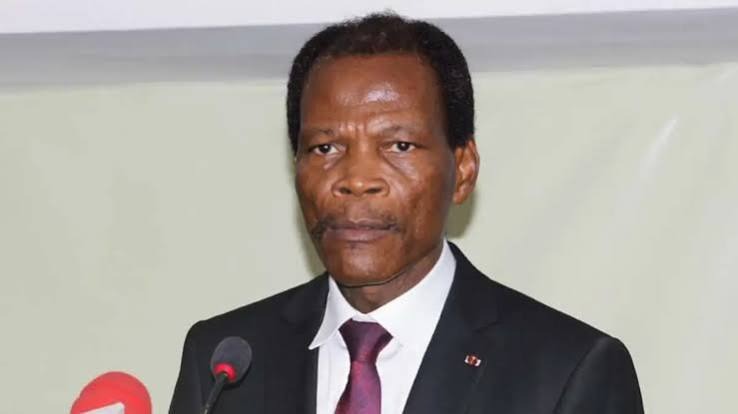
Cotonou — The decision to keep Candide Azannaï, president of the Restaurer l’Espoir party, behind bars is not just a courtroom headline in Benin. It carries tangible consequences for a nation still emerging from the shock of a thwarted coup attempt on 7 December 2025 — consequences that ripple through markets, public trust and the daily lives of citizens.
Why the economic stakes go beyond the courthouse
When a high-profile political figure remains in pretrial detention, investors and trading partners watch closely. Benin’s reputation for stability has been a cornerstone of its economic appeal in West Africa. The continued detention of Azannaï signals that the state is treating the alleged plot with utmost seriousness — a message that can reassure some partners but also raises questions about political risk.
For ordinary citizens, the uncertainty translates into a wait-and-see mood. Business owners along Cotonou’s commercial corridors say major decisions are being postponed until the legal picture becomes clearer. The longer the case drags on, the more it weighs on consumer confidence and informal trade.
The charges at the heart of the case
Azannaï, a former minister, was arrested in December 2025 following events that authorities describe as an attempted destabilisation of state institutions. He faces serious accusations, including conspiracy against state security and incitement to rebellion, examined by the Court for the Repression of Economic Offences and Terrorism (CRIET).
In a constitutional democracy, such allegations demand a thorough, transparent investigation. The decision to keep the accused in custody rests on a clear procedural logic: suspected accomplices remain at large, and the inquiry must continue without risk of evidence being tampered with or witnesses being pressured.
A court process that respects defence rights
The recent appeals chamber hearing illustrates how the system is meant to function. After an initial request for provisional release was rejected by the liberty and detention chamber, Azannaï’s lawyers exercised their right of appeal. He was brought from detention to appear in person before the judges — not a rushed, closed-door affair, but a contradictory proceeding with both sides heard.
The defence lawyer, Me Aboubacar Baparapé, acknowledged after the hearing that the key stages of the judicial investigation had been conducted properly. He noted that his client’s substantive interrogation was complete, and that Azannaï had been free to state his case — insisting he is not involved in the alleged plot.
What the defence’s own words reveal
Baparapé’s measured comments are telling. He confirmed that the investigation into his client’s individual role had run its course, and that Azannaï had denied all accusations. The lawyer also signalled that the defence will keep using available legal remedies, saying they would file a new release request “when the time comes” until they are heard.
That posture — calm, procedural, lawful — underscores that Benin’s judicial system offers ongoing mechanisms for review based on how the case evolves.
The wider impact on public trust and stability
Beyond the courtroom, the case tests public confidence in state institutions. Supporters of the detained politician may feel frustrated, but the appeals court’s ruling reflects a principle: in matters of national security, facts take precedence over political considerations.
For Benin’s economy, the key question is how long the uncertainty lasts. A prolonged, messy legal saga could chill investment and slow down sectors that depend on predictability — from transport and logistics to tourism and cross-border commerce. A swift, credible resolution, on the other hand, would reinforce the country’s image as a rules-based democracy.
By allowing the investigation to proceed while suspected co-authors are still being sought, the judiciary says it is protecting society while guaranteeing a fair trial. Whether that balance holds — and how it affects Benin’s economic trajectory — will be watched closely in the months ahead.


 Boureima Amadou





