
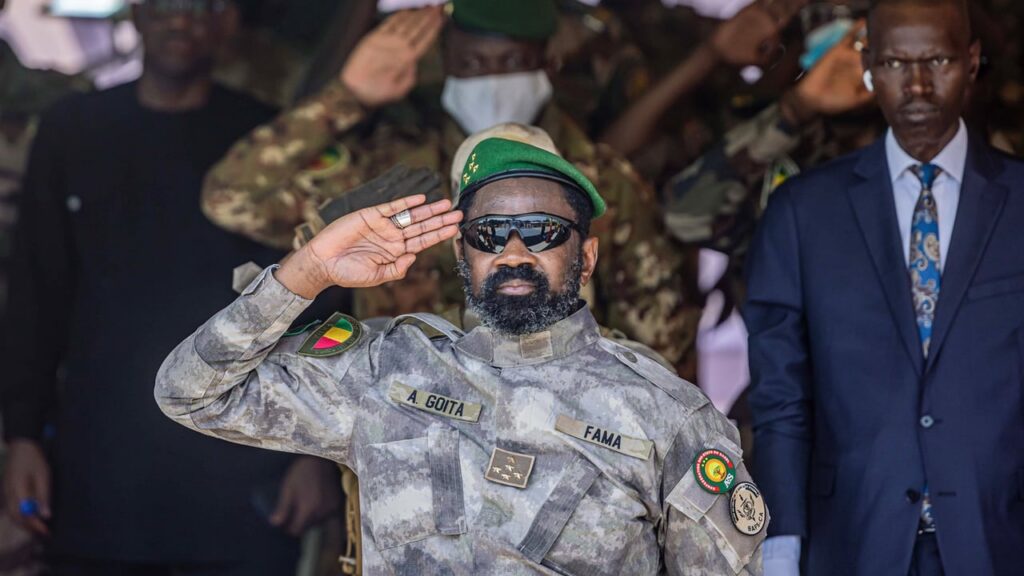

Assimi Goïta’s leadership at a crossroads in Mali’s turbulent landscape
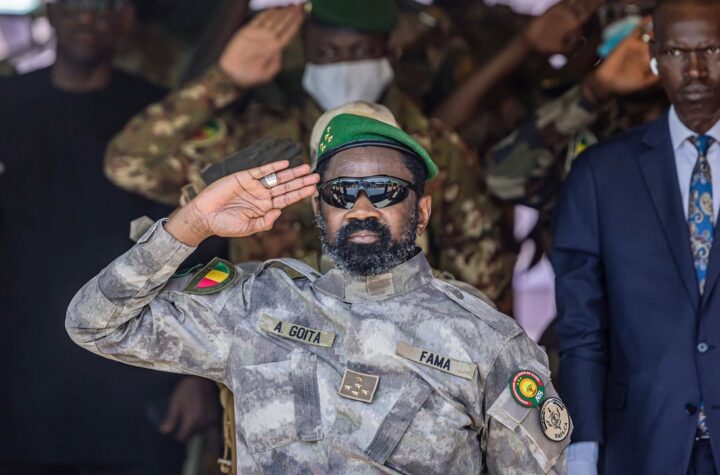
In the heart of Bamako, a nation grappling with deep-seated challenges finds itself under the watchful eye of one man: Assimi Goïta. Once a transitional figure, Goïta has evolved into the central axis of Mali’s political and security architecture, yet his tenure remains mired in controversy and uncertainty. As the country faces mounting pressures—from insurgent violence to economic stagnation—his decisions now shape Mali’s trajectory more than ever before.
From military rule to fragile governance
Assimi Goïta’s rise to prominence began in the aftermath of a 2020 coup that ousted President Ibrahim Boubacar Keïta. Initially positioned as a transitional leader alongside Bah N’Daw, Goïta’s influence grew rapidly, culminating in his assumption of the presidency in 2021. Since then, he has navigated a complex web of domestic and regional dynamics, balancing military authority with political expectations.
Yet, Mali’s path under Goïta’s leadership has been anything but smooth. The country continues to reel from the devastating effects of jihadist insurgencies, particularly in the central and northern regions. Despite efforts to stabilize the situation, the security landscape remains volatile, with attacks persisting and civilian casualties rising. Critics argue that Goïta’s government has struggled to deliver on its promise of restoring peace, while supporters credit him with maintaining a firm grip on power amid chaos.
Controversies and the shadow of dissent
Goïta’s leadership has not been without its detractors. His close ties to the Jama’at Nusrat al-Islam wal Muslimin (JNIM), a prominent Islamist militant group, have sparked widespread debate. While some view these connections as a pragmatic approach to dialogue, others condemn them as a dangerous compromise that undermines Mali’s sovereignty and regional alliances. The late Defense Minister Sadio Camara’s funeral in April 2026, where Goïta was seen paying his respects, further fueled speculation about the government’s covert engagements.
Domestically, public sentiment is divided. Urban populations in Bamako often express frustration over economic hardship and governance failures, while rural communities bear the brunt of insecurity. The government’s reliance on external support—particularly from Russia’s Wagner Group—has also drawn criticism, with many questioning the long-term implications of such partnerships on Mali’s independence and human rights record.
What lies ahead for Mali under Goïta?
The coming months will be pivotal for Assimi Goïta and Mali. With regional blocs like ECOWAS monitoring the political climate closely, the pressure to transition back to civilian rule is intensifying. Yet, Goïta’s grip on power appears unshaken, at least for now. His ability to reconcile security imperatives with democratic expectations will determine whether Mali can emerge from its current crisis—or whether it will remain trapped in a cycle of instability.
One thing is certain: the decisions made in Bamako today will echo across the Sahel, shaping the future of a nation—and a region—in desperate need of clarity.
More Stories
Senegal crisis deepens after President Faye sacks Prime Minister Sonko
Niger takes control of uranium sector with new national company
Senegal faces political turbulence as Faye removes Sonko