
 Mariama Hamani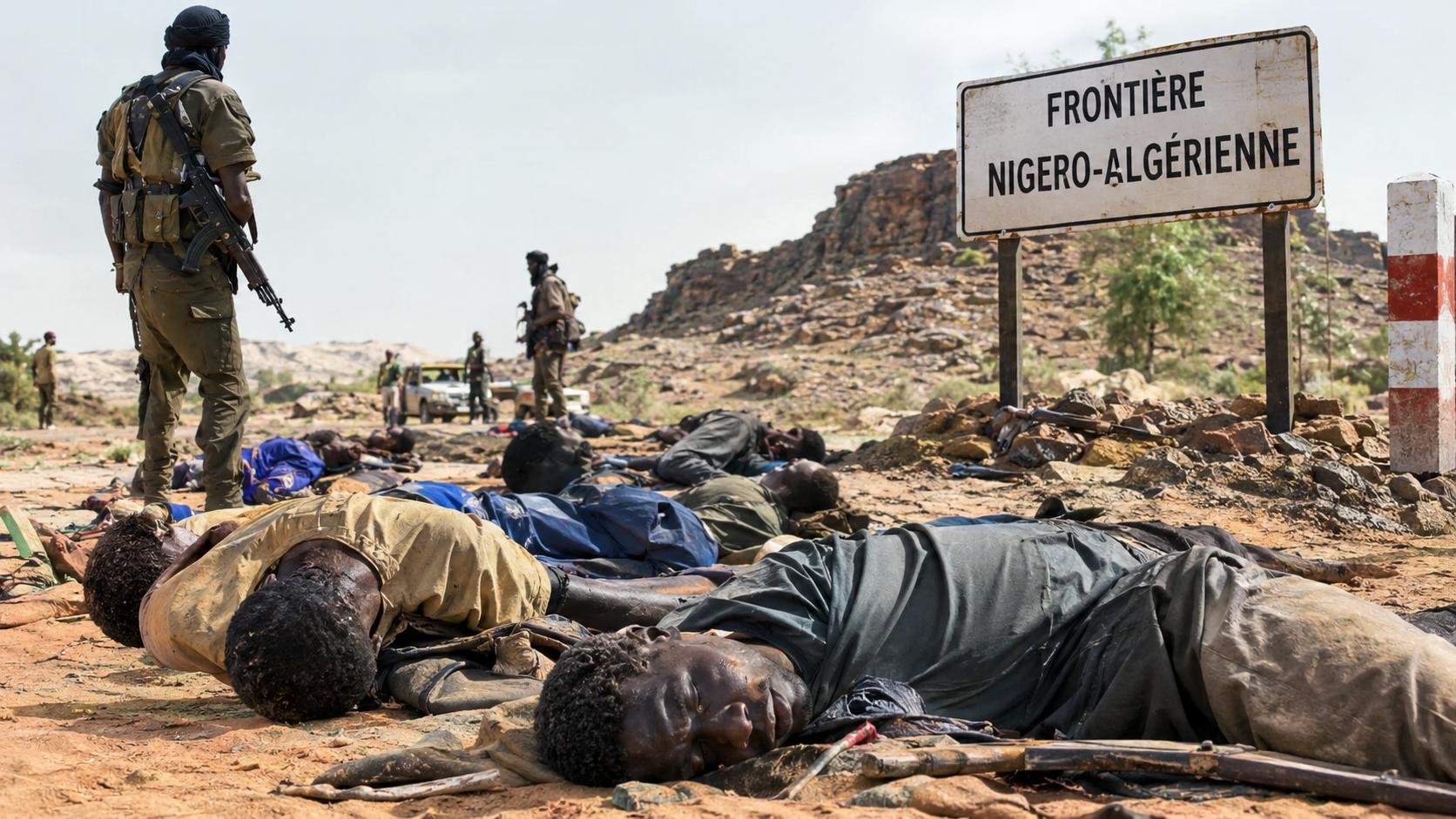
At least 48 civilians lost their lives when an Algerian military helicopter fired on an artisanal gold-mining camp straddling the frontier between Niger and Algeria, turning a remote stretch of Sahara into a scene of carnage. The dead were not fighters. They were labourers chasing a living from the sand.
A remote goldfield turned into a killing ground
For years the border strip between the two countries has acted as a magnet for young men in search of quick money. Hundreds of them, from Niger and neighbouring states, work the scattered alluvial deposits with hand tools, sleeping in tents and improvised shelters far from any road, clinic or police post. That informal world came to an abrupt and bloody halt when a helicopter swept in and opened fire on the encampment below.
How the raid unfolded
A Russian-built Mi-171 opened fire in broad daylight
The aircraft, a Russian-made Mi-171 operated by the Algerian air force, flew low over the site before strafing the makeshift installations, the parked vehicles and the rudimentary washing stations where miners sift gravel for specks of gold. There was nowhere to hide. The landscape offers no trees, no walls — only open rock and dust. Men scattered across the flat ground as rounds tore through the camp.
The wounded and the dead
Beyond the confirmed fatalities, many miners suffered severe injuries. The nearest health facilities lie hours away along rutted desert tracks, and the wounded were evacuated in the beds of pickup trucks and in any vehicle still able to move, reaching care in precarious conditions. Word of the strike travelled slowly to families scattered hundreds of kilometres away.
Algiers and the language of counter-terrorism
Algeria regularly justifies its aerial patrols along its southern rim as a campaign against terrorism and cross-border crime. This time, the people on the receiving end were unarmed informal workers. For the communities that depend on these diggings, the official explanation does not hold up.
The silence from Niamey speaks louder than any statement
Sovereignty as a slogan, not a shield
An air strike by a foreign power on national soil would normally trigger protests, recalled envoys and furious communiqués. None of that has happened. General Abdourahamane Tiani and his junta have said nothing of substance, and that restraint is itself being read as a message.
Observers across the region interpret the operation as having been tolerated — perhaps quietly welcomed — by the military authorities in Niamey. Having severed ties with its traditional partners in pursuit of new legitimacy and regional backing, the regime appears ready to trade the integrity of its own territory, and the lives of its own citizens, for political survival.
Algiers tightens its grip on the south
Algeria, for its part, wants its southern margins secured whatever the price. The vacuum of authority on the Nigerien side of the line offers a convenient opening to impose its own rules beyond the border.
An army unravelling from within
Aftermath of a failed putsch
This foreign intervention lands on a defence establishment already reeling. The Forces armées nigériennes have not recovered from the attempted coup during the night of 28 to 29 August, an episode that laid bare deep fault lines between commanders and the ranks.
A wave of desertions
Since then an unprecedented number of officers and soldiers have abandoned their posts. Their reasons overlap:
- Disillusionment with the junta’s political trajectory
- Exhaustion after years of worsening security
- Refusal to be complicit in abuses or internal score-settling
The result is a security apparatus too thin to cover an enormous national territory, leaving the field open to neighbouring armies and non-state armed groups alike.
Indignation grows among ordinary Nigeriens
Inside Niger, disbelief has hardened into fury. Relatives of the victims and civil society organisations are demanding answers. How can a government that placed national sovereignty at the heart of its rhetoric allow a foreign army to slaughter its civilians without demanding an accounting?
A bleak turning point
By looking away from Algiers’ operations while failing to hold its own troops together, the junta in Niamey is exposing the limits of its project. The border tragedy marks a grim milestone: a weakened country where the hunt for gold has turned deadly and where sovereignty increasingly resembles nothing more than a slogan on a banner.


 Boureima Amadou





