Boureima Amadou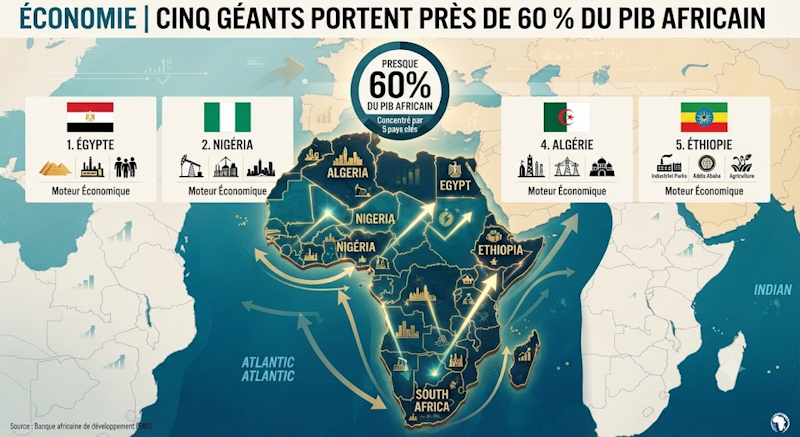
Fresh data from the African Development Bank reveals a striking reality: just five African nations account for nearly 60% of the continent’s total gross domestic product. These economic heavyweights—Egypt, Nigeria, South Africa, Algeria and Ethiopia—form the backbone of Africa’s growth trajectory.
This concentration of economic power highlights how these countries shape the continent’s financial future. Their influence stems from diversified economies, vast natural resources, expanding domestic markets, robust industrial bases, and major infrastructure investments. Together, they create a dynamic that propels Africa’s overall development forward.
what sets these african economic leaders apart
Each of these five nations brings unique strengths to the table:
- Egypt and Nigeria stand out for their massive populations and increasingly varied economic activities, blending agriculture, manufacturing, and services.
- South Africa maintains its position as the continent’s industrial and financial leader, hosting major corporations and financial institutions.
- Algeria leverages its vast energy reserves and strategic public investment programs to fuel steady economic expansion.
- Ethiopia has emerged as a manufacturing hub, rapidly industrializing while rolling out transformative infrastructure projects.
the other side of the coin: economic disparities across africa
While these five countries act as engines of growth, their dominance also underscores deep economic imbalances across the continent. Many African nations still struggle with weak industrialization, limited financial access, high unemployment, and over-reliance on primary commodity exports. The gap between these economic powerhouses and smaller markets remains a critical challenge for policymakers.
Economists emphasize that fostering balanced growth will be essential in the coming years. Supporting smaller economies to diversify, invest in innovation, and integrate into regional supply chains could help spread prosperity more evenly and reduce dependence on a handful of dominant players.