Mariama Hamani
The rapid integration of military drones is transforming Africa’s security landscape, offering governments new tools to monitor threats and conduct operations. Yet this technological shift also exposes critical vulnerabilities, fueling debates over sovereignty, governance, and civilian safety.
How drones became central to African security strategies
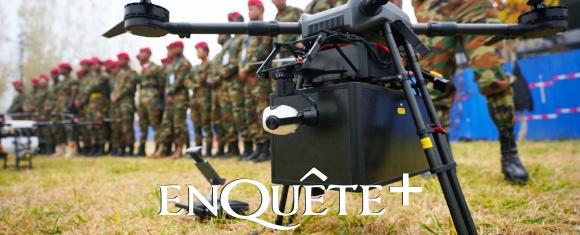
Once limited to surveillance and intelligence gathering, drones now play a pivotal role in Africa’s military and counterinsurgency operations. Their adoption reflects a broader shift in conflict dynamics, where states and non-state armed groups increasingly rely on remote aerial technologies to gain tactical advantages in unstable regions.
The acceleration in drone acquisitions over the past two decades underscores this trend. Between 1980 and 2024, 31 African countries procured over 1,500 military drones, with nearly half bought since 2020. North Africa leads in deployments, while Nigeria stands out as one of the continent’s top importers. These systems provide governments with enhanced surveillance, precision strikes, and reduced risks to troops in high-threat areas.
Conflict zones such as Sudan, Mali, Burkina Faso, Niger, Somalia, and Ethiopia serve as key examples of this evolution. Drones are now integral to both conventional military operations and asymmetric warfare, used not only by state forces but also by armed groups to plan and execute attacks.
Rising accessibility and shifting power dynamics
A major concern is the growing availability of drone technology to non-state actors. Commercial drones, widely sold for civilian use, are being repurposed by groups such as Boko Haram, Al-Shabaab, and the Group for Support of Islam and Muslims (JNIM) to conduct targeted strikes, coordinate ground operations, and amplify propaganda through recorded footage.
This democratization of drone warfare has redefined battlefield tactics. Where drones were once tools of observation, they now enable precise attacks, real-time coordination, and psychological warfare—reshaping how conflicts are waged across the Sahel and the Horn of Africa.
Foreign dependence: a strategic blind spot
Despite these capabilities, African states remain heavily reliant on external suppliers. China, Israel, the United States, and Turkey dominate the market, providing not just drones but also training, maintenance, software updates, and spare parts. This dependence creates long-term strategic risks, particularly around data security and operational autonomy.
The reliance on foreign technology raises pressing questions about digital sovereignty and the protection of sensitive intelligence collected by these unmanned systems. Without local control over data flows and system integrity, African governments risk ceding critical decision-making power to external actors.
Local production gains ground, but challenges persist
To counter foreign dependence, several African nations are investing in domestic drone manufacturing. South Africa leads the continent’s industrial efforts, while Morocco has adopted a hybrid approach combining local production with international partnerships. Nigeria, Egypt, Ethiopia, Tunisia, and Algeria are also expanding their industrial bases to reduce reliance on imports.
In West Africa, Senegal is emerging as a notable player through Ndobine, a company specializing in drones for maritime surveillance, precision agriculture, and cartography. However, local production still accounts for only about 12% of the African market, highlighting the scale of the challenge ahead.
Drones offer tactical gains—but at what cost?
While drones enhance military capabilities, experts warn they are not a solution to Africa’s deep-rooted conflicts. Their deployment may improve operational efficiency but does little to address underlying political, economic, or social grievances that fuel instability.
In fact, drone proliferation has contributed to increased violence. In 2024 alone, drone strikes in 13 African countries resulted in 1,176 civilian deaths. In Sudan, reports indicate nearly 700 civilians were killed in the first three months of 2026 by drone attacks, underscoring the humanitarian toll of unchecked military technology.
Charting a path toward responsible drone governance
To harness the benefits of drone technology without exacerbating insecurity, African states must adopt robust regulatory frameworks. This includes developing doctrines aligned with international humanitarian law, strengthening operator training, ensuring transparent procurement processes, and fostering local innovation.
Regional coordination under the African Union could help harmonize rules on drone use, data protection, and cross-border operations. The goal is not just to acquire more drones, but to master their deployment in ways that uphold human rights and long-term stability across the continent.


 Boureima Amadou